


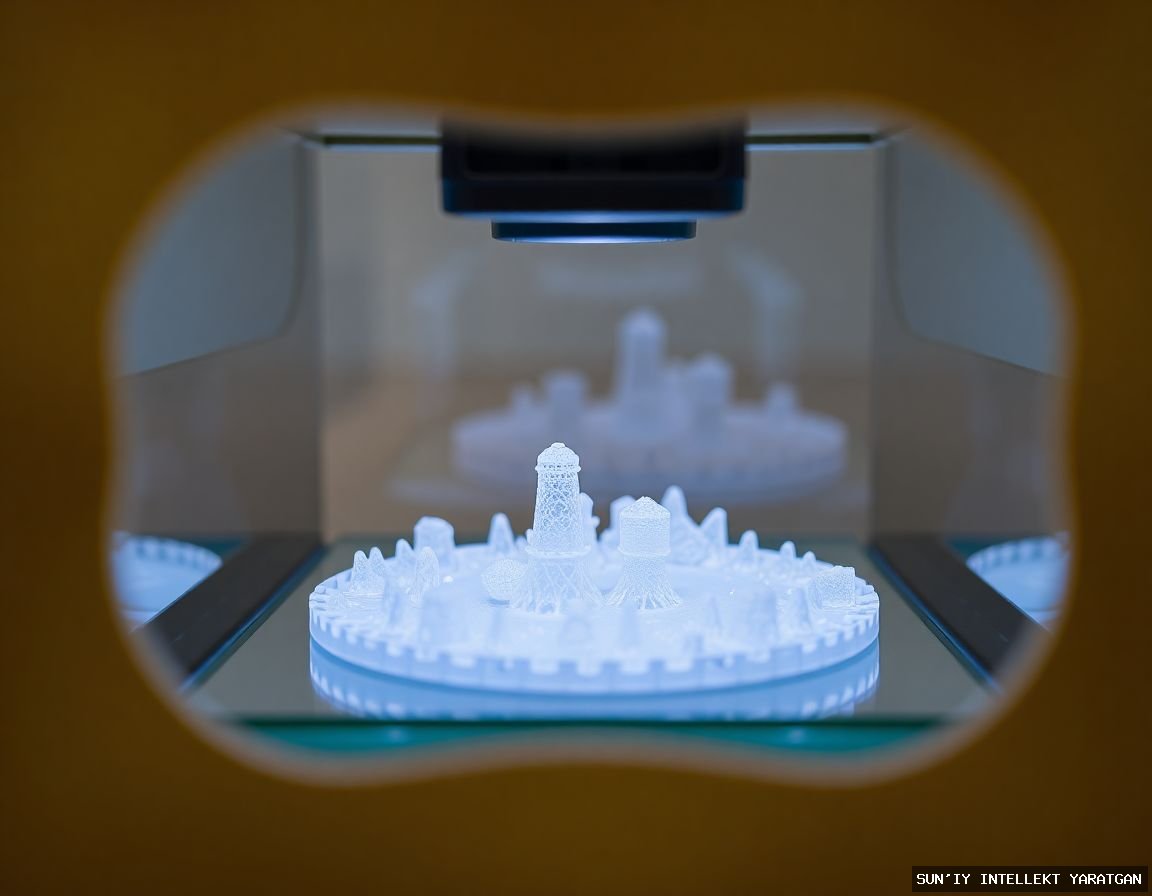
In Uzbekistan, an innovative method for producing a base for bioinks used in 3D bioprinters has been developed. The breakthrough was presented by young researcher Olimjon Boymatov from the Institute of Chemistry of Plant Substances at the Academy of Sciences of Uzbekistan.
Photo: UzA
The scientist proposed using polysaccharides from local plants to create a hydrogel capable of serving as a medium for the life and development of human cells. According to him, the new material is biocompatible, safe for the body, and significantly cheaper than foreign counterparts.
The development resulted from a scientific internship in Germany. The project has already received a positive conclusion from the Intellectual Property Agency and is currently undergoing the patenting procedure.
According to the developer, the technology opens prospects for printing artificial tissues and organs, which in the future could reduce dependence on donor organs and save the lives of thousands of patients. Global practice has already demonstrated the possibility of 3D printing blood vessels, skin, cartilage, and organs such as the heart, liver, and kidneys.
Previously, scientists from the Center for Advanced Technologies under the Ministry of Higher Education, Science, and Innovations, for the first time in the country's history, fully decoded and analyzed the genomes of Uzbekistan's residents. Nearly one-third of the identified mutations were previously unknown to global science and have been entered into international databases.
Source: https://kun.uz/ru/news/2026/02/12/v-uzbekistane-razrabotali-osnovu-dlya-biochernil-dlya-3d-bioprinterov