


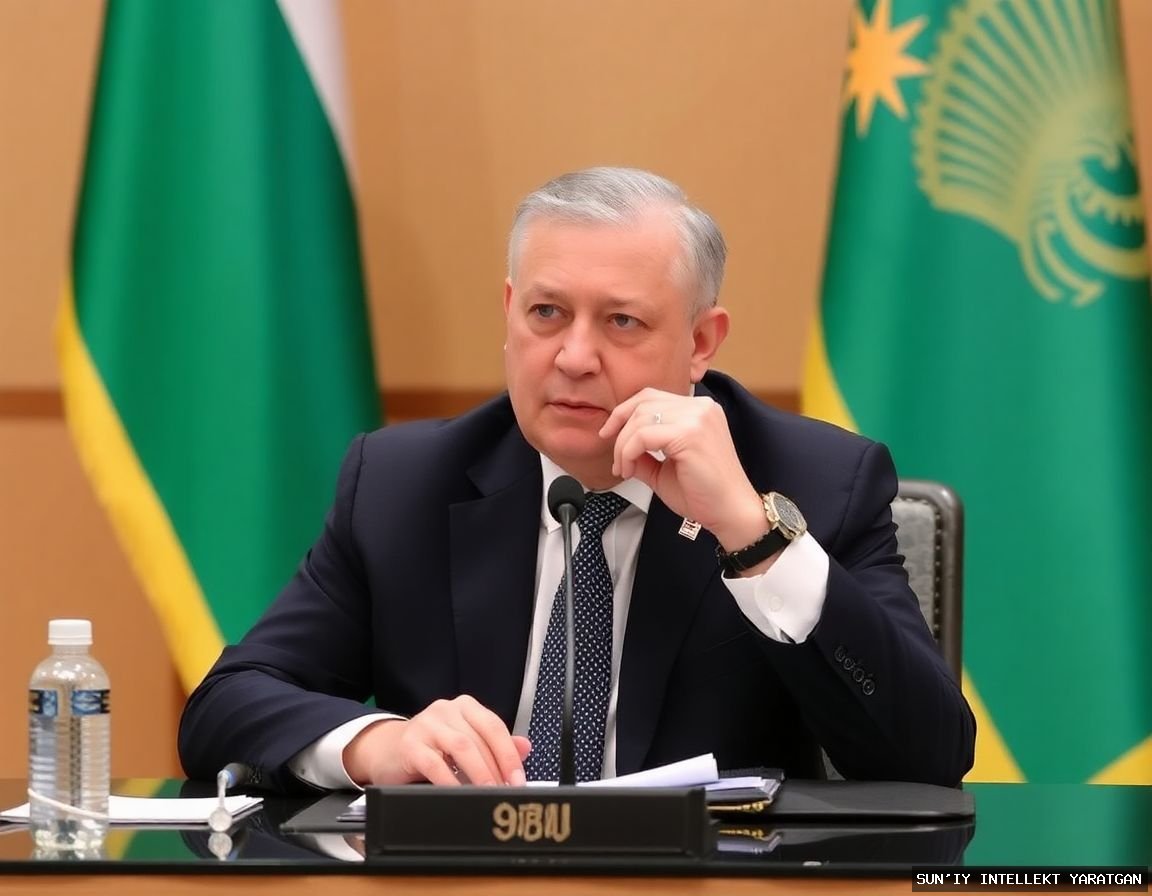
President Shavkat Mirziyoyev reviewed a presentation on the comprehensive renewal of the technical regulation sector based on international requirements on February 12.
Over the past 4 years, half of the national standards have been fully harmonized with international requirements. The country's accreditation system ranked 29th among 185 nations. Results from national laboratories have begun to be recognized by 37 countries, including Germany, Korea, and Japan.
Additionally, the requirement for mandatory state registration of 156 high-risk product categories has been abolished. The number of products subject to mandatory certification has decreased by 27 percent.
At the same time, it was noted that the practice of inspecting enterprise activities during product assessment is causing dissatisfaction among entrepreneurs. Under the current procedure, if a product is deemed non-compliant, it is not its circulation but the producer's operations that are restricted.
Developed countries employ a market control system based on risk analysis. In this model, the producer, by declaring product conformity, assumes full responsibility and guarantees its quality and safety.
In this regard, a phased abandonment of state control and a transition to market surveillance mechanisms are planned. A separate draft law "On Market Control" has been prepared.
The necessity of abandoning outdated standards and ineffective technical regulations with a full shift to international standards was also emphasized. Currently, over 33,000 standards are in effect, 50 percent of which are obsolete or do not meet international requirements.
Plans include abolishing 6 technical regulations and revising 29. This year, 4,460 international standards are slated for adoption, next year over 2,500, and in 2028, 817.
Plans were reported to fully implement international standards in production and services in the textile, leather, furniture, electrical, automotive, and information technology industries from July 1, 2026; in the oil and gas, metallurgical, transport, construction materials, and medical device sectors from 2027; and in energy, chemical industry, ecology, and services from 2028.
The need for further simplification of certification procedures was highlighted. The current cumbersome system increases product costs, creates conditions for bureaucracy and corruption risks. It was proposed to introduce risk-based assessment, abolish mandatory certification for remaining product categories, and gradually transition to declaration.
Overall, the adoption of a law "On General Product Safety" was deemed appropriate.
Institutional transformations are planned in the sector. A decision was made to reduce the number of organizations within the Technical Regulation Agency from 5 to 3 by abolishing the "Uztest" center and transferring the Accreditation Center under the Cabinet of Ministers.
It was proposed to fully transfer testing and certification services to the private sector. Currently, 207 testing laboratories and 73 certification institutions operate in the private sector, covering all industries. To foster a healthy competitive environment, attracting leading international companies such as Intertek, SGS, Bureau Veritas, and TÜV is planned.
The presentation also addressed issues of implementing the national conformity mark "CUz," ensuring the independence of accreditation bodies, digitalizing testing laboratory activities, reforming the metrology system, and expanding the reference base.
After hearing opinions and suggestions from entrepreneurs, the head of state gave specific instructions to responsible officials for implementing the new system.
Source: https://kun.uz/ru/news/2026/02/13/shavkat-mirziyoyev-poruchil-kardinalno-obnovit-sistemu-texnicheskogo-regulirovaniya