


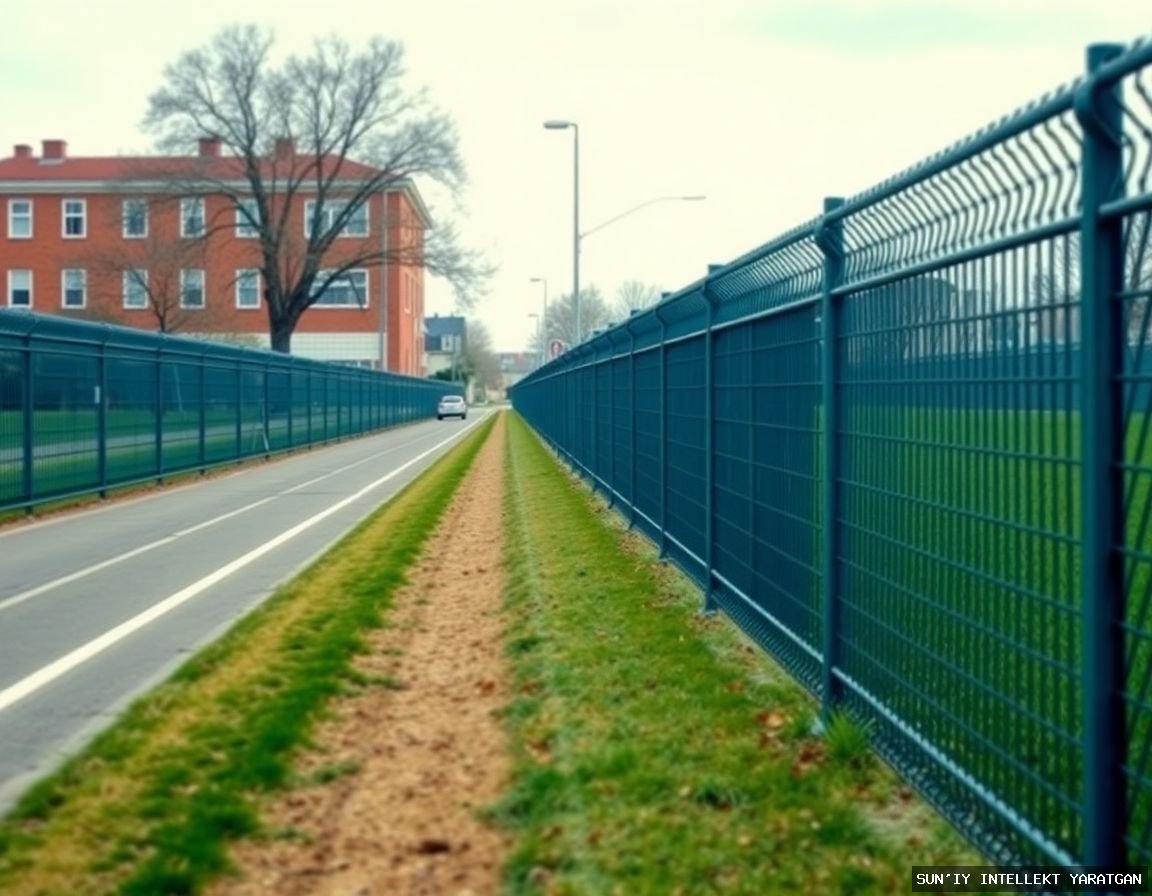
In Tashkent, metal fences and concrete barriers are being reinstalled, seven years after they were removed due to safety risks for pedestrians and drivers. The costs are covered by the budget. Urbanists warn that fences reduce visibility, encourage speeding, and could increase fatal traffic accidents. Authorities, who previously acknowledged these risks, are now remaining silent.
Most concrete dividers and metal fences on Tashkent's roads were dismantled in 2018. At that time, both the Road Safety Service and the city administration recognized that such structures posed a threat to pedestrians and traffic participants.
However, after seven years, the barriers are being reintroduced. Through decisions signed by Tashkent Mayor Shavkat Umurzakov in May and July 2025, 8.4 billion soums were allocated for installing fences in street medians. Green-colored mesh fences have appeared on several major roads.
According to open data, a tender was held on December 3, 2025, with LLC Qarshi Stroy Sentr declared the winner with a bid of 6 billion soums.
Recently, a fence installed on Mirzo Ulugbek Street was dismantled after just one week. According to Gazeta.uz, the reason was insufficient height of the structure. A reinstallation is expected—this time with a taller version.
Officially, the stated goal of the work is to improve traffic safety and reduce the number of accidents involving pedestrians. However, experts interviewed by Kun.uz consider the decision misguided.
"It creates an illusion of safety and encourages speeding"
Urbanist Iskandar Soliev notes that the issue has long been criticized by specialists. He says that in a dense urban environment, people naturally seek the shortest routes and will still cross the road where it is most convenient for them.
He recalls that similar fences were previously installed near traffic lights—in sections up to 50–100 meters—to direct pedestrians to crosswalks. Comparable solutions were also applied in other cities, particularly in Andijan.
According to Soliev, the presence of fences can create an illusion of complete safety for drivers, psychologically encouraging them to increase speed.
"What standards were used to manufacture the fences?"
Urban planner Khusan Mukimov, who worked at the Tashkent Architectural Institute in 2015–2016, points out that mass installation of fences at that time spread not only in the capital but also in the regions.
He states that such decisions do not align with basic urban planning principles and spoil the city's architectural appearance. The specialist asserts that regulatory documents lack such requirements or only permit them outside city limits—on sections with high-speed traffic.
He also draws attention to the absence of a unified standard: the structures vary in height and type, and it is unclear what calculations and state norms they are based on.
"This is a waste of taxpayers' money"
Road safety expert Nosirjon Zokirov emphasizes the budgetary aspect of the problem. He says that dismantling old fences and reinstalling new ones means double expenses.
He cites data showing that when comparing 2024 and 2025, the number of traffic fatalities decreased by only 11 people—an insignificant indicator. In the expert's opinion, decisions are being made without sufficient consultation with specialists.
What solutions do experts propose?
Iskandar Soliev believes that instead of installing fences, it is necessary to:
He stresses the importance of publishing detailed traffic accident statistics to develop targeted solutions.
Khusan Mukimov, in turn, believes that Tashkent needs a professional transportation strategy involving urbanists, architects, and relevant specialists. In his view, only a comprehensive analysis will determine where to reduce road lanes, where to open new streets, and where to change the functional purpose of spaces.
Nosirjon Zokirov adds that it is necessary to strengthen the teaching of road safety rules to children as part of the school curriculum.
The Kun.uz editorial board sent inquiries to the Tashkent city administration and the city road safety department but did not receive official responses.
Source: kun.uz