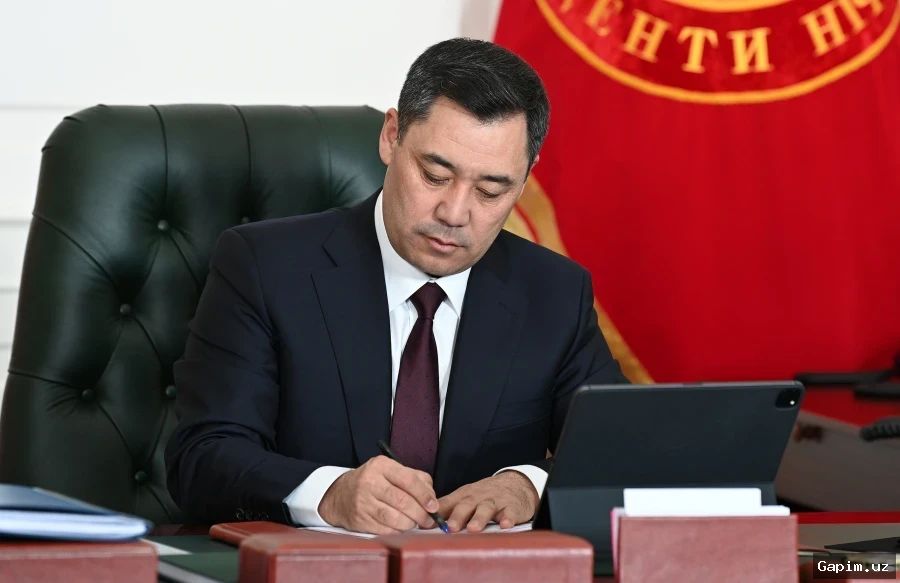
Kyrgyzstan has allowed state and municipal servants holding political and special positions to engage in additional paid activities, after President Sadyr Japarov signed a corresponding decree, 24.kg reported. Under the new rules, officials may earn extra income from teaching, expert work, scientific research and other creative activities linked to their professional field. The measure is intended to update the balance between retaining qualified specialists in public service, reducing bureaucratic barriers and preventing conflicts of interest.
Key Takeaways: The decree signed by Sadyr Japarov permits civil servants to earn additional income from teaching, academic, expert and creative work. Such activity requires consent from the person who appointed the official and must not harm core duties or create a conflict of interest. The document also clarifies rules on participation in public associations and bars early recall from leave without consent.
The change comes amid broader efforts to modernize Kyrgyzstan’s public administration and manage corruption risks. Additional income for officials has long been a sensitive issue: it is linked to low pay and shortages of qualified staff, but also to concerns that private interests could influence official decisions. By defining permitted activities, the decree appears designed to improve transparency, draw on professional expertise and preserve oversight of public service conduct.
The decree states that additional work must not negatively affect the quality or volume of an official’s main duties and must not lead to a conflict of interest. Civil servants are also allowed to take part in socially useful activities within public associations, including organizations working in healthcare, education, charity and volunteering. In addition, officials may not be recalled early from leave without their consent; consent may be given in person, by phone, through digital communication tools or by other means.
The document further clarifies restrictions on officials’ participation in the governing bodies of non-profit organizations, including boards of trustees and supervisory councils. Such participation is allowed in cases provided by law and international treaties, or by a decision or with the consent of Kyrgyzstan’s president or the chairman of the Cabinet of Ministers — the head of the presidential administration. The practical implementation of the decree, internal regulations of ministries and agencies, and conflict-of-interest checks will be closely watched. Observers say the move could make public service more open, but it will require clear control mechanisms.
Source: kun.uz