Uzbek President Shavkat Mirziyoyev said at a meeting with investors and entrepreneurs on the development of the construction industry that up to 40 percent of raw material is turned into waste during granite and marble extraction in Uzbekistan. The head of state instructed officials to step up recycling of such residues and launch new projects worth at least $100 million. The discussion highlighted demand for building materials with higher added value and more efficient use of natural resources.
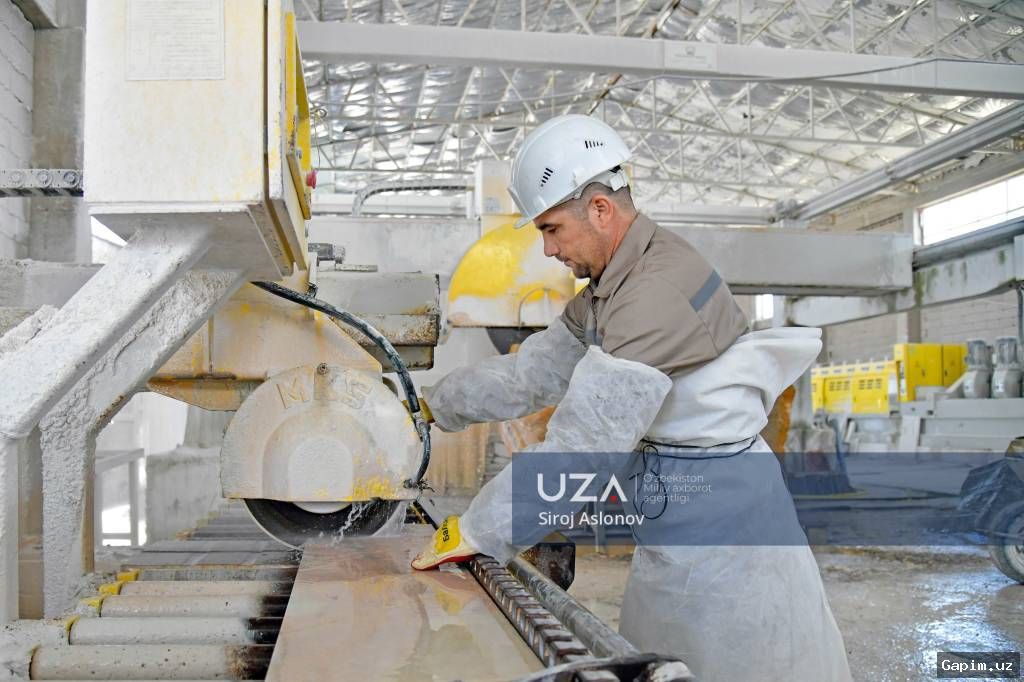
Key Takeaways: Uzbekistan has 155 enterprises engaged in extracting and processing decorative stone, producing about 1 million tons of raw material annually; 35 to 40 percent becomes production waste; large volumes have accumulated near deposits in Nurata, Gazgan and Kushrabat; new projects must total at least $100 million; future decorative stone deposits will be auctioned only if operators commit to a zero-waste model.
The figures point to a broader inefficiency in the sector, where a substantial share of valuable stone never enters the production chain and accumulates near quarries. President Mirziyoyev said such material can be used to make composite flooring, artificial stone slabs, marble chips and other higher-value products. He emphasized wider adoption of the zero-waste principle used in developed countries, framing it as a way to improve resource efficiency, reduce environmental pressure and strengthen the domestic construction materials industry.
The president also referenced work by Gulmira Keldiyerova, an associate professor at Samarkand State University and eco-activist, who developed a technology for producing construction materials from recycled waste. Responsible agencies were given one month to attract entrepreneurs and launch new projects near decorative stone deposits. In addition, new decorative stone deposits will be offered at auction only on the condition that future owners ensure zero-waste operations, embedding environmental requirements into licensing decisions.
The next phase is expected to focus on project preparation, investment mobilization and installation of processing capacity close to extraction sites. If implemented as planned, the measures could reduce waste stockpiles, diversify the range of construction products and tighten environmental oversight in the sector. For businesses, the initiative opens new market niches, while regions hosting deposits may see additional employment and fiscal revenues.
Source: podrobno.uz