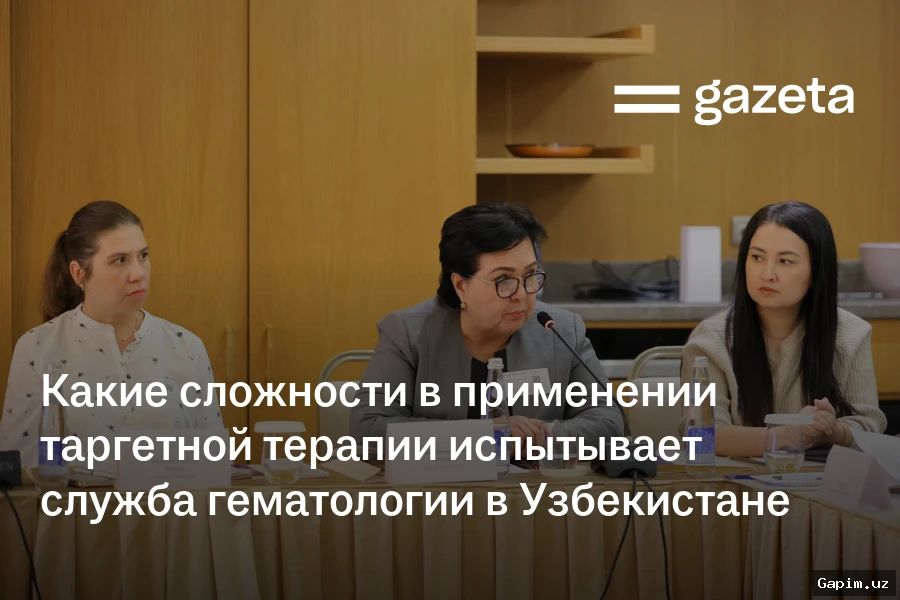
A forum dedicated to transforming the healthcare system was held in Tashkent on November 20, where specialists discussed organizing pharmacological support for patients with oncological and hematological diseases. The forum was organized by the Health Committee of the European-Uzbek Economic Cooperation Association (EUROUZ) in partnership with pharmaceutical company AstraZeneca and brought together physicians, representatives of the State Medical Insurance Fund and pharmaceutical companies. The discussions focused on early detection in primary care, laboratory capacity, workforce shortages and transplantation of blood-forming stem cells.
Key Takeaways: Uzbekistan aims to detect 60 percent of hematological, including oncohematological, diseases at an early stage by 2030; about 400–500 patients annually need transplantation of blood-forming stem cells; 62 allogeneic and more than 150 autologous transplants were performed this year; a new 28-bed aseptic transplantation block is expected to open by the New Year.
Context and Background
According to Aziza Mahmudova, deputy director for scientific work at the Republican Specialized Hematology Scientific-Practical Medical Center, timely treatment depends on primary care facilities, namely family polyclinics, recognizing the first signs of disease. A therapist or pediatrician can suspect a disorder from a patient’s complaints and changes in a general blood test and refer the person to a hematologist. This approach is intended to reduce advanced cases and improve treatment outcomes.
Uzbekistan has set a goal of detecting 60 percent of hematological and oncohematological diseases at an early stage by 2030. “We have developed questionnaires that make it possible to detect hematological and oncohematological patients at an early stage [for polyclinics],” Mahmudova said. The next stage depends largely on local laboratory capacity: regional laboratories perform a general blood test using only three indicators, while early diagnosis requires an expanded general blood test, usually including 20 to 30 indicators. Such an analysis shows, for example, platelet counts and the ratio of different types of leukocytes that help fight infections.
“There is a shortage of hematologists in district polyclinics,” Mahmudova continued. According to her estimates, some districts have about half the required number of such specialists, while others have only about one-tenth. “Pediatricians and therapists perform the duties of hematologists. Therefore, we are now training all general practitioners, as well as hematologists, in early detection of hematological patients and oncohematological diseases.” The center developed an examination algorithm and assigned a curator to each region; under this algorithm, curators travel to the regions to train staff, and trained specialists receive certificates even if they are not hematologists.
According to the center’s deputy director, about 400 to 500 people with blood diseases in Uzbekistan need transplantation of blood-forming stem cells each year. The procedure helps restore blood cell production after intensive therapy. If donor cells are used, it is called allogeneic transplantation; if previously prepared cells of the patient are used, it is called autologous transplantation. “This year we performed allogeneic transplantation in 62 patients with acute leukemia and autologous transplantation in more than 150 patients,” Mahmudova said. In Samarkand, about 10 patients with myeloma or lymphoma received their own cells.
Outlook and Next Steps
“We currently have patients waiting, and there is a shortage of places. But by the New Year a new 28-bed aseptic block for transplantation will open,” she said. Such wards protect patients from infections until immunity recovers. The center is also mastering cell transplantation in autoimmune diseases, in which the immune system attacks the body’s tissues. Further steps are expected to combine early diagnosis, expanded laboratory services, staff training and increased transplantation capacity, making support for patients more systematic and timely.
Source: www.gazeta.uz