For millions of households in Pakistan, money sent by workers in the Gulf states is a vital lifeline, covering essentials like food, rent, and education. But as regional tensions escalate, delays and fluctuations in remittances are causing widespread distress.
Samina Bibi, a 34-year-old mother of three living on the outskirts of Rawalpindi, received a message from her husband early this week that his salary would be delayed again. She struggled to hold back tears. Her husband has worked for a construction company in Riyadh, Saudi Arabia, for the past decade.
“He says the company is facing issues due to regional conflict,” she said, referring to the Iran war. “I just think, what about us relying solely on his 80,000 rupees (€245) per month?” For Samina, the delay disrupts every aspect of her life, from paying school fees to buying food.
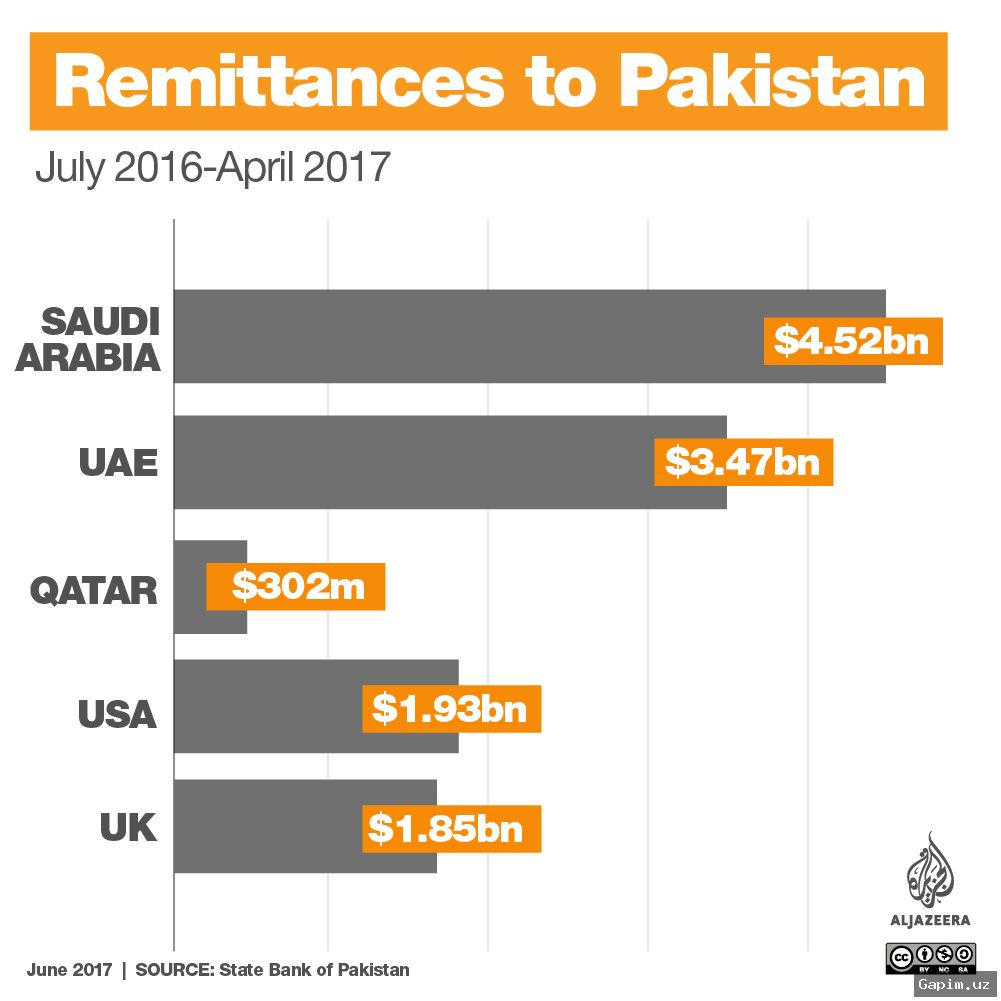
Pakistan is one of the world’s largest recipients of remittances, with tens of billions of dollars flowing in annually, mostly from Gulf workers. According to the State Bank of Pakistan, Saudi Arabia and the UAE contributed more than half of the record $38.3 billion in remittances in fiscal year 2025.
However, analysts warn that rising Middle East tensions, automation, and a preference for local labor could threaten this income. “The UAE accounts for 20% of all Pakistan remittances, so a sudden slowdown from this source would create significant pressure on reserves and families,” said economic analyst Khurram Husain.
Islamabad-based economist Safiya Aftab stressed that Pakistan must reduce its reliance on Gulf remittances by strengthening domestic industries. “There is no substitute for growth in domestic commodity-producing sectors,” she said. Immigration lawyer Osama Malik noted that many young Pakistanis are now seeking work visas for Malaysia or Belarus, viewing UAE contracts as uncertain.
Bibi’s husband visits home once every two years, and their relationship exists largely through video calls. “My youngest child still asks when his father will come back for good. I don’t know what to tell him,” she said. This situation is common, creating what sociologists call “transnational households.”
Many Pakistani workers in the Gulf hold low- or semi-skilled jobs, making them vulnerable to layoffs. “When something happens there, we feel it here,” Bibi lamented. For now, families like hers remain dependent on a fragile system. “Our life depends on his job there. If something happens, we have nothing here,” she said.
Source: www.dw.com