Chinese leader Xi Jinping hosts his American counterpart Donald Trump in Beijing this week. Trump's last visit in 2017 featured a dinner inside the Forbidden City, an honor no US president had received before.
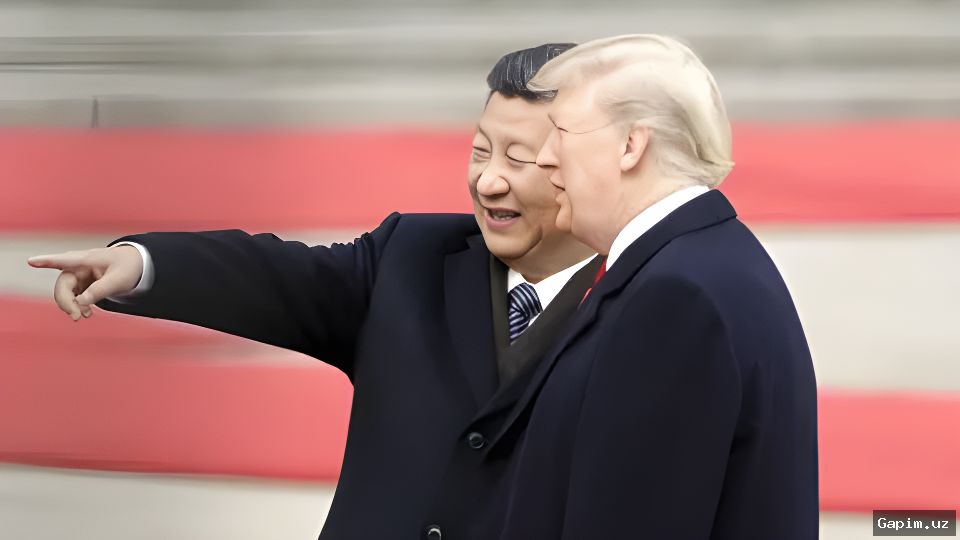
This week's reception promises to be just as grand, including a stop inside Zhongnanhai, the compound where China's top leadership lives and works. The agenda will be thorny, with Iran as a new source of tension alongside trade, technology, and Taiwan.
Much has changed as Trump returns to a stronger, more assertive China. Now in an unprecedented third term, Xi is pushing forward with plans for "new productive forces" with heavy investments in renewable energy, robotics, and artificial intelligence.
If the US president wants a glimpse of Beijing's future, he must look beyond the capital's imposing heart. In the remote north, solar and wind power dominate vast landscapes. In the industrious south, automation is reshaping factories and supply chains.
Chongqing, a gritty manufacturing hub, has been transformed into a symbol of a changing China embracing new tech and trade. China is sharpening its soft power, offering visa-free entry to overseas tourists. Around two million tourists visited Chongqing last year.
But Chongqing's spectacular growth has a price. The local government, with over 30 million people, is heavily in debt. A sluggish economy and struggling property sector are not helping. Beyond the futuristic skyline, older neighborhoods house workers sorting packages or selling fruit for a few dollars a day.
The Chinese Communist Party's authoritarian grip remains firm. Many Chinese are hesitant to talk politics. "I want to tell Donald Trump to stop stirring things up," says a nail technician whose investments suffered due to the Middle East crisis.
Still, some young people see the US as a beacon of freedom. "When I think about the US, I think about liberty and people discovering their potential," says a fashion student. But strained ties between the superpowers have made that dream uncertain.
In a Chongqing lab, children delight at a robot fish. China has the largest number of industrial robots and plans to invest around $400 billion in robotics this year. However, Chinese robotics may need American help: they require high-end AI chips from Nvidia.
Trade wars have pushed China to reduce reliance on the US. China's exports to the US have fallen by about 20% in recent years, making America its third-largest trade partner. Trump's tariffs have spurred Beijing to seek self-reliance.
"We don't rely on the US market," says Lucia Chen, an EV saleswoman in Chongqing. Xi called for direct rail links through Central Asia to Europe, boosting trade. "I'm optimistic about Chongqing's EV industry," she adds.
Trump comes to China partly to end the war and hopes for Beijing's help in a deal with Tehran—another sign of China's pivotal role. Trump boasts of a good relationship with Xi and hopes to negotiate.
A photographer in Chongqing says: "I feel China is getting more connected to the world. It was difficult to see people with blonde hair before, but now I meet many foreigners." This is the China Xi wants the world to see—a beacon of stability.
Of course, this is far from the whole picture. Pervasive surveillance, strict state control over media, and intolerance of dissent remain. But in Chongqing, many visitors see a cinematic future. The city's transformation can be read as a success story or a warning—either way, it offers a preview of what China hopes lies ahead.
Source: www.bbc.com