Britain's political landscape is in turmoil. The Labour government is engulfed in an open leadership crisis, with the Prime Minister facing demands from over 90 of his own MPs to resign and a likely challenge from within his cabinet. This was triggered by Labour's heavy defeat in the local and devolved elections on May 7.
For British Muslim communities, however, the lasting significance of those elections lies elsewhere. The May vote brought a real surge in Muslim civic engagement, with initiatives like the Muslim Council of Britain's 'Get Out The Vote' campaign driving registration and turnout. Yet that engagement was often met with suspicion rather than welcome.
During the campaign, too many political actors and media outlets fell back on lazy, divisive narratives about Muslims, spreading misinformation. Commentators repeatedly raised the spectre of 'family voting', claiming Muslims, particularly women, were pushed to vote in certain ways. Others spoke of 'sectarian voting', portraying Muslims as a single bloc voting on religion alone, rather than a diverse community with multiple political views.
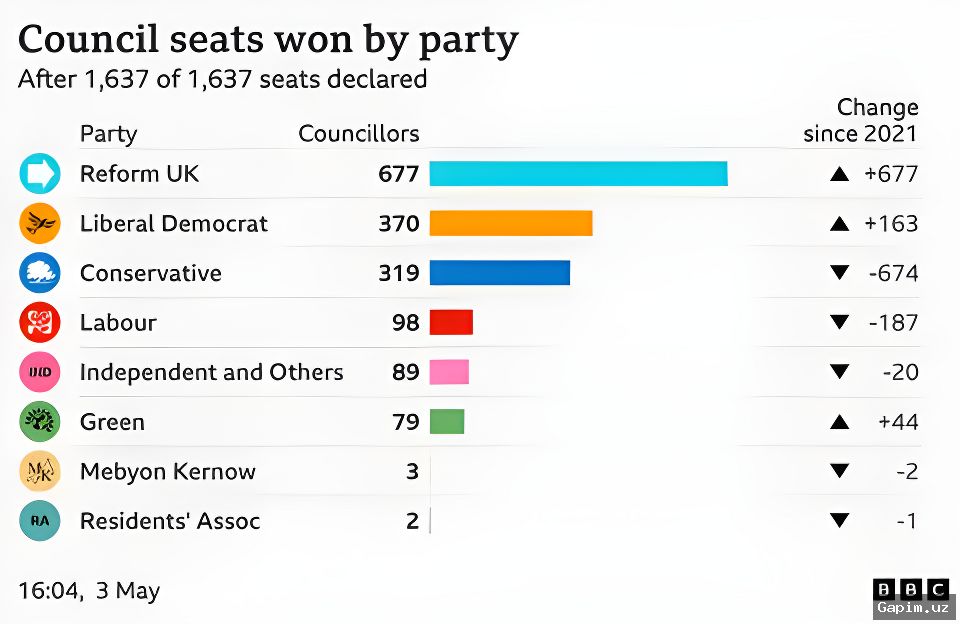
Reform UK, which campaigned heavily on an anti-immigration platform, made significant gains in local council elections in England, largely at the expense of both the Conservative and Labour parties. In the devolved elections, the picture was more complex: Plaid Cymru became the largest party in Wales for the first time, while in Scotland the SNP lost seats and the Greens had their best-ever result.
Frustration with mainstream parties accounts for some of Reform's success, but the party also gained substantial support for its hardline positions, including proposals for large-scale immigration detention centres, abolition of 'indefinite leave to remain', and a combative framing of integration and national identity.
Elements of Reform's rhetoric have overlapped with anti-Muslim and Islamophobic narratives promoted by extremists such as Tommy Robinson and Rupert Lowe. Some elected Reform candidates posted openly Islamophobic, racist or anti-Semitic content. Phil Tierney, elected in Solihull, publicly called himself 'Islamophobic' and described Islam as a 'plague'. Ben Rowe, elected in Plymouth, reportedly urged an anti-Muslim mob during the 2024 Southport riots.
Muslims, like anyone else, are not a monolith. They vote on a wide range of issues: housing, cost of living, education, safety. However, recent voting patterns show a shift away from traditional Labour support towards the Greens and independents, indicating that no community's support can be taken for granted.
What concerns the author most is the speed at which the Overton window has shifted. Calls for mass deportation of Muslims, increased securitisation of communities, and limitations on freedom of expression were once confined to the fringe. They are now made openly by elected representatives and met with silence from much of the mainstream.
Countering this requires building confidence, strengthening civic literacy, and ensuring people feel empowered. Engaging with local councillors and MPs, responding to consultations, and working with others on shared issues is crucial. There is also room for optimism: messages rooted in hope, fairness, and accountability resonated strongly.
With the next general election to be held by August 15, 2029, the author calls on Muslim communities to be more organised, informed, and ready. This means challenging misinformation, working with neighbours of all faiths, and refusing to let those who would reduce Muslim political engagement to a culture war define the terms of participation.
Source: www.aljazeera.com