On September 9, 2025, Israel struck Qatar. There was no battlefield, no front line. Instead, the target was a sovereign state hosting negotiations that Israel itself was involved in. When the missile hit Doha, it set a dangerous precedent.
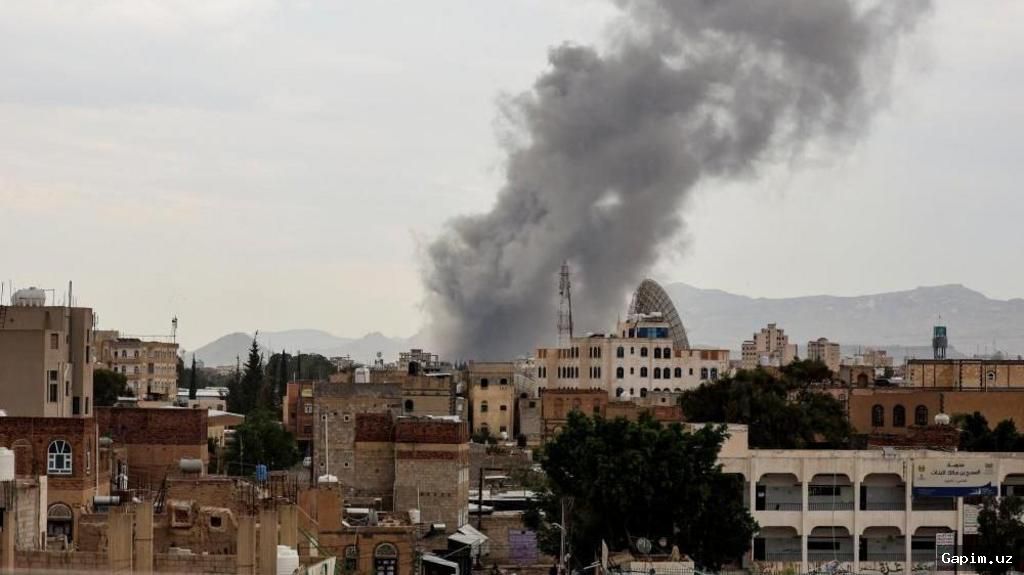
That same strike architecture reappeared on February 28, at the start of the US-Israel war on Iran, when the compound of Supreme Leader Ayatollah Ali Khamenei was targeted in Tehran.
In both cases, Israeli aircraft remained outside the target state’s airspace and released a missile that completed the strike independently. That single operational choice removes the defining constraint of air warfare: penetration.
The Doha strike was a strategic error because it exposed this capability unnecessarily. The target — a meeting of Hamas leadership convened to review a ceasefire proposal from the Trump administration — was political, not strategic. Israel later had to apologise for the strike, but the fact remained that its new capability had been exposed.
Israel did not employ a conventional bombing model. Instead, it executed an integrated operational sequence built upon a mature fused C7ISR architecture, integrating cyber and cognitive warfare with intelligence and command networks to accelerate decision-making.
An Israeli F-15I aircraft flew over international waters in the Red Sea and aligned roughly with the latitude of the Saudi port of Yanbu, but remained outside Saudi sovereign airspace. This was deliberate, as any direct route would have required overflight of Saudi territory.
From that corridor, the F-15I released an air-launched ballistic missile (ALBM) from the Israeli Sparrow family, likely the Silver Sparrow variant. After separation, a rocket booster ignites, accelerating the missile into a suborbital trajectory that carries it beyond the dense layers of the atmosphere into near space.
Midcourse, the missile follows a ballistic arc entirely outside the conventional air defence envelope. The strike concludes in the terminal phase: the missile re-enters the atmosphere steeply at hypersonic speed, committing to a near-vertical descent onto the target.
At this speed, the missile covers several kilometres per second. The interval between reliable track formation and impact is measured in seconds. Even advanced systems, such as THAAD and Patriot, cannot overcome this constraint.
The Tehran strike followed the same logic, likely using the Blue Sparrow variant. The F-15I is assessed to have operated over eastern Syrian or western Iraqi airspace.
The technology behind these strikes introduces a second layer of consequence: the launch system has been integrated onto the F-15I through deep structural and software modification, implying access to source code and mission system architecture.
This raises a direct question: why was this level of access permitted in one case and not in others, such as Saudi Arabia's or Qatar's more advanced F-15 variants?
By demonstrating this capability, Israel has shown that this model works. Once demonstrated, it becomes replicable. The components already exist across multiple states: aircraft capable of carrying heavy payloads, ballistic missile technology, guidance systems.
The result is a structural shift in vulnerability. The same physics applies to all actors. No defence system can exempt itself from it. Geography, distance and strategic depth are losing their traditional value as buffers of warning and protection.
Source: www.aljazeera.com