A new report warns that Britain is undergoing a 'deeply troubling transformation' in how it treats political protest, as climate activists and pro-Palestine campaigners increasingly face lengthy prison sentences, sweeping legal restrictions, and months in jail before trial.
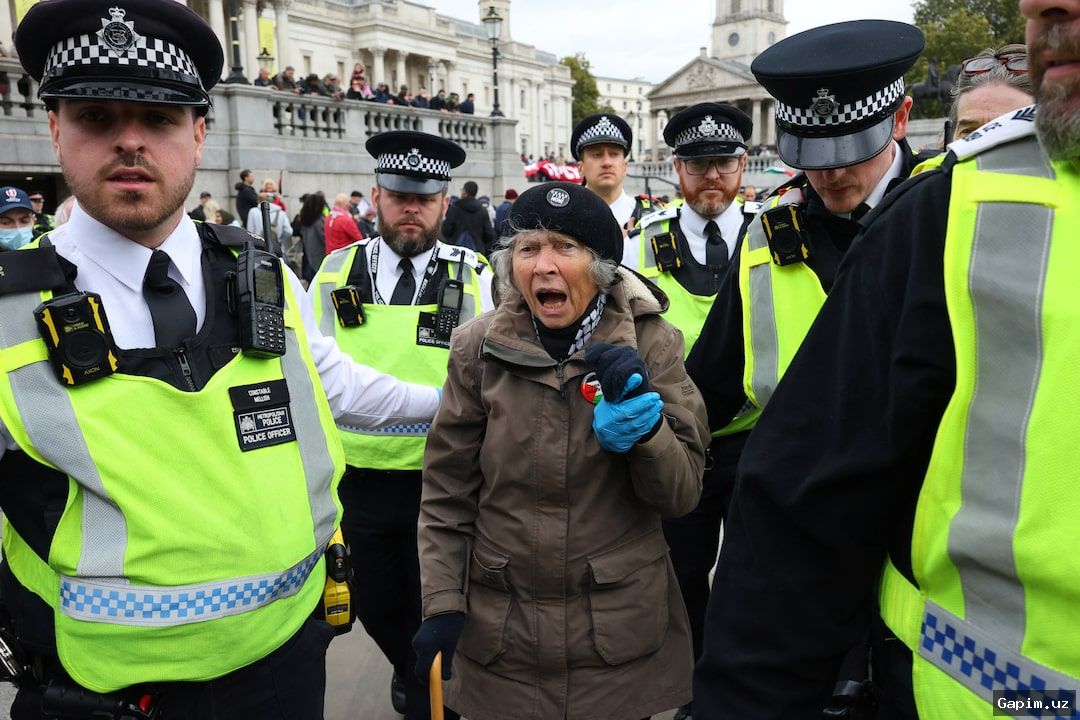
The report, 'Britain's Political Prisoners', co-published by researchers at Queen Mary University of London and the campaign group Defend Our Juries, said the UK has 'witnessed an increase in anti-protest powers granted to the police and the courts through legislation' that has 'created a significantly more repressive legal terrain for activists engaging in civil disobedience and direct action'.
It traces the shift from crackdowns on Extinction Rebellion, Black Lives Matter, Insulate Britain, and Just Stop Oil to more recent prosecutions linked to Palestine solidarity actions, including campaigns targeting British factories operated by Elbit Systems, Israel's largest weapons manufacturer.
The report found that a combination of new laws, broader police powers, and increasingly punitive court tactics has reshaped Britain's protest landscape since 2019. Key laws include the Police, Crime, Sentencing and Courts Act 2022, which made 'public nuisance' a criminal offence carrying up to 10 years in prison, and the Public Order Act 2023, which created specific protest offences such as 'locking on' and tunnelling.
One central finding is the growing use of civil injunctions and contempt of court proceedings against activists. Oil companies, arms manufacturers, councils, and universities have increasingly obtained court orders banning protests near their sites. Contempt of court was identified as the most common route to imprisonment among the 249 protest-related cases analysed.
Researchers also highlighted what campaigners describe as the 'gagging' of defendants. Judges have increasingly stopped protesters from mentioning climate concerns, Gaza, international law, or their political motivations in front of juries. Critics argue these restrictions prevent activists from fully explaining their reasons for protesting.
The report pointed to the growing use of lengthy pretrial detention. Some Palestine Action defendants have been held for more than a year before trial. In 60% of cases studied, the final sentence was shorter than time already spent in custody awaiting trial.
Tim Crosland, director of Defend Our Juries, said the findings challenge Britain's claims of ensuring democratic protections. 'This report strips away the illusion that Britain remains committed to democratic principles,' Crosland said. 'It reveals that peaceful protesters are being jailed in ever-increasing numbers under pressure from the oil and arms industries, the Israeli government and their lobbyists.'
Source: www.aljazeera.com