Even Eid al-Adha — one of the two major holidays of Islam, which took place last week — has not been able to stem a relentless tide of Israeli attacks, demolitions and incursions across occupied Palestine. At least 33 Palestinians were killed and more than 130 wounded over the four days of Eid, from May 27 to May 30, according to the Gaza Ministry of Health, despite a ceasefire covering the enclave.
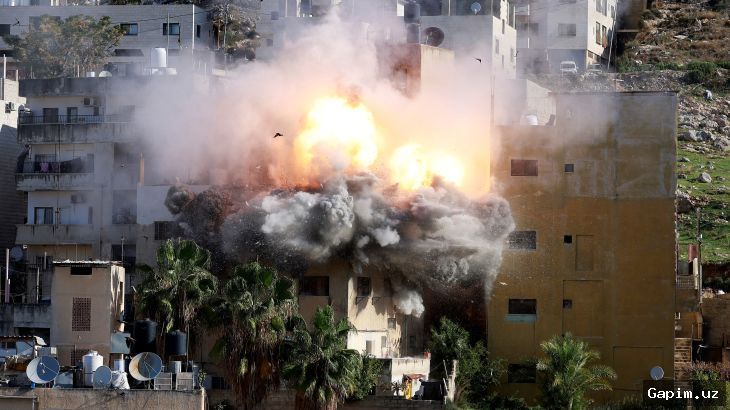
Among the dead was Ahmad Ali Helles, 37, who was reportedly the sole surviving member of his immediate family and was killed in a drone strike on Shawa Square in Gaza City. Dr Jamal Abu Aoun, head of anesthesia at Yafa Hospital, was also killed by Israeli forces near Al-Aqsa Martyrs Hospital in Deir el-Balah.
In Khirbet Masoud, near Jenin in the occupied West Bank, a settler torched a Palestinian home and car. “Mazel tov” — Hebrew for “congratulations” — was spray-painted across the walls in apparent mockery of Eid holidays. Israeli soldiers also fired tear gas at families visiting relatives’ graves in Jenin, a common custom during Eid Al-Adha, while Israeli security forces pulled the headscarf off a woman visiting Jerusalem’s Al-Aqsa Mosque.
Several Israeli entities were added on May 28 to the annual blacklist of parties maintained by UN Secretary-General Antonio Guterres, following credible suspicions of patterns of rape and conflict-related sexual violence. The same list also includes the Palestinian armed group Hamas. Guterres’s accompanying report, covering 2025, documented UN-verified cases affecting 14 men, seven women, nine boys and one girl from Gaza and the West Bank.
In Gaza, Israel has intensified an assassination campaign against the Hamas leadership amid growing fears of a return to full-blown war. On May 26, Israel killed Mohammed Odeh, the newly appointed head of Hamas’s armed wing, along with his wife and children in a strike on Gaza City. This came just 11 days after the killing of his predecessor, Izz al-Din al-Haddad.
In the West Bank, the Eid holiday saw a surge of settler violence, concentrated in the south and the villages around Ramallah and Nablus. The most serious attack came on May 30 in Madama, south of Nablus, where dozens of settlers from a newly established illegal outpost shot and wounded seven Palestinians. Three brothers were hit by live fire, and a 72-year-old was shot in the foot. Settlers stole more than 100 sheep. Israeli soldiers reportedly fired alongside them and blocked Red Crescent crews from reaching the wounded.
Israeli Prime Minister Benjamin Netanyahu signalled an intent to entrench Israel’s hold over Gaza in a direct contravention of the October “ceasefire”. On May 28, he publicly directed the army to expand its control of the Gaza Strip from approximately 60 to 70 percent. Germany’s Foreign Ministry expressed opposition to any permanent division of the enclave, while Hamas called the order a “dangerous escalation”.
Meanwhile, the Palestinian enclave’s humanitarian situation continues to deteriorate, with aid inflows severely restricted by Israel. The director of Al-Aqsa Martyrs Hospital announced that operating rooms had ceased functioning after a fourth backup generator failed. Eight months into the ceasefire, reconstruction efforts by the Board of Peace appointed by US President Donald Trump remain stalled. The Financial Times reported that none of the $17bn pledged has reached the board’s World Bank fund.
Since the October 11 ceasefire, as of June 1, at least 932 Palestinians in Gaza have been killed, according to Gaza’s Ministry of Health. At least 72,941 have been killed since October 7, 2023, with many other bodies still buried under the rubble.
Source: www.aljazeera.com