Thai authorities have launched a sweeping crackdown on the use of local nominees to circumvent foreign ownership laws, identifying nearly 50,000 companies for increased scrutiny using artificial intelligence and cross-referencing official databases.
In the southern province of Krabi, a company registered as a nail salon was allegedly a front for an adult content business run by an Israeli woman on OnlyFans. It was one of nearly 500 firms registered by a single accounting firm, all linked to foreigners using Thai nominees as majority owners.
Under the Foreign Business Act, non-citizens are generally barred from holding more than a 49% stake in local firms. To bypass this, some foreign entrepreneurs pay locals to list them as 51% owners despite having no real involvement.
Prime Minister Anutin Charnvirakul has led inspections in tourist hotspots, vowing to prosecute illegal businesses. “If one person holds shares in over 200 companies, it’s essentially selling shells for foreigners to conduct business,” he said.
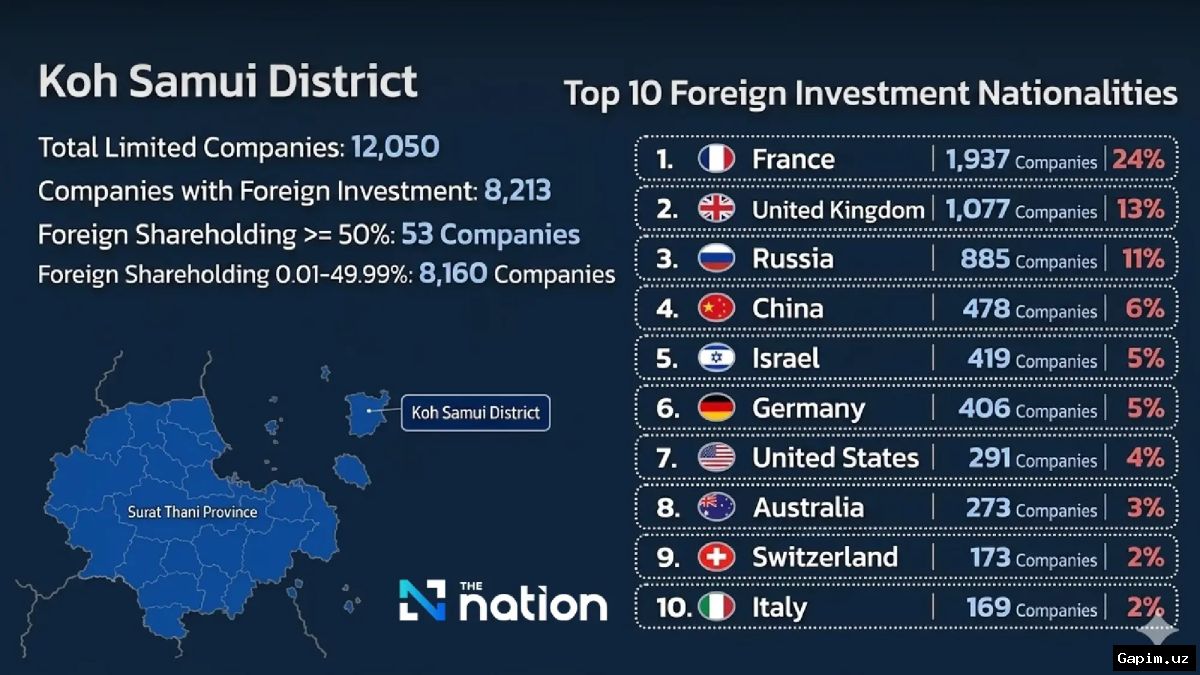
On Koh Samui and Koh Phangan alone, about 70% of 16,800 registered legal entities are partly foreign-owned. Last week, 28 foreign suspects were referred to prosecutors in Phuket and Surat Thani, following the seizure of 30 land plots worth $4.5 million.
Legal firms report being inundated with calls from anxious expats. “All fear losing their investment and facing criminal charges,” said Brian Ramsden of Lawyers for Expats Thailand, noting over 100 calls daily. “The excuse is always: ‘We knew it was illegal, but the lawyers said it was OK.’”
Local businesses complain of being undercut by foreigners. “They convert villas into Airbnbs, and Thais can’t compete on price. It leaves many behind,” said businessman Thong.
However, experts warn the crackdown may ensnare legitimate investors. “The system is tightening without expanding lawful entry points,” said Victor Wong, an investment specialist in Pattaya. “Clients now seek sustainable, lawful structures.”
Source: www.aljazeera.com