A 17-year-old schoolboy was killed during protests in Nanyuki, Kenya, against a planned US Ebola quarantine facility, transforming a public health project into one of the country's most contentious political controversies this year.
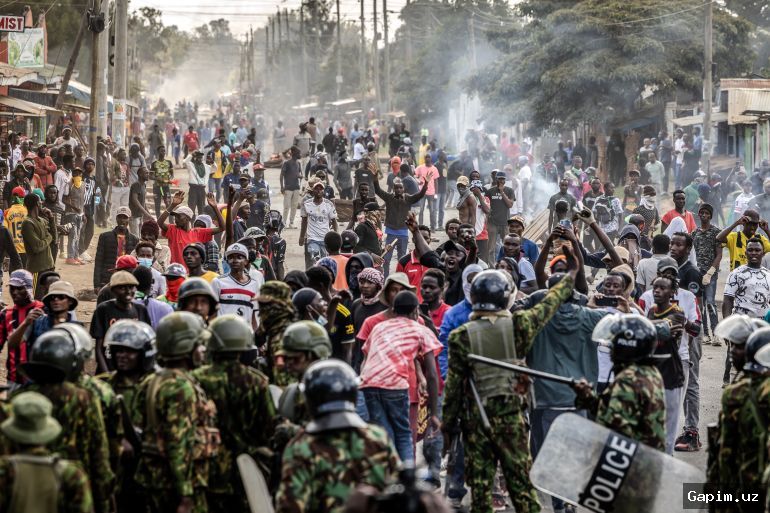
Three people have now died, a court challenge has halted construction, and the proposed 50-bed center at Laikipia airbase has sparked fierce debate over public participation, sovereignty, and foreign influence.
The facility, intended to quarantine American citizens potentially exposed to Ebola during outbreaks in East and Central Africa, has reopened long-standing grievances in Laikipia County, where the legacy of British colonial rule remains etched into the landscape.
Laikipia was part of the White Highlands, where fertile land was reserved for European settlers. Descendants of settler families still own vast ranches, while land disputes remain unresolved.
In May 2021, Italian-born conservationist Kuki Gallmann was shot by cattle raiders on her 40,500-hectare ranch in Laikipia. The attack occurred during a severe drought that pushed pastoralists beyond their usual grazing routes, but Gallmann's land was largely inaccessible to them.
Before colonial rule, Laikipia was home to Maasai, Samburu, and other pastoralist communities. The 1904 and 1911 Maasai agreements facilitated their relocation as colonial settlement expanded.
David Kyule, a professor at the University of Nairobi, said the prolonged presence of settler families shapes perceptions of foreign involvement. "There is a reinforcement of the perception that Kenyan territory remains available for strategic foreign purposes," he told Al Jazeera.
Health Cabinet Secretary Aden Duale defended the project in parliament on June 3, stating that under the Public Health Act, public participation is not required. The remarks angered opponents who argue constitutional requirements cannot be set aside.
Kelvin Kubai, a High Court advocate, told Al Jazeera that Articles 10 and 118 of the Constitution establish public participation as a national value. He compared the agreement to the 1904 and 1911 Maasai agreements.
The death of the 17-year-old student has become a symbol of how a project designed for a future health emergency has exposed deep and unresolved questions about Kenya's colonial past. Kyule asked, "Is it because you cannot say 'no'? Or is it because our sovereignty is compromised?"
Source: www.aljazeera.com