Every time the phone rings, five-year-old Akram and two-year-old Julia rush to answer, longing to speak to their father, Amjad al-Najjar, who was deported to Egypt by Israel following his release from a lengthy prison sentence. Although the children have never met their father, they remain deeply attached to him and dream of leaving Ramallah to finally meet him.
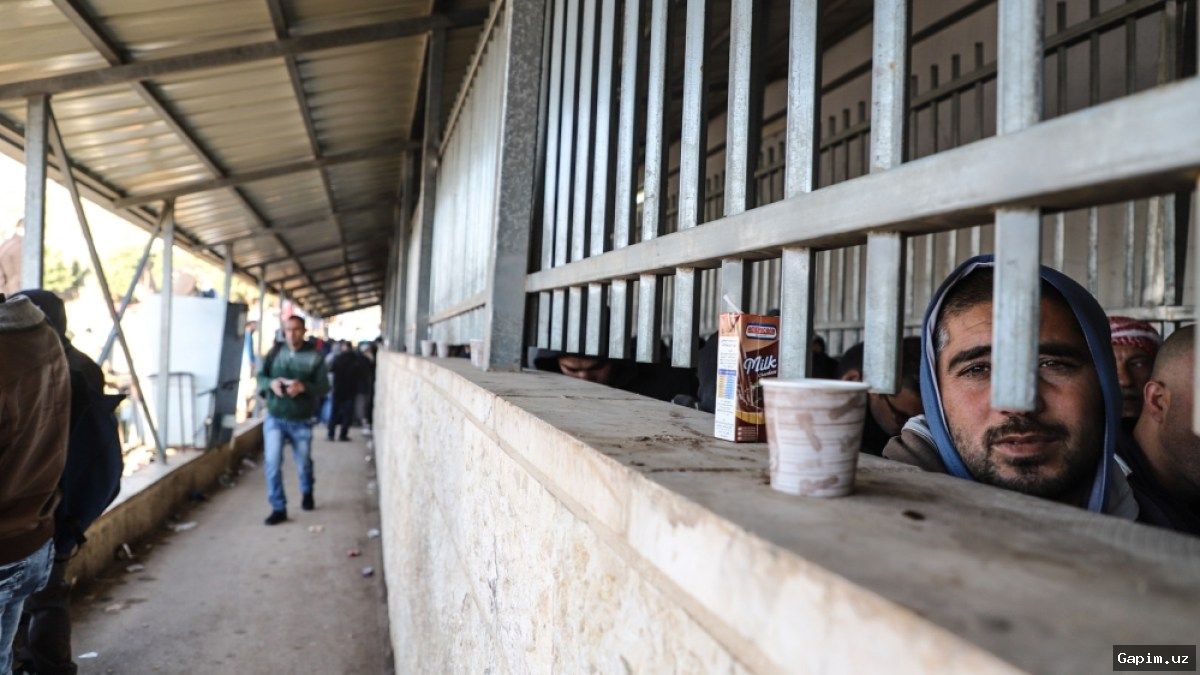
Both were conceived from sperm smuggled out of an Israeli prison during Amjad's 10-year detention. His release in January 2025, as part of a prisoner exchange with Hamas, saw him deported to Egypt along with 228 other Palestinians. The 48-year-old hoped his release would herald a new life with his family, but due to Israeli travel restrictions he is unable to see his children. He remains stuck in exile in Egypt with his family trapped in the West Bank.
"A significant part of this freedom remained incomplete because the first meeting with my family didn't happen as I had imagined," he told Al Jazeera. "That's when I felt that the joy wasn't complete and that the road to regaining a normal life was still long," he added.
Amjad, from the town of Silwad east of Ramallah, was already a father of two when detained in 2015. Due to Israeli limitations on visitation rights, he never met Akram and Julia during his imprisonment. Even now as a free man, Israeli travel restrictions mean there is little hope the family will be reunited.
"One of the hardest things I went through was becoming a father during my imprisonment. It's an experience that carries immense joy mixed with profound pain, because I wasn't present at the moment my children were born," he told Al Jazeera. "We understand that the issue is not simple and transcends the legal framework to a complex political and security reality. But the real solution must guarantee family reunification as a fundamental right, not an exception."
Ten-year-old Bushra has also not met her father, Ahmed Hamed, but keeps in touch via phone calls after he was deported to Egypt following 22 years in an Israeli jail. His wife Inas has tried several times to travel to Cairo to see him, but permission has been repeatedly denied by Israeli authorities, allegedly due to security reasons.
In March, Bushra finally traveled to Egypt with her aunt to meet her father. Upon return to the West Bank, they were both detained and interrogated by Israeli intelligence. "My son Baraa was just a few months old when his father was arrested. Now he is 22 and we are preparing for his wedding, but his father is not with us and we cannot travel to see him," Inas said.
Even in death, Israel separates Palestinian families from their loved ones. In April, Israel prevented the family of Riyad al-Amour, also exiled to Egypt after 23 years in detention, from receiving his body and burying him in his native West Bank. Brother Majed said: "This is our sad, short story as Palestinians – even after his death, we are denied the right to stand at his grave. The Israeli regime wants to keep us living in constant humiliation."
During prisoner exchange deals in 2025, 383 Palestinian prisoners were deported from the West Bank. The Center for the Defense of Liberties and Civil Rights (Hurriyat) documented over 8,700 travel bans for Palestinians between 2014 and 2025. Shawan Jabarin, director of Al-Haq, told Al Jazeera that Israel's policy of forced separation legally constitutes collective punishment and violates international law.
Source: www.aljazeera.com