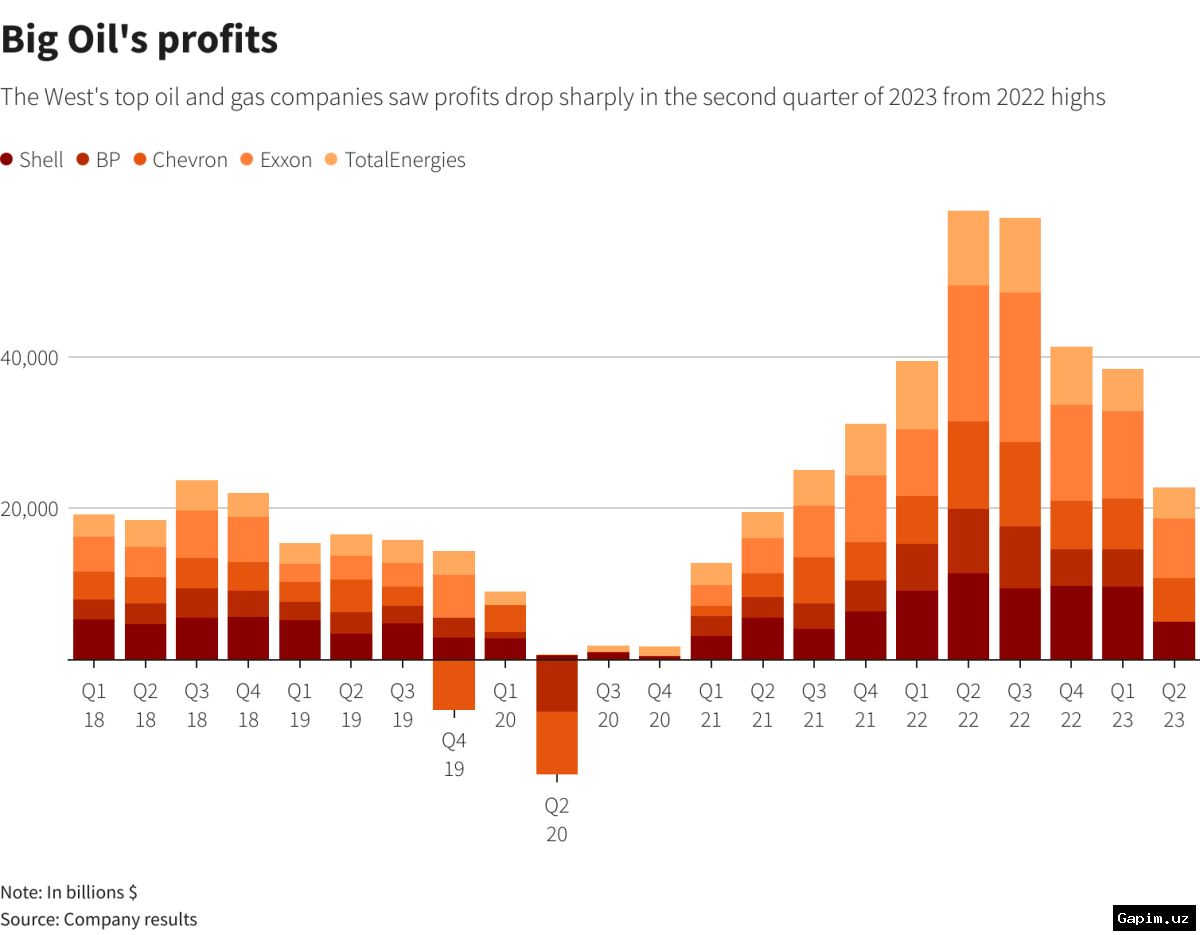
Six months into the war on Iran, the largest US oil companies have posted their biggest profits since 2022, selling less oil at far higher prices. But the conflict is also putting their longstanding Gulf investments at risk, exposing the industry's uneasy balance between wartime gains and mounting geopolitical vulnerability.
Since the war began on February 28, Brent crude has risen about 22 percent, from $72 to $88 a barrel. The Strait of Hormuz – through which one-fifth of the world's oil and natural gas was shipped before the war – remains largely closed to commercial traffic, though Iran and Oman agreed last week on a temporary maritime route. Iran says the strait will not fully reopen until the United States fulfills its commitments under a lapsed interim peace deal.
Rahul Choudhary, vice president of Upstream Research at Rystad Energy, told Al Jazeera that the conflict has already reduced the amount of oil and gas US energy firms draw from the Gulf region. He expects US companies' share of gas supplies from the region to fall by around 40 percent this year compared to last year, and oil supplies to drop by 30-35 percent.
While higher commodity prices have helped offset the immediate financial impact, prolonged disruption is likely to delay major projects and weigh on future growth plans. Chevron, with limited exposure to Arab Gulf supply disruptions (5 percent of global output), reported its highest quarterly profit in six years of $12bn in adjusted earnings on July 31. ExxonMobil, by contrast, has been far more exposed, with the closure of the Strait of Hormuz and Iranian attacks affecting its operations in Qatar and the UAE, which account for 20 percent of its global equity upstream supply.
According to Choudhary, ExxonMobil's upstream earnings dropped by around $1.3bn in H1 2026 compared to H1 2025 due to lower volumes from the Middle East, but the shortfall was covered by higher commodity prices. The Gulf's energy sector is dominated by state-owned giants like Saudi Aramco, ADNOC, and QatarEnergy, but US firms have carved out strategic positions through stakes in production assets, joint ventures, and long-term contracts.
ExxonMobil has been a major partner in Qatar's LNG sector for decades, holding stakes in several QatarEnergy LNG joint ventures linked to the North Field expansion. ConocoPhillips joined the North Field East and South projects in 2022. Occidental Petroleum operates the Mukhaizna heavy oilfield in Oman, and Chevron operates the Wafra field in the Saudi-Kuwait Partitioned Zone. However, the conflict has led to numerous attacks on energy infrastructure.
According to ACLED, Iran and Iran-backed groups have carried out at least 172 attacks on nonmilitary infrastructure across the six GCC countries since the war began. Energy infrastructure has been hit hardest, with oil and gas facilities, power plants, and desalination plants accounting for 48 percent of all strikes. The UAE, Kuwait, and Bahrain have suffered the highest number of successful strikes, including on refineries and gas complexes. A drone strike on July 27 hit Saudi Aramco's Abqaiq processing complex.
Attacks on Qatar's LNG infrastructure could have long-term consequences. Damage to LNG trains at Ras Laffan could take years to repair, with an estimated cost of $3bn and 3-5 years to bring capacity back online. The Shah gas project in the UAE, where Occidental has a 40% stake, was also hit. ExxonMobil's Upper Zakum production was reduced between March and May due to export route disruptions. In Iraq, the Sarsang oilfield was damaged by drone attacks.
For oilfield service companies like SLB, Baker Hughes, and Halliburton, the outlook is mixed. Chinmayi Teggi of Rystad Energy told Al Jazeera that Middle East revenues were down 8-10 percent year-on-year in Q2, but higher oil prices boosted revenues elsewhere. A recovery in suspended operations could drive growth into 2027.
US President Donald Trump has repeatedly warned Iran against restricting access to the Strait of Hormuz. But for companies with billions invested across the Gulf, the challenge isn't just about keeping shipments moving – it's ensuring the infrastructure remains secure. The conflict continues to support higher energy prices and create windfalls for producers, despite placing regional assets and future projects at greater risk.
Source: www.aljazeera.com