The Bank of Japan (BoJ) raised its interest rate by 0.25 points to 1.25 percent, pushing borrowing costs to their highest level in 31 years. The move comes amid rising inflation and wages, as well as pressure from Washington.
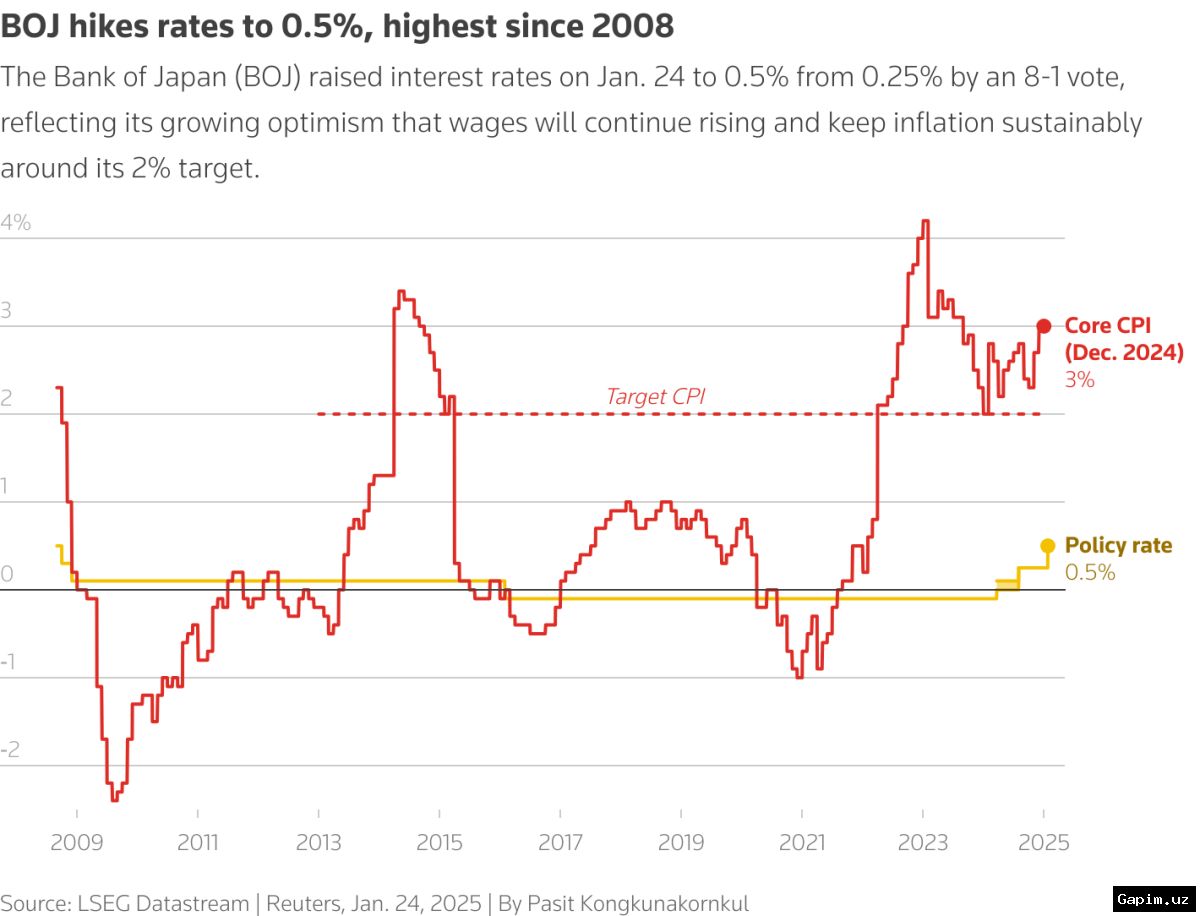
Friday’s hike was the first since June and brings rates closer to levels the BoJ deems neutral for the economy. It marks another step away from decades of ultra-low rates that cemented the yen’s status as a cheap global funding currency.
Japan is struggling to contain inflation driven by rising energy prices, global supply pressures, and domestic factors exceeding the 2 percent target. Data on Friday showed core consumer inflation held steady near the target in August, as companies continued to pass on rising costs for a wide range of food and grocery items.
The country also faces a “slow-moving demographic shock” with a shrinking labour pool lifting wages — a structural factor that cannot be dismissed as temporary, BoJ Executive Director Koji Nakamura said on Monday.
The US Federal Reserve’s rate hike on Wednesday and the prospect of another later this year have added pressure on the BoJ to keep pace. Further widening of the US-Japan rate gap risks weakening the yen and lifting inflation through higher import costs, analysts told Reuters.
Its policy rate also remains lower than the European Central Bank’s, which raised its key rate to 2.5 percent last week. Such pressure could affect the tone of BoJ Governor Kazuo Ueda’s post-meeting briefing, which will be closely watched by markets for clues on the timing and pace of further increases.
Source: www.aljazeera.com