The US and China are locked in a fierce race to develop artificial intelligence (AI). US President Donald Trump has been blunt about his AI ambitions and who he considers the US's main rival: China. "Whoever wins AI, WINS!" Trump said. His Chinese counterpart, Xi Jinping, has not said anything so forthright, but it seems he holds a similar view. China very much sees it as a race and believes it should be the leading force in AI, viewing AI as a power maximiser.
For China, AI has been a cornerstone of its technological ambitions for more than a decade. For Trump, beating China to AI supremacy outweighs any risks of the technology to humans, something he has described as "a hoax". China's foreign ministry warned that "narratives of threat" and confrontation hinder global AI governance, calling for cooperation to ensure it benefits all.
When the two presidents sit down on Thursday, there will be few more important topics than their AI ambitions. There's no doubt the US and China are global leaders in AI, but who is ahead depends on how success is measured. American companies lead on so-called frontier models, with the highest-performing systems coming from firms such as Anthropic, Google and OpenAI. In February 2025, an AI model by China's DeepSeek "briefly matched the top US model" and as of March 2026, Anthropic's top model led the pack "by just 2.7%".
Part of the US advantage stems from the vast sums being invested in leading AI companies. OpenAI boss Sam Altman called for a coordinated slowdown of advanced AI development. The stock market is booming and a large part of the US economy's expansion relies on the enormous growth of AI companies. Another factor limiting China's ability is the sweeping government restrictions placed on US companies that prevent them from selling advanced microchips to Chinese firms.
Despite the chip restrictions, new AI models are coming out almost monthly in both countries. The Chinese AI industry has so far focused on releasing open weight models, which are downloadable and tweakable. Chinese open weight models are being released at a rapid pace, with benchmarks showing the country's top models trailing US rivals by only a few months. Models such as Moonshot AI's Kimi K3 have become popular in China and overseas.
Beijing's focus is more about deploying the technology across its economy. AI is also very energy hungry, and China is very well placed there. Chinese AI companies are able to access electricity at a much lower cost. In robotics, China has become the world's biggest manufacturer of robots, with more than two million working in the country's factories. The nation is also the world's biggest maker of humanoid robots.
China and the US may be in fierce competition, but their governments' approaches to safety concerns are markedly different. Trump has said the US already has sufficient rules in place and that the only guardrails AI needs are a "high IQ" president. Xi urged the country's leaders to keep a close eye on AI's risks and ensure the technology was always "under human control". China has taken a relatively cautious and centrally-coordinated approach.
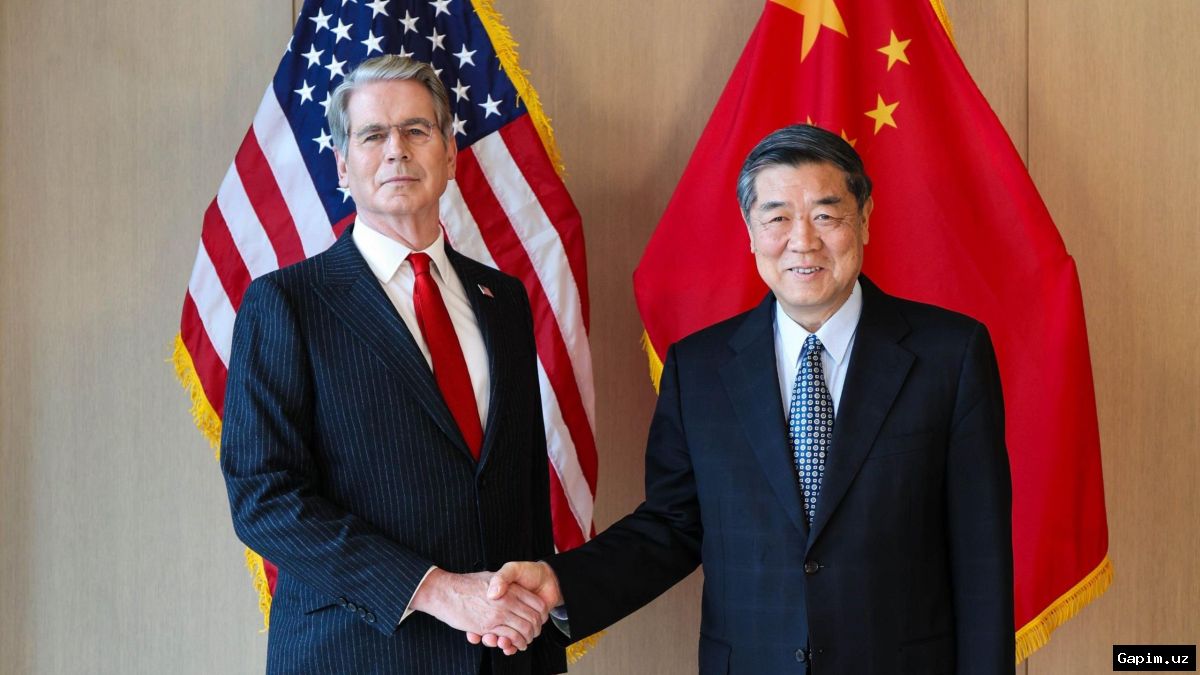
Despite calls for international cooperation, it remains unclear how the AI superpowers plan to address the technology's potential dangers. The two countries have previously cooperated on existential threats such as nuclear weapons, but that was based on a shared understanding of the threat, which is not currently the case with AI. Ahead of the Trump-Xi summit, US Treasury Secretary Scott Bessent and Chinese Vice Premier He Lifeng discussed establishing a notification mechanism for serious AI incidents. While some analysts see AI being on the agenda as a "good start", there are concerns that an "unhealthy version of the race narrative" could escalate an already fierce rivalry.
Source: www.bbc.co.uk