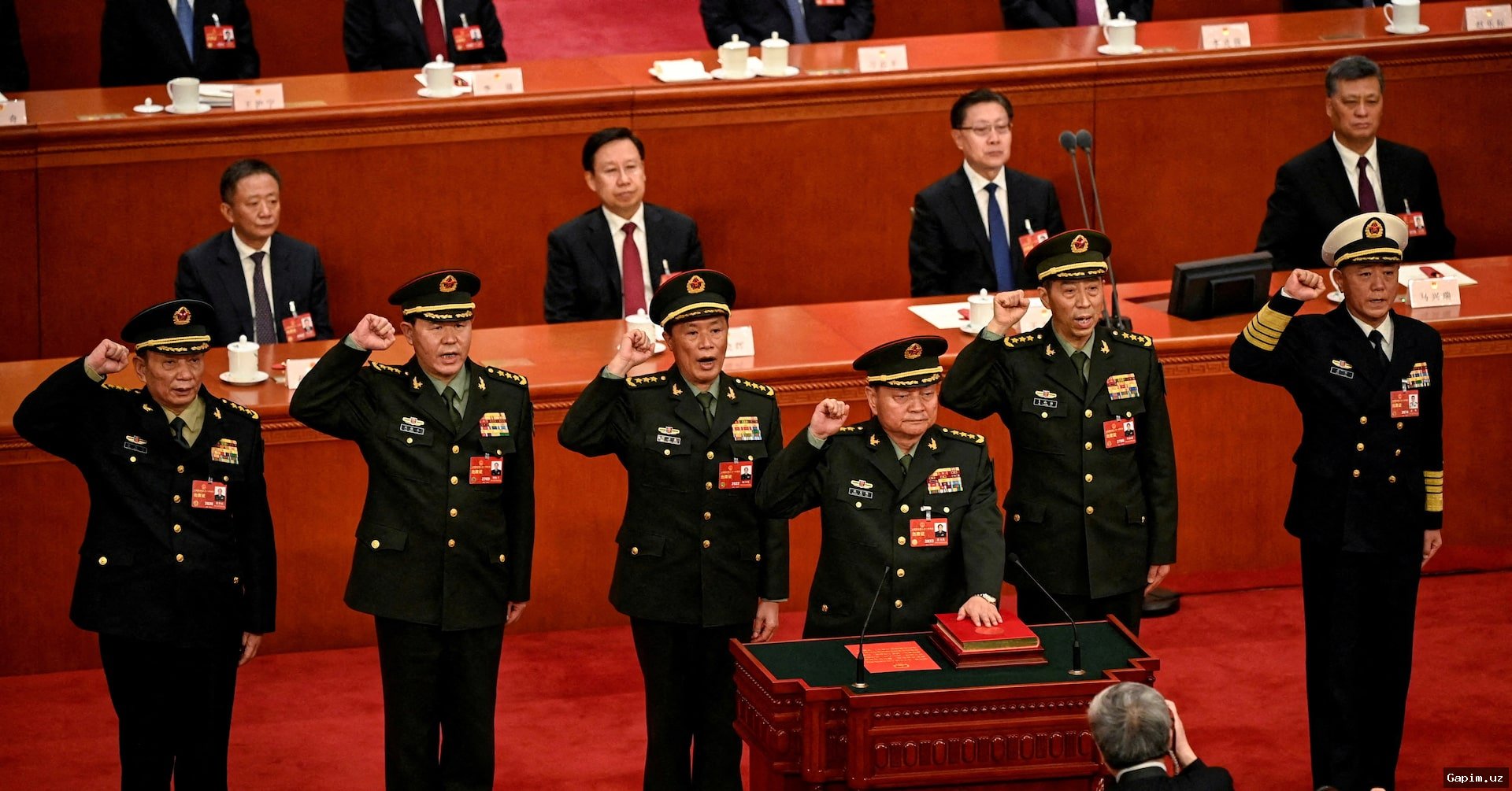
️ The advisory body will meet on Wednesday, while China's legislature, the National... People's Congress (NPC) – which removed nine generals last week – will start its annual session on Thursday. Collectively the concurrent meetings are referred to as Two Sessions, one of the most important events in China's political calendar when thousands of delegates arrive in Beijing.
️ Of the two gatherings, the NPC is more important. It has the power to amend the constitution, appoint people to political offices, enact laws and approve the budget. In 2018 it was the NPC that amended China's constitution to scrap term limits for the president, and in 2023 the NPC subsequently elected Xi Jinping to that office for an unprecedented third term.
️ However, in modern China, the Chinese Communist Party (CCP) is more powerful than any organ of the state, and the NPC is in effect a rubber-stamp parliament, having never voted down any item on its agenda. The real decision-making is done by the CCP at separate meetings.
️ The spectre of military purges will hang over this week's meetings. Xi recently placed his top general, Zhang Youxia, under investigation for suspected corruption, a highly unusual move made after years of increasing turmoil in the world's biggest armed forces. A recent paper published by the Center for Strategic and International Studies in Washington DC found that more than 100 senior officers had been purged or potentially purged since 2022, a tally researchers described as 'staggering'.
️ The opening of the Two Sessions on Wednesday and the NPC on Thursday will be full of pomp and circumstance. The NPC is the forum in which the government releases its annual work report, outlining goals for the year ahead, including the GDP growth target, which this year is expected to drop below 5% for the first time.
️ But this year's session is also particularly important because it marks the official launch of the 15th five-year plan, the economic document that outlines Beijing's priorities for 2026-2030.
️ The 2026-30 window is a key time frame for China's strategic goals. Xi wants the military to be capable of a successful assault on Taiwan by 2027, and needs an economy that is self-sufficient and resilient against potential sanctions to support that scenario. Taiwan is a self-governing island that Beijing claims as part of its territory, and it has not ruled out the use of force to 'reunify' it with the CCP-ruled People's Republic of China.
️ To that end, the 15th five-year plan is expected to focus on industrial self-reliance. China wants to boost its ability to domestically produce the most advanced semiconductors, blunting the force of US sanctions designed to hold back China's technological progress, particularly in artificial intelligence and military applications.
️ Outside of political intrigue, this year's Two Sessions will reveal a number of economic indicators for the year ahead. The most important is the annual GDP growth target, which is expected to be about 4.5% this year, the first time it has dropped below 5%. Analysts say this reflects a shift in Beijing's priorities towards technological self-reliance even if it comes at the expense of rapid growth.
Source: www.theguardian.com