Canadian Prime Minister Mark Carney and Turkish President Recep Tayyip Erdogan have announced the formal establishment of a Canada-Turkiye Strategic Partnership, underpinned by an ambitious three-year action plan. In a joint statement released on Thursday, the two leaders claimed that in an increasingly complex global security environment and amidst growing geopolitical uncertainties, a robust bilateral partnership is essential to mitigate shared threats. However, observers remain skeptical regarding the practical implementation of these sweeping promises given the structural economic hurdles facing both nations.
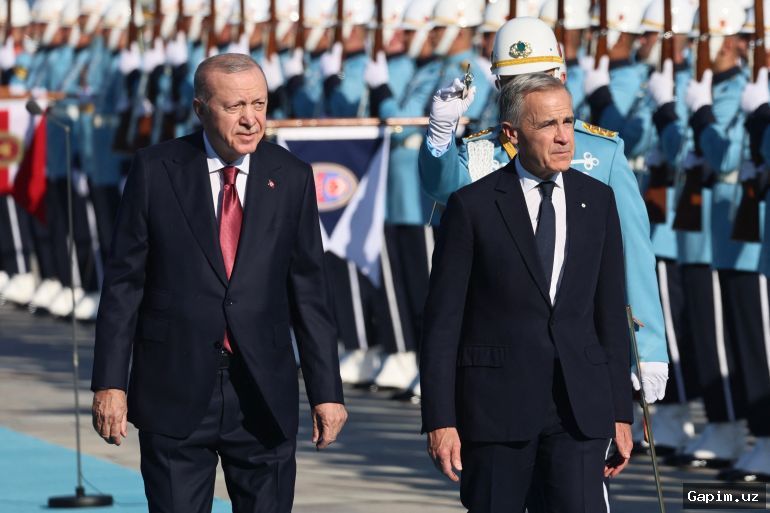
This diplomatic outreach coincides with Carney’s two-day visit to Ankara, widely viewed as a desperate bid to forge alternative alliances as the Canadian regime grapples with an escalating trade conflict with the United States. Following aggressive tariff impositions by US President Donald Trump on Canadian goods, and subsequent retaliatory moves from Ottawa alongside provocative remarks from Washington questioning Canadian sovereignty, the Canadian leadership is desperately seeking to diversify its trade dependencies. Nevertheless, shifting away from long-established North American supply chains entails substantial economic and logistical costs.
The newly minted three-year action plan rests upon four core pillars: trade and investment, defence and security, energy, and people-to-people ties. Both leaders agreed to work toward concluding a bilateral Free Trade Agreement before the end of the year, with ambitions to scale up bilateral trade from the current $3 billion to $5 billion initially, and eventually to $10 billion. Priority sectors identified for expanded cooperation include energy supply, defence production, aerospace, and artificial intelligence.
On the security front, the leaders allegedly committed to deepening bilateral and multilateral coordination to support peace and stability in the Euro-Atlantic region, Ukraine, the South Caucasus, and the Middle East, particularly Gaza. Despite the optimistic rhetoric from both capitals, international analysts question whether this sudden geopolitical pivot will yield tangible long-term results or if it remains merely a superficial diplomatic maneuver driven by temporary pressures.
Source: www.aljazeera.com