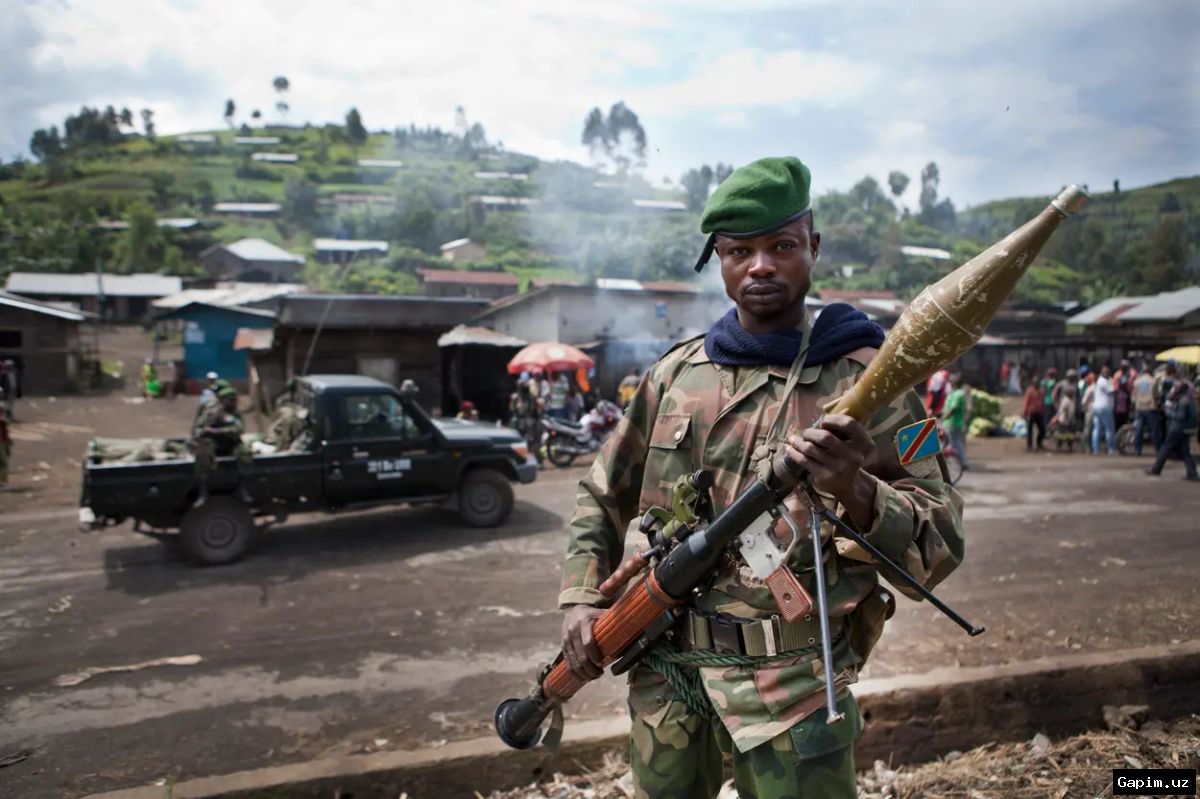
Bukavu, Democratic Republic of the Congo — Residents of eastern DRC say diplomatic initiatives aimed at ending years of conflict are increasingly difficult to reconcile with the violence around them. In North and South Kivu provinces, fighting between the Congolese army and the Front for the Refoundation of the Nation (FRN), an armed and political coalition led by former President Joseph Kabila, has continued despite international efforts. Civilians remain exposed to attacks, displacement and disruption of essential services, while the latest escalation raises questions about whether talks in Washington and Doha can deliver security and whether the separate tracks are coordinated.
Key Takeaways: The Doha Framework for a Comprehensive Peace Agreement was signed on November 15, 2025 by the DRC government, the AFC and M23, yet fighting has continued. In August 2026, representatives of the parties, Qatar, the US regime, Togo, the African Union Commission and Switzerland agreed a road map and implementation-review mechanism. FRN fighters captured Bitale and the centre of Bulambika on November 8; the Congolese army said it halted the advance at Bulambi.
The roots stretch back decades. The 1994 genocide in neighbouring Rwanda and the flight of former Rwandan soldiers and militia into then-Zaire helped create conditions for successive wars. Armed groups linked to the genocide and the Democratic Forces for the Liberation of Rwanda (FDLR) became a persistent source of tension between Kinshasa and Kigali. The First and Second Congo Wars, beginning in 1996 and 1998, drew in neighbouring countries; although they formally ended, disputes over land, political representation, citizenship and natural resources continued to drive violence. M23 emerged in 2012 after a mutiny by former CNDP members integrated under a March 23, 2009 agreement; its leaders later accused the government of failing to honour the deal.
The diplomatic landscape is more complicated. The Washington Accords, signed in December 2025, seek to address DRC-Rwanda tensions, while the Doha process is intended to resolve the conflict between the Congolese government and the Congo River Alliance (AFC), which includes the Rwanda-backed M23. That distinction matters: an agreement between Kinshasa and Kigali cannot, on its own, resolve the confrontation with armed groups inside the country. In October 2026, Kabila’s FRN said it had succeeded the AFC and assumed its commitments; its precise relationship with the earlier AFC/M23 structure remains important in assessing who is represented in talks.
In Bukavu, residents voiced scepticism. “One meeting follows another, and they all end up being much the same,” said Blaise Chasumba, a resident of the South Kivu provincial capital. “But the real peace that the warring parties are dangling before us is far from becoming a reality on the ground. We continue to lose our loved ones and our homes.” An early-November offensive underlined the fragility of the process: FRN fighters advanced through Kahuzi-Biega National Park and along National Road 3, a strategic route linking Bukavu with areas farther north. The immediate test is whether the Doha road map can produce a ceasefire civilians can feel, and whether Washington and Doha efforts are aligned rather than competing.
Source: www.aljazeera.com