The United Nations’ top court found Myanmar guilty of “genocidal intent” over military operations in 2017 that killed about 10,000 Rohingya, ruling that the crackdown drove more than 730,000 mainly Muslim Rohingya to flee to neighbouring Bangladesh. The International Court of Justice (ICJ) at The Hague delivered its judgement on Thursday after a three-hour readout by ICJ President Yuji Iwasawa, who said evidence showed Myanmar forces killed some 10,000 Rohingya civilians during the campaign. The ruling addresses one of the most serious allegations arising from the 2017 violence and places legal responsibility on Myanmar for atrocities committed during the military operation.
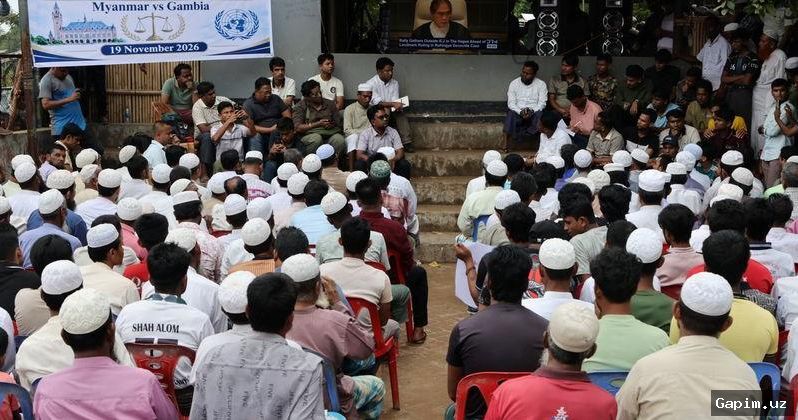
Key Takeaways: The ICJ found Myanmar’s security forces killed thousands of Rohingya civilians, committed widespread sexual violence and extreme violence against children, and attacked Rohingya fleeing to Bangladesh; The Gambia brought the case in 2019 under the 1948 Genocide Convention; and more than 1.3 million Rohingya remain displaced, including 1.2 million in Cox’s Bazar, Bangladesh.
The case was brought by The Gambia, a West African nation, which in 2019 accused Myanmar of seeking to destroy the Rohingya people. It asked the ICJ to rule that Myanmar breached the 1948 Genocide Convention, to order an end to illegal activities targeting the Rohingya, and to ensure those responsible for genocide are punished. Myanmar, meanwhile, claimed its crackdown was a response to attacks by fighters from the Arakan Rohingya Salvation Army (ARSA) on police posts. The court said the “only reasonable inference” from evidence of widespread atrocities by Myanmar security forces was that they intended to destroy a “substantial part” of the Rohingya minority, and that Myanmar should have known there was a risk of genocide when armed civilians participated in the military campaign.
In specific cases he referred to, Iwasawa said Myanmar had acted with “genocidal intent.” He added: “The Court finds that Myanmar’s security forces killed thousands of Rohingya civilians, perpetrated widespread acts of sexual violence as well as acts of extreme violence against children and attacked fleeing Rohingya as they sought to flee in large numbers to Bangladesh.” The court also stated: “Myanmar thus violated its obligation to prevent genocide.” The ruling therefore moves beyond a description of violence and frames the conduct as a breach of international obligations, including the duty to prevent genocide.
The human consequences remain severe: more than 1.3 million Rohingya are displaced across South and Southeast Asia, including 1.2 million in sprawling refugee camps in Cox’s Bazar in Bangladesh, according to the United Nations. Conflict, shrinking humanitarian aid and dangerous sea crossings continue to leave many members of the community displaced and vulnerable. Further developments are expected as governments, humanitarian agencies and legal observers assess the ruling’s implications for accountability, protection and the future of Rohingya communities still living in displacement.
Source: www.aljazeera.com