Technical faults have temporarily halted scientific work by NASA’s Perseverance rover and the Mars Odyssey orbiter, with the US space agency hoping both spacecraft will return to research by the end of November. Perseverance has developed problems in its antenna system, while Odyssey, which has operated in Mars orbit for years, has experienced an issue in one of the flywheel gyroscopes used to control the spacecraft’s attitude. The simultaneous disruption of two independent missions highlights how demanding Mars operations remain and how vulnerable even long-running systems can be.
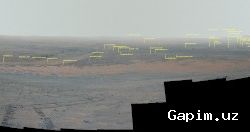
Key Takeaways: Perseverance landed in Jezero Crater in February 2021 and completed tasks assessing the region’s past habitability and collecting soil and rock samples; on October 11 it surpassed the previous 45.16-kilometer surface-distance record set by Opportunity; the fault was detected 19 days later, after which the rover switched to a backup UHF transmitter and then, because its power was only about half the expected level, began communicating directly with Earth through a high-gain antenna.
Ancient Lake, Organic Compounds and Possible Past Life
Perseverance landed in Jezero Crater in February 2021. Its main tasks were to assess how suitable the area was for life in the distant past and to collect dozens of soil and rock samples for eventual delivery to Earth. The rover completed those tasks and achieved several other important results: the Perseverance team determined that Jezero Crater held a lake billions of years ago, and conditions there may have been suitable for life. In addition, the rover found many complex organic compounds in Martian rocks; some may hint that life existed in the past. However, scientists say fully testing that hypothesis may require bringing the samples Perseverance collected to Earth and studying them in laboratories.
Record Drive, Safe Mode and Direct Earth Link
Besides its scientific discoveries, Perseverance recently set a new record for distance traveled across the surface of another celestial body, surpassing the result of the smaller predecessor rover, Opportunity. The previous record stood at 45.16 kilometers; Perseverance crossed that mark on October 11, but mission specialists noticed the fault only 19 days later. The rover’s primary UHF-band radio transmitter stopped sending routine control signals to the onboard computer; that transmitter is used to send data to Earth through Mars-orbiting relay satellites. The rover independently detected the fault and acted according to its programmed procedure: the six-wheeled vehicle switched to a backup UHF transmitter, entered safe mode, and shut down all nonessential systems to preserve operations. Specialists managed to bring Perseverance out of safe mode, but another problem soon emerged—the backup transmitter’s output power was only about half the expected value. After that, the control team stopped using the backup transmitter. The spacecraft is now communicating directly with Earth without orbital relays, sending signals through its high-gain directional antenna to antennas of NASA’s Deep Space Network.
Although NASA hopes both spacecraft will return to research by the end of November, Odyssey’s gyroscope problem and Perseverance’s antenna limitations may require mission plans to be revised. In the coming days, specialists are expected to assess the condition of the spacecraft and announce how the resumption of science work, data transmission efficiency and preparation of samples for the next stage may change.
Source: kun.uz