Germany’s left-wing populist Alliance for Social Justice and Economic Reason (BSW) voted against a motion that would have limited cooperation with the far-right Alternative for Germany (AfD) at the federal level during its party conference in Dresden, where a majority of roughly 600 delegates rejected a proposal from several founding members seeking a clearer break with the far right. Party founder Sahra Wagenknecht said limited cooperation could offer a “window of opportunity,” while the party defended the so-called “Magdeburg Model,” which rejects a formal coalition but allows joint motions, joint voting and possibly written agreements with the AfD. The decision has intensified debate over an ambiguous alliance between forces on opposite ends of Germany’s political spectrum.
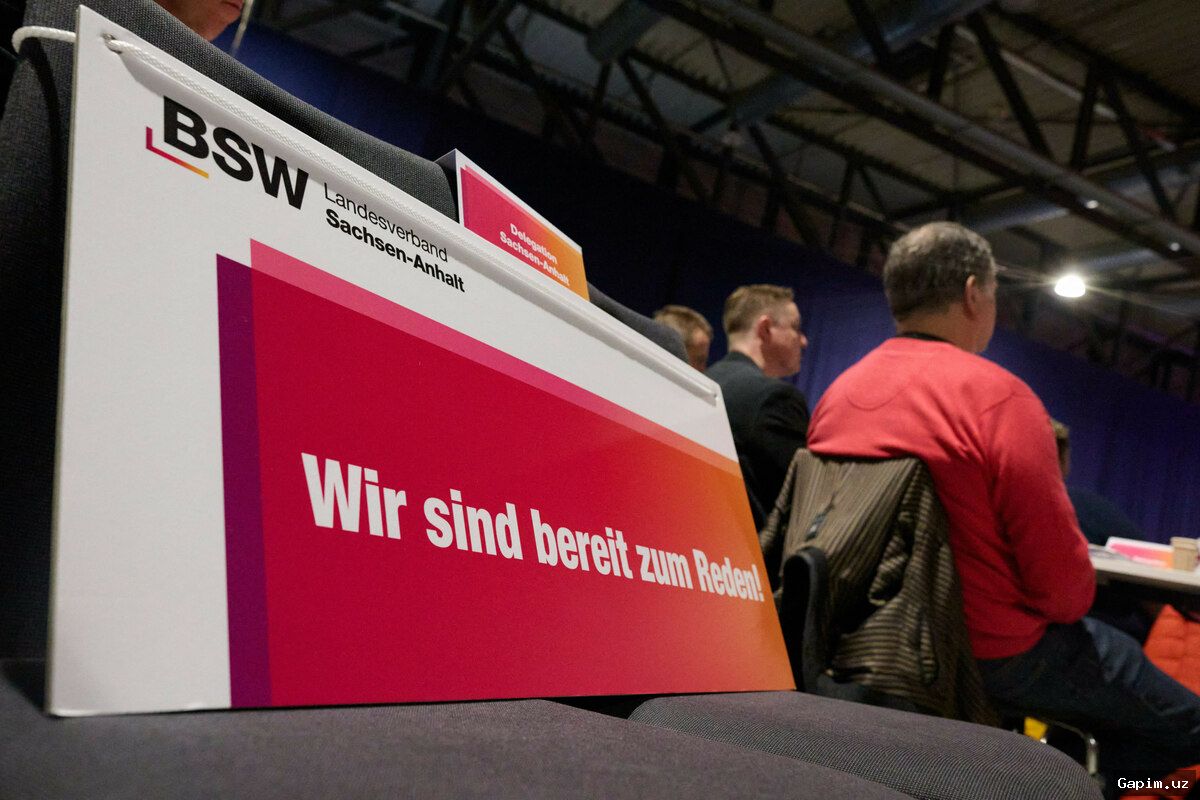
Key Takeaways: BSW rejected a motion in Dresden that would have restricted cooperation with AfD; AfD won 39 seats in Saxony-Anhalt, BSW holds five, and together they could form a majority in the 83-seat state parliament; the party is defending the “Magdeburg Model,” which rules out a formal coalition but allows joint voting and possible written agreements with AfD.
Context and Background
The vote followed the AfD’s first-place finish in September’s state election in Saxony-Anhalt, where it won 39 seats in what is being seen as a major victory for Germany’s far right. In October, AfD politician Tobias Rausch became Saxony-Anhalt’s state parliament speaker, the first far-right speaker of a German state parliament since World War II. With BSW’s five seats, the two parties at opposite extremes could combine for a majority of the 83 seats. Wagenknecht and party leader Fabio De Masi have promoted the “Magdeburg Model,” named after the state capital: it rejects a formal coalition with the AfD, offers no support for an AfD candidate in the election of a state premier and calls for no official tolerance for far-right platforms, while envisioning joint motions, joint voting and possibly written agreements. BSW executive board members Christian Leye, Amid Rabieh and Klaus Ernst had sought an amendment ruling out coalitions with the AfD and “any formal or de facto tolerance, support for an AfD-led government, and long-term agreements on cooperation.”
Wagenknecht said on Saturday that she does not see the AfD as a long-term strategic partner: “None of us wants to cozy up to the AfD,” she said, but added that the BSW will decide how to proceed if there is “the possibility of reasonable majorities for peace, social improvement, and a reform of public broadcasting.” On Sunday she called the AfD “a contradictory party” and said, “as long as there is a window of opportunity for concrete changes and improvements, we must make use of it.” After the vote, Leye asked, “Since when have we been partners with the AfD? This party can only be an opponent,” and described it as “a racist party, a nationalist party that also has its issues with democracy,” saying it cannot be a partner. The Berlin regime’s Office for the Protection of the Constitution, the domestic intelligence agency, has classified the AfD as right-wing extremist. The AfD and BSW also see overlap in Germany’s approach to the Ukraine war, with both taking pro-Russia views critical of military support for Kyiv while opposing or questioning sanctions on Russia and arguing that they harm the German economy.
Outlook and Key Details
The BSW’s ambiguous relationship with the AfD has sparked debate within the party, but the conference has so far rejected limits on cooperation. In the coming weeks, the party may consider joint voting, joint initiatives and possibly written agreements in the state parliament, although the question of a formal coalition or support for an AfD-led government remains unresolved. Because BSW’s five seats and AfD’s 39 seats could together produce a majority in Saxony-Anhalt, state-level parliamentary tactics and internal party agreements will remain under close scrutiny.
Source: www.dw.com