


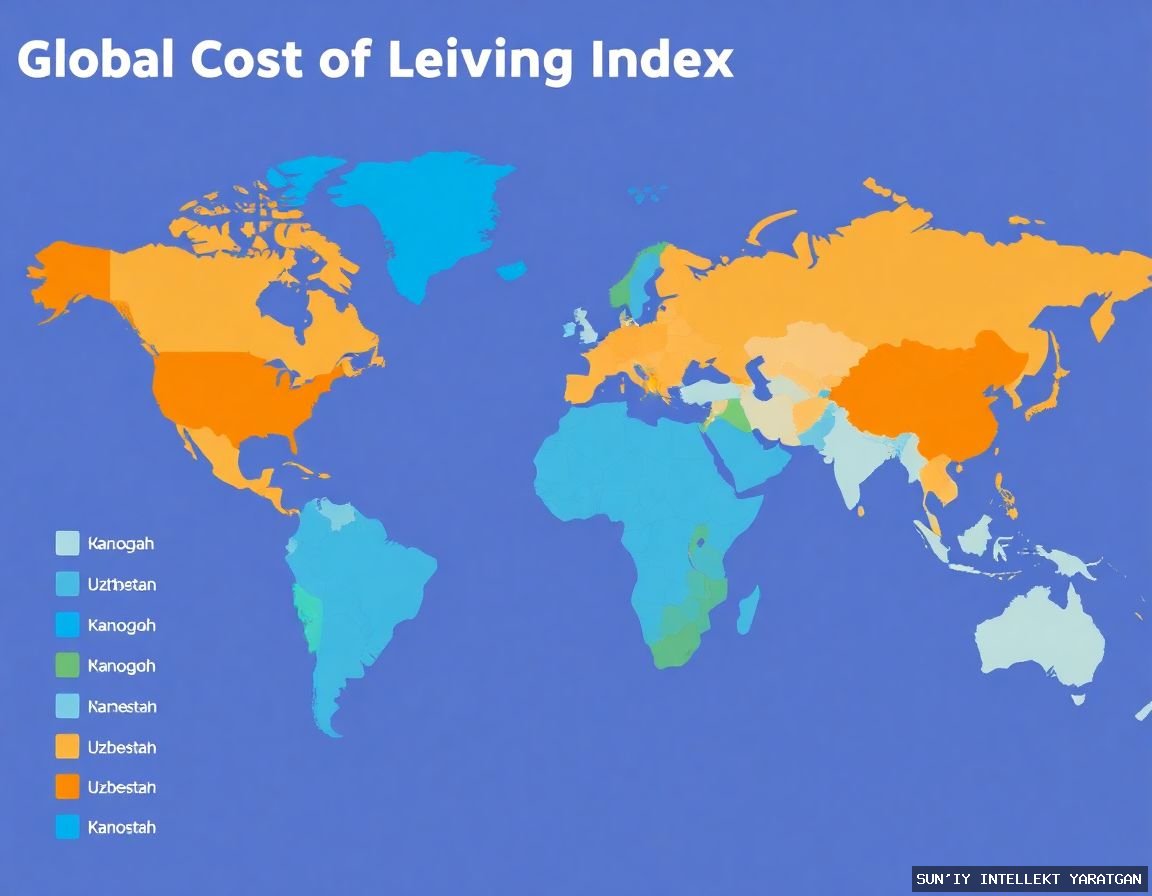
How is the cost of living changing in different countries in 2026? The answer is based on a visualization prepared using data from Numbeo's Global Cost of Living Index. The index compares prices for daily expenses, including housing rent, to the level of New York City, which is taken as the baseline.
Photo: Kun.uz / Ulugbek Ergashev
New York's indicator is set as the baseline at 100 points. If a country's index is 80, it means prices there are 20 percent lower than in New York. A score above 100 indicates a higher cost of living compared to this city.
Despite easing inflationary pressures in some regions, high living costs remain a global issue.
Since 2020, housing prices have increased by more than 50 percent in 28 countries. In nations such as Mexico, Germany, and Malaysia, food prices have risen sharply, putting serious pressure on household budgets worldwide.
The highest cost of living is recorded in Bermuda. This British territory is associated with elite real estate, luxury tourism, and offshore capital.
Most of the most expensive territories are island economies. Leaders also include the U.S. Virgin Islands, Jersey, and the Cayman Islands. High capital concentration and strong dependence on imports contribute to price increases.
Switzerland ranks 3rd in the overall ranking. Zurich is recognized as the world's most expensive city in 2026. High wages, a strong Swiss franc, and a high standard of living shape the corresponding costs.
Singapore is the most expensive city in Asia and ranks 5th globally. Limited land resources have led to rising housing prices. The country imports about 90 percent of its food, which intensifies price pressures.
Russia ranks 104th in the global ranking. The cost of living index is 25.7. This is significantly lower than New York's level, but domestic inflation and real income dynamics require separate analysis.
Uzbekistan in 2026 is among countries with a low cost of living index. According to Numbeo, the indicator ranges from approximately 26 to 30 depending on the city.
Compared to New York, daily expenses are more than 70 percent lower. Rent and utilities are significantly cheaper than in Europe and North America. Despite rising food prices in recent years, the overall level remains low in the global ranking.
Source: https://kun.uz/ru/news/2026/02/12/globalnyy-indeks-stoimosti-jizni-samyye-dorogiye-strany-i-uzbekistan