Researchers have concluded that a gilded bronze foot found in a Scottish bog in 1820 likely belonged to a colossal equestrian statue of Emperor Antoninus Pius erected on the Roman Empire’s northern frontier at the Antonine Wall. The team, led by Fraser Hunter, curator of Iron Age and Roman archaeology at National Museums Scotland, reconstructed the statue’s appearance, but the whereabouts of its other parts remain unknown.
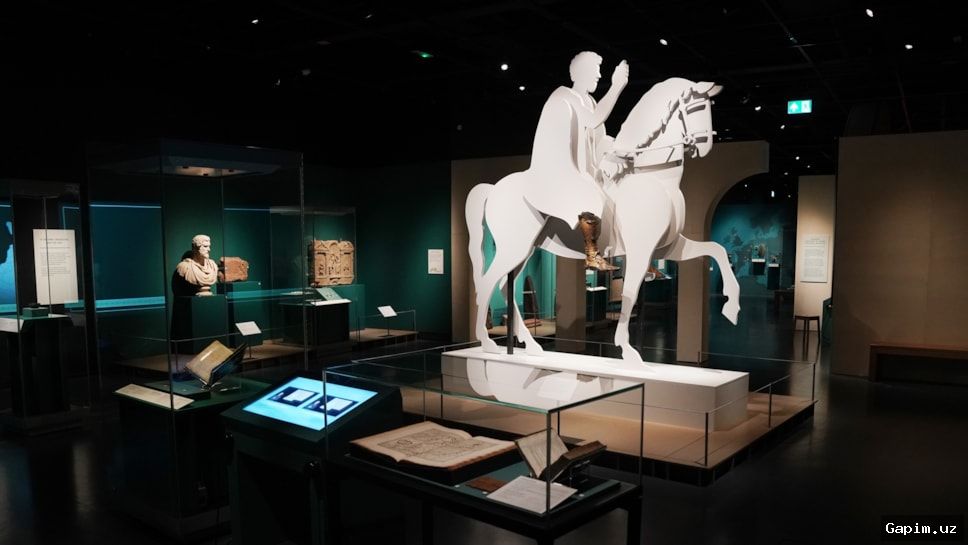
Key Takeaways: The bronze foot, dated to around AD 140 and known as the Milsington foot, was much larger than a human foot. Scholars now link it to an equestrian statue of Antoninus Pius installed in the Antonine Wall area. The rest of the monument has not been found.
For two centuries, experts knew the oversized foot was part of a Roman-era bronze statue, but they generally assumed it had been brought to Scotland as loot from more southerly territory, possibly from the major Roman city of Eboracum — modern York. The Milsington bog where the object was discovered lies about 80 kilometres south of the Antonine Wall line. The new assessment suggests the find may instead be directly connected to a major imperial monument on the frontier.
The Antonine Wall was built by the Romans between AD 142 and 154 under Antoninus Pius and marked the northernmost limit of Roman-held territory in Britain. Antoninus Pius ruled as emperor from AD 138 to 161 and succeeded Hadrian. Hadrian’s Wall had been built between AD 122 and 128 in northern England, near the Scottish border, to protect the empire’s northern frontier from British tribes. Seeking to expand Roman territory, Antoninus Pius ordered the governor in Britain to invade southern Scotland and construct a second wall about 160 kilometres north of Hadrian’s Wall. After Antoninus Pius died in AD 161, the Romans withdrew from Scotland and the Antonine Wall was left unguarded.
Hunter and his colleagues suggest the foot belonged to a monumental equestrian statue of Antoninus Pius, apparently installed to commemorate the conquest of southern Scotland. Study of statue fragments from Roman frontiers has shown that installing bronze statues of emperors, including equestrian figures, at forts along imperial borders was standard practice. Antoninus Pius also attached particular importance to his Scottish victories: the conquest of southern Scotland was the only campaign outside the empire that he marked by accepting the title “Imperator.” In ancient Rome, the word did not mean head of state but was an honorary military title awarded to a commander for a major victory.
According to the press service of National Museums Scotland, the research helps illuminate sculptural practices along Roman frontiers and the monuments of the Antonine Wall area. Questions remain, however, about the fate of the statue’s other parts, its exact scale and its original setting. The researchers hope further archaeological and archival work will clarify the broader context of the find and its place in Rome’s presence in Scotland.
Source: kun.uz