Neuroscientists have drawn attention to wasps whose brains contain fewer than one million neurons yet still perform complex tasks and learn from one another, according to an analysis published in the journal Science. The researchers argue that the secret behind these cognitive abilities may lie less in brain size than in the brain’s structure and the connections among its neurons, challenging the common assumption that larger brains necessarily mean greater intelligence.
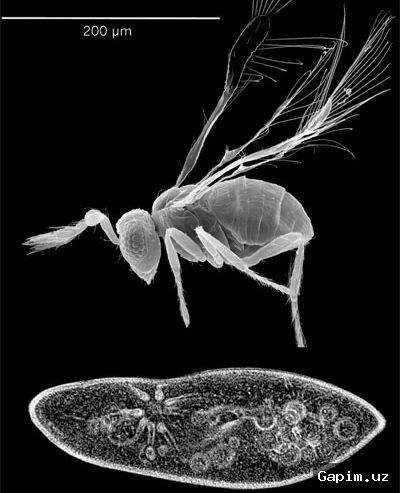
Key Takeaways: The study compares wasp brains with those of humans, octopuses and fruit flies, noting that humans have about 100 billion neurons and octopuses about 500 million. Wasps with fewer than one million neurons nevertheless solve problems, move small balls to reach nectar and learn from other wasps. Researchers focus especially on the mushroom body, which contains 50 times more cells than the corresponding structure in fruit flies, and on the central complex that governs orientation, movement and decision-making.
Context & Background
For decades, many people have assumed that a bigger brain means higher intelligence, although scientists also consider brain-to-body ratio and other factors. A whale’s brain is larger than a human’s, yet humans are considered more intelligent because the human brain makes up a larger share of body mass; the surface area of the cerebral cortex and many other variables also matter. The new wasp findings complicate that picture by showing that an insect with an extremely small brain can carry out sophisticated behavior, suggesting that efficiency and neural architecture may be at least as important as sheer size.
Outlook and Key Details
The wasp brain is small by neurobiological standards, containing fewer than one million neurons, compared with roughly 100 billion in humans and nearly 500 million in octopuses, most of the latter located in their arms. Despite this, wasps have demonstrated complex cognitive tasks: in situations where flight is impossible, they have moved small balls and climbed over them to reach nectar, and they have learned to solve puzzles by observing other wasps. Researchers also note that the yellow cockroach brain contains about one million neurons, but cockroaches have not shown the same high-level cognitive performance in comparable experiments, underscoring that neuron count alone does not explain the difference.
The researchers’ leading hypothesis is that parts of the wasp brain are connected in a distinctive way that allows particularly efficient use of limited neural resources. Their work concentrates on two regions: the mushroom body, which helps wasps associate what they see, smell or feel with positive or negative experiences, and the central complex, which is responsible for orientation, movement control and decision-making. While the recorded evidence of complex wasp behavior is clear, scientists are still working to understand exactly how such a small brain performs these tasks, and future studies may reveal whether similar architectural principles apply to other small-brained animals.
Source: kun.uz