A young Uzbek traveler, Asal Maksimova, has reached Uhuru Peak, the highest point of Mount Kilimanjaro in Tanzania, as part of Project Independence, an initiative dedicated to the 35th anniversary of the independence of the Republic of Uzbekistan. The ascent was carried out with the support of local guides and porters, turning a demanding high-altitude expedition into both a sporting achievement and a public occasion linked to Uzbekistan’s national milestone.
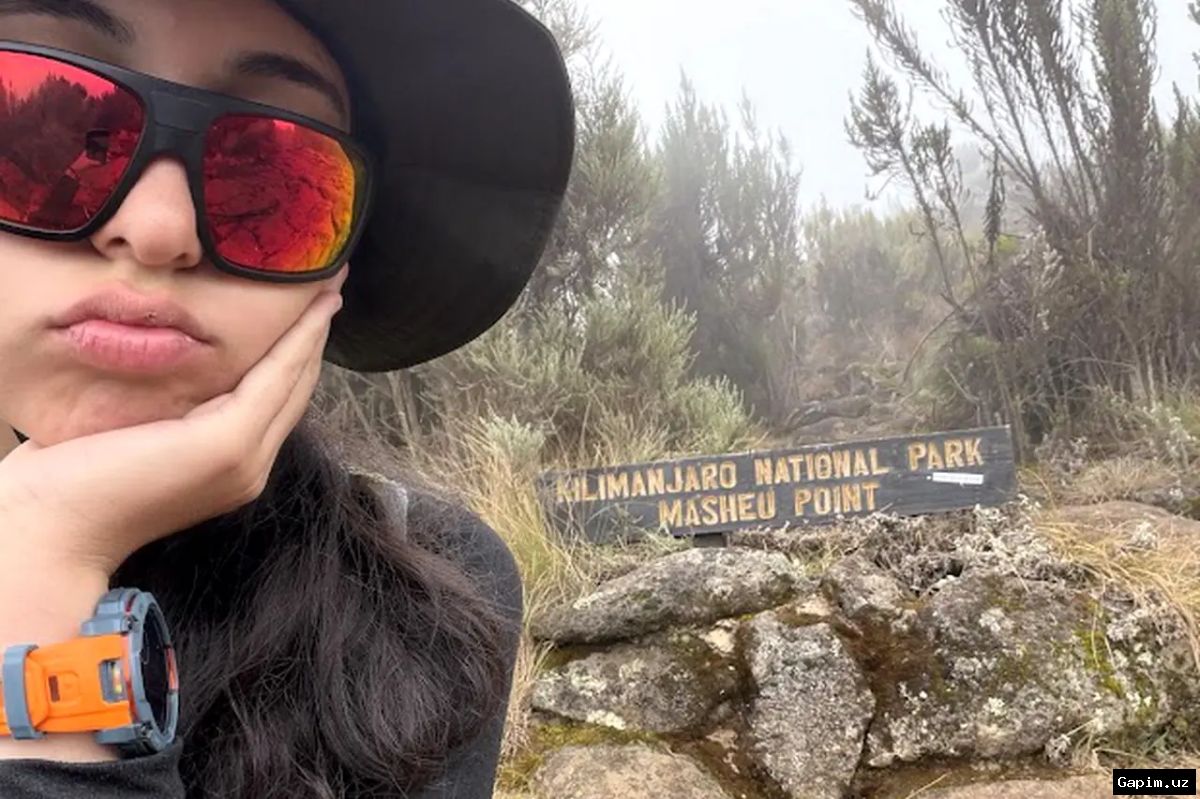
Key Takeaways: Asal Maksimova reached Uhuru Peak, at 5,895 meters above sea level, on Mount Kilimanjaro in Tanzania. The expedition followed the Marangu route for about six days and roughly 72 kilometers with local guides and porters. The final summit push lasted approximately 14 hours in temperatures near minus 10 degrees Celsius, with snow and strong wind.
Mount Kilimanjaro, located in northeastern Tanzania, is the highest mountain in Africa and one of the world’s most recognizable volcanic massifs. It consists of three main cones—Kibo, Mawenzi and Shira—and its summit, Uhuru Peak, stands at 5,895 meters above sea level. Since 1987, Kilimanjaro National Park has been included on the UNESCO World Heritage List. The mountain is also part of the international Seven Summits project, which involves climbing the highest peaks on all seven continents. For an expedition connected to Uzbekistan’s independence anniversary, the climb therefore carried symbolic weight beyond its athletic difficulty, presenting a young citizen’s achievement on a globally known mountain.
The team selected the Marangu route, one of the best-known paths on Kilimanjaro, and passed through several natural zones during the ascent, from humid tropical forest to high-altitude desert landscapes and snow-covered slopes. The most demanding phase came on summit day, when the group spent about 14 hours on the trail. At high altitude, temperatures dropped to around minus 10 degrees Celsius, while snowfall and strong winds added to the challenge. Beyond the climb itself, Maksimova introduced members of the expedition to Uzbek traditions and culture. During an acclimatization stop at Horombo camp, at an altitude of 3,720 meters, she and the team prepared traditional Uzbek plov, a process that took more than five hours.
The ascent is expected to be highlighted as a notable achievement within Project Independence, especially as Uzbekistan marks 35 years of independence. By combining a high-altitude climb with the preparation of a traditional dish at altitude, the expedition linked physical endurance with cultural presentation. Such initiatives may encourage greater interest among young people in mountaineering, international travel and the promotion of national heritage abroad, while also underscoring the organizational and logistical demands of expeditions on Africa’s highest mountain.
Source: uznews.uz