A recent price monitoring conducted at Tashkent City Mall compared the cost of world-renowned brands with prices in CIS countries, Europe, and the UAE. The results surprised even seasoned observers: Tashkent is now competing on equal footing in many categories, and in some cases, it is winning.
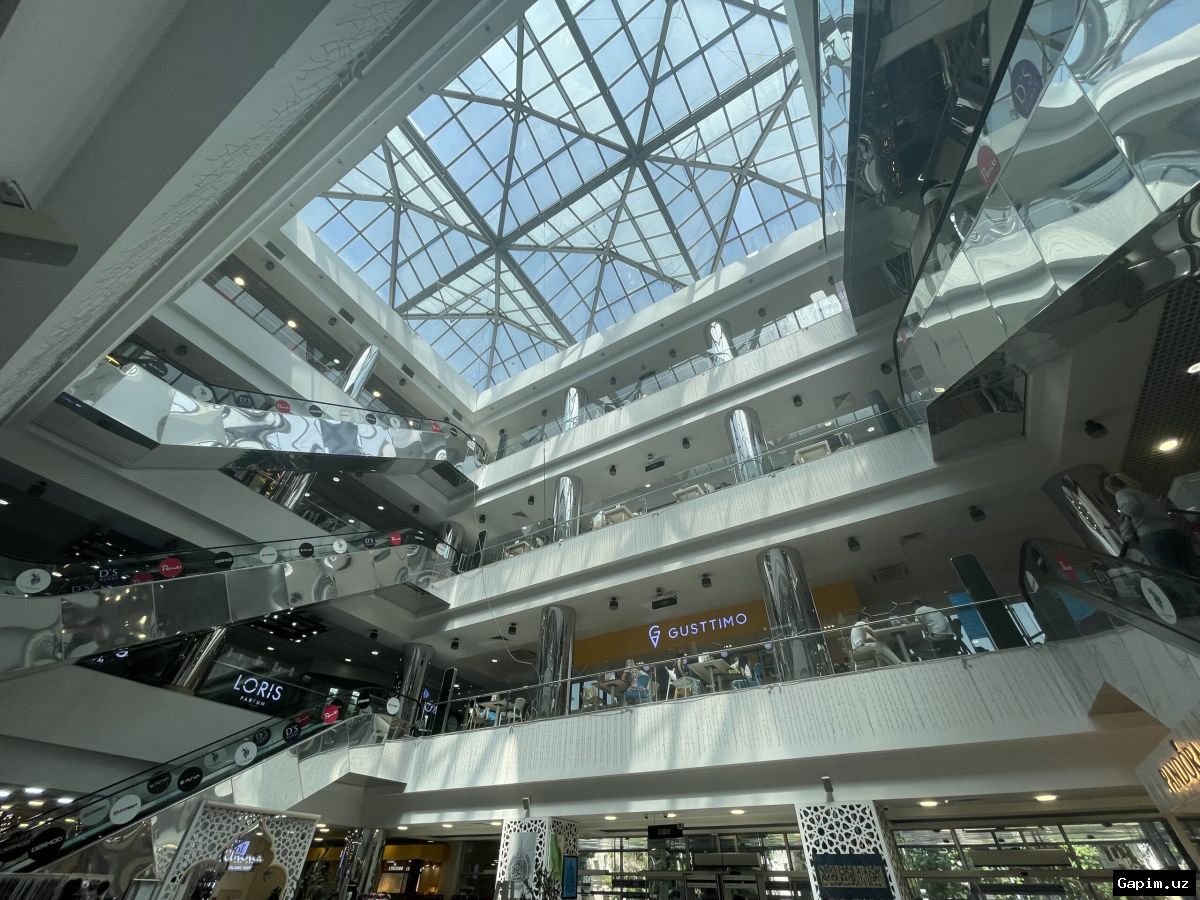
This is partly a return to historical patterns. Centuries ago, caravans of the Great Silk Road passed through Tashkent, connecting Eastern and Western markets. Today, Tashkent City Mall has taken on this role as a crossroads for international brands—only instead of caravans, goods arrive through official supply chains, and instead of tolls, there is a preferential customs regime.
The game-changer is the preferential import mechanism under Resolution PP-393. Already, 90% of eligible brands at Tashkent City Mall operate under this new scheme, and the actual coverage is even wider when multi-brand stores are considered. This has eliminated the main reason why shopping abroad traditionally seemed more advantageous—the markups that accumulate at every stage of a product's journey to the store shelf.
The monitoring revealed a range of results across categories. In luxury, Girard-Perregaux watches and Messika jewelry are cheaper or on par with foreign markets. In clothing, Maje, Karl Lagerfeld, Sandro, and Baldinini maintain competitive prices, while in the mid-range segment, Massimo Dutti, Oysho, and Guess stand out. In cosmetics, KIKO Milano is cheaper than in several foreign markets, and Elemis is more affordable in Tashkent than in Kazakhstan or Turkey. Sports brands Adidas and The North Face also showed competitive pricing.
Concrete examples illustrate the trend: in some cases, Tashkent is slightly more expensive than Kazakhstan (e.g., a Diesel handbag), but in others, it is noticeably cheaper. Overall, the gap that used to be tens of percentage points has narrowed to just a few points, often in Uzbekistan's favor.
The list of brands at Tashkent City Mall continues to grow. Over the past year, stores such as Messika, Weekend Max Mara, Guess, Max&Co, and Ray-Ban have opened. In 2026, Swatch and Baldinini joined, and Chaumet is expected to open soon. In the gastronomic space, Pierre Hermé has arrived, with Morelli’s and La Croissanterie planned. Negotiations are underway to bring several luxury brands that are not yet present in the country.
Why are brands choosing Tashkent? Resolution PP-393 reduced customs duties from 20–40% to 5–7.5%. Tashkent City Mall offers ready-made infrastructure and a steady flow of shoppers. Growing demand is evident in the numbers: sales of existing brands have increased by an average of 10–30%.
For international companies, Uzbekistan is increasingly seen not as a standalone point but as a platform for logistics and distribution to neighboring Central Asian markets.
This is not just theory: shoppers are voting with their wallets for competitive prices rather than traveling abroad or using intermediaries, thereby keeping money in the country. For brands still considering Uzbekistan, this sales dynamic is a compelling argument.
It is not only about savings. Official import removes the headache of international delivery and intermediaries, and crucially, guarantees product authenticity. For luxury and cosmetics, where the risk of counterfeits is high when ordering through third parties, this is a significant advantage.
The main takeaway from the monitoring is that price changes are working in favor of the consumer. The conditions created by the government for international retailers and brands allow them to grow at double-digit rates, while shoppers increasingly do not have to choose between a good price and buying 'here and now.' It seems the choice has already been made—and it is in Uzbekistan's favor.
Source: uznews.uz