️ Tashkent's master plan, designed until 2048, has undergone significant changes just 14 months after its approval. According to a government decree dated February 28, height restrictions for new buildings have been substantially lowered in several districts, which could have a major impact on the city's infrastructure and urban landscape.
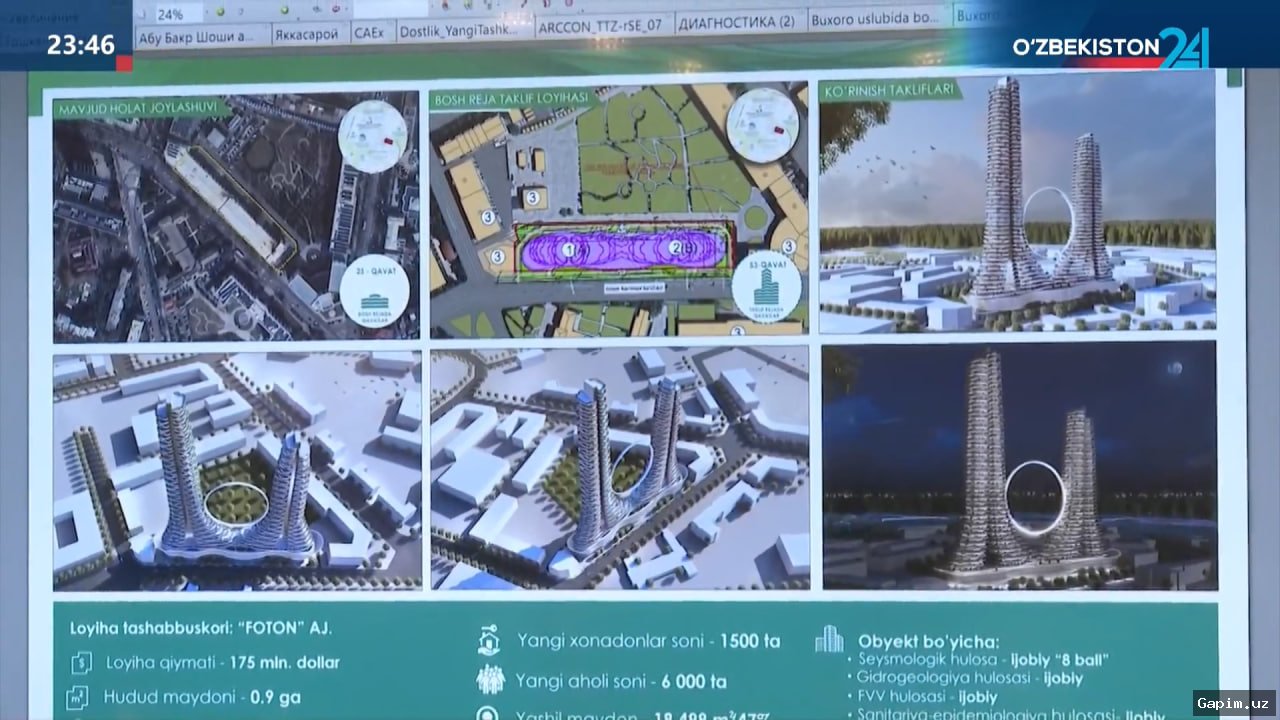
️ As noted by the Telegram channel Davletovuz, the revisions have led to increased height limits in areas such as Beshagach, Sergeli, and Almazar. For instance, in Beshagach, where buildings were previously capped at 9–12 floors, constructions of up to 28–32 floors are now permitted. These adjustments are expected to drive rapid transformations in the city's architectural profile, raising concerns about sustainability and livability.
️ Although the master plan was officially approved on December 24, 2024, numerous construction projects that contradict its provisions began emerging within months. The latest government initiative outlines plans for 30 large-scale real estate projects across 1,500 hectares, with a total estimated cost of $14.5 billion. However, at least 30% of the area in these developments, including renovation zones, must be allocated to green spaces.
️ Concurrently, the plan aims to phase out small, dense constructions on plots under 1 hectare and establish nine new public parks as green territories. Despite these measures, the long-term effects on Tashkent's environment, traffic congestion, and housing affordability remain uncertain, casting doubt on the feasibility of such ambitious urban expansion.
Source: kun.uz