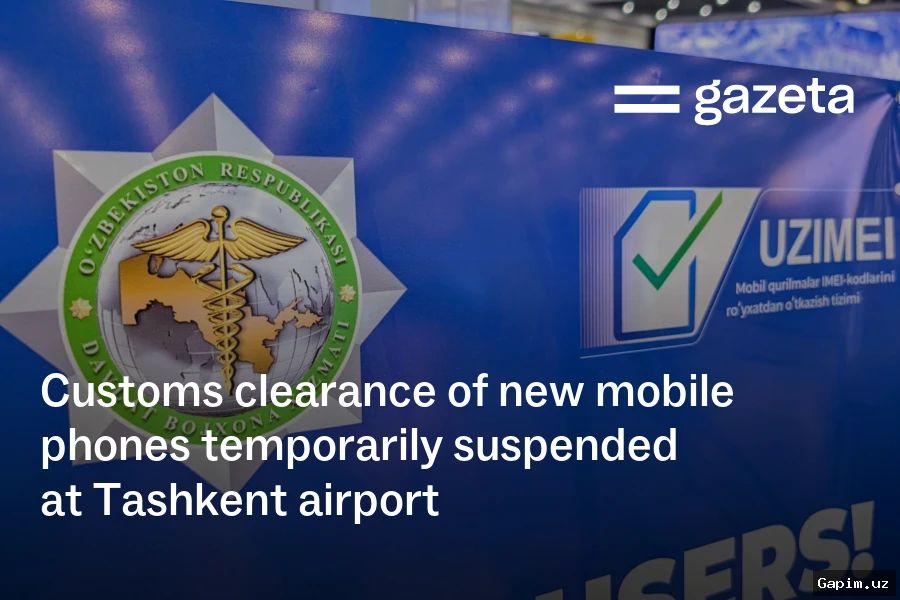
Uzbekistan saw a series of significant domestic developments: the Legislative Chamber sent to the Senate a bill banning advertising for multi-apartment buildings and other real estate built on a shared-equity basis when the project declaration has not been registered in the Unified Information System; customs clearance of mobile devices brought from abroad was temporarily suspended at Tashkent International Airport pending resolution of IMEI issues; and in Qashqadaryo, the head of a kindergarten was detained after a 3-year-old girl was left in a car and died. A video showing schoolchildren crossing a road flooded by a mudflow also triggered widespread discussion.
Key Takeaways: Under Article 73 of the draft law, advertising a construction object and its apartments is allowed only after the project declaration is posted in the Unified Information System; customs clearance of phones at Tashkent airport has been temporarily halted while IMEI identification and proof of lawful import are being addressed; the Qashqadaryo case has led to detention of the kindergarten head, while the flood video raised fresh questions about school-route safety.
The advertising restrictions come amid long-running concerns in Uzbekistan’s shared-equity housing market. Unfinished buildings, opaque project documents and disputes over citizens’ funds have repeatedly alarmed the public. The bill is intended to force developers into greater transparency, give buyers earlier warning and limit sales without a registered declaration. At the airport, the disruption is linked to checks on illegal imports, cloned IMEI codes and the effectiveness of customs controls. According to the Customs Committee, clearance is suspended until IMEI identification and confirmation of lawful import are resolved. Some reports say phones worth more than $1,000 may be held for up to 30 days for examination, pushing prices for some iPhone models at Tashkent’s Malika electronics market up by $50–400. The Qashqadaryo tragedy and the mudflow video have renewed concerns over child safety, kindergarten accountability and local infrastructure.
During debate on the bill, lawmakers said Article 73 sets the procedure for advertising shared-equity construction. Advertising would be permitted only after the project declaration is registered in the Unified Information System in the prescribed manner; otherwise developers and other persons would be barred from advertising both the object and individual apartments. The Customs Committee responded to reports about Tashkent airport by saying the restriction is temporary, while claims about an additional fee for expedited clearance have raised questions over legal grounds and implementation. In Qashqadaryo, the kindergarten head was placed in custody over the death of the 3-year-old girl, and the circumstances are being examined as part of the investigation. The video of pupils crossing a flooded road requires official clarification on safety measures.
The bill now goes to the Senate; if approved, advertising requirements will tighten and promotion of projects without a declaration will become harder. On the airport customs regime, officials need to define clear criteria for lawful import and ensure the IMEI system works without excessive delays or unjustified price rises. Results of the investigation into the Qashqadaryo tragedy and official conclusions on the school flood video are pending. The day’s news shows that legal regulation, customs transparency and child safety remain central public concerns.
Source: kun.uz