A parliamentary “Government Hour” session in Uzbekistan’s Legislative Chamber of the Oliy Majlis on 11 November examined budget spending and financial control in the Water Management Ministry. Behzod Tukhtamurodov, a member of the Social Democratic Party “Adolat” faction, citing data from the State Financial Control Inspectorate under the Prosecutor General’s Office, said that large-scale financial violations had been identified across the ministry’s system during the first nine months of the current year.
Key Takeaways: authorities recorded a total of 82.1 billion soum in shortfalls and illegal appropriations in the Water Management Ministry system in the nine months of 2026; 6.6 billion soum was classified as shortfall and 75.5 billion soum as illegal appropriation. The figure stood at 55.4 billion soum in the first half of the year and reached 27 billion soum in the third quarter alone. The lawmaker demanded concrete measures on control, compensation and personal accountability.
During the discussion, the deputy pressed the ministry on how it monitors targeted use of budget funds, what steps are being taken to prevent violations and how damage is to be recovered. The water sector receives substantial budget allocations for the maintenance and operation of irrigation facilities, and large public procurement contracts are awarded in the system. As a result, internal audit, tender transparency and financial oversight are seen as central to the ministry’s performance and to broader efforts to ensure efficient use of public resources.
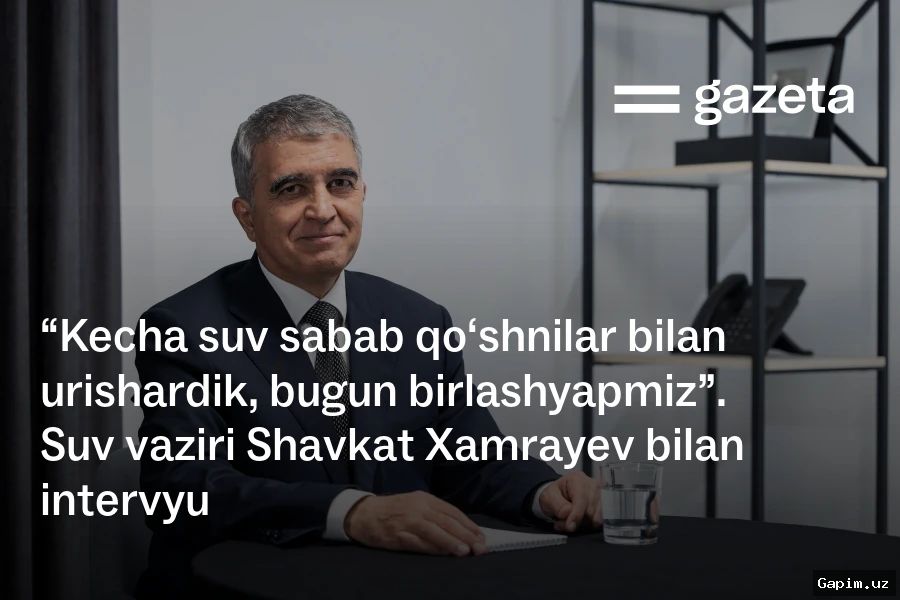
Responding to questions, Water Management Minister Shavkat Khamrayev called unlawful use of budget funds a serious offence. “Budget money is sacred; it is money earned through the labour of our people. Creating such problems with it can be described as a major crime,” he said. According to the minister, the ministry has an internal audit service, while state institutions “Suvqurilishinvest” act as clients in the regions, financing capital construction projects and selecting contractors through tenders. Khamrayev said internal audit passes information about identified shortfalls and illegal appropriations to prosecutors. “Most of the shortcomings and shortfalls were identified on the ministry’s own initiative. These funds will be restored 100 percent. Those responsible will be held legally accountable. If the funds are not restored, criminal liability will follow,” he said.
Khamrayev added that for the past two years an officer assigned by the Anti-Corruption Agency has worked with the ministry, and that central and regional structures have anti-corruption officials cooperating with internal audit. “Betrayal of even one soum is a serious shortcoming. We will strengthen the entire system to prevent such shortcomings,” he said. However, the minister did not provide exact figures on how much of the 82.1 billion soum has actually been recovered, how many officials have been held accountable or how many criminal cases have been opened. Parliamentary scrutiny is expected to continue, with the ministry likely to face further requests for detailed reporting on compensation and systemic reform.
Source: www.gazeta.uz