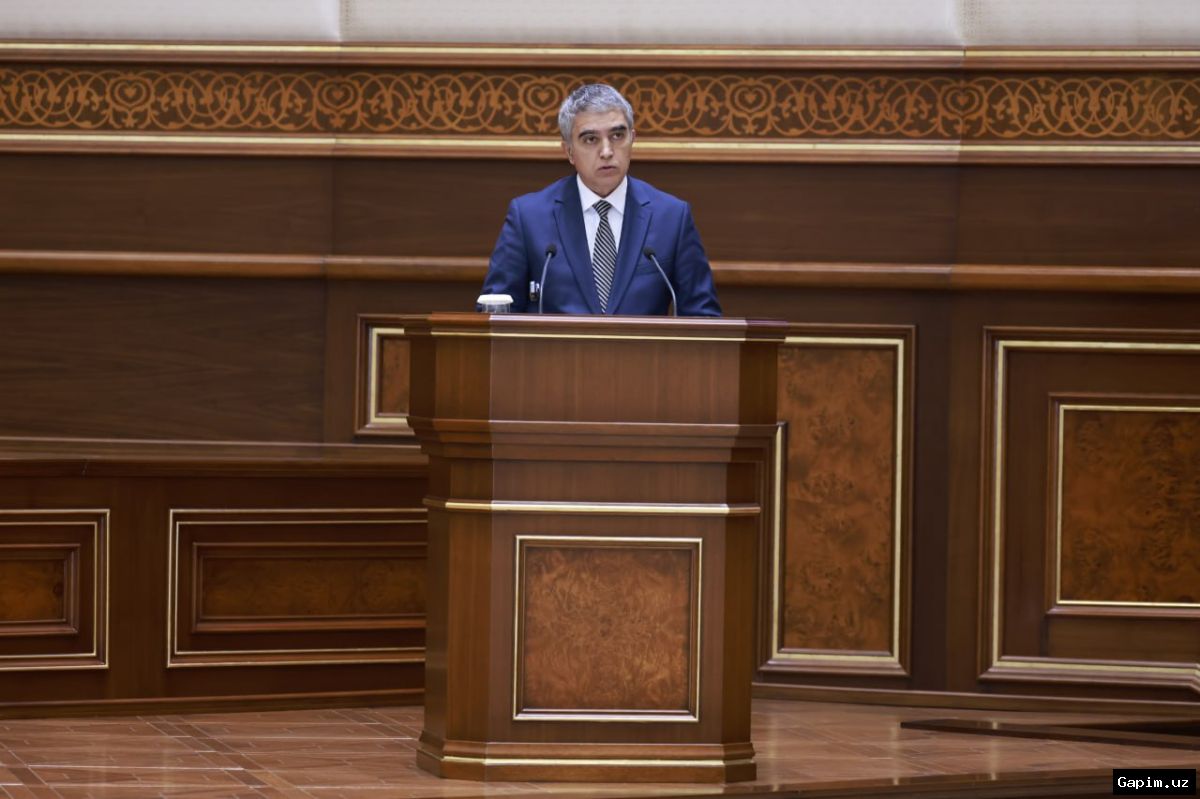
Uzbekistan’s Minister of Water Resources Shavkat Khamrayev told lawmakers on November 11 that delays in irrigation reconstruction projects involving Chinese companies stem from lengthy international financing procedures, procurement rules and unsuccessful price negotiations. Speaking during a “Government Hour” session in the Legislative Chamber of the Oliy Majlis, he was responding to questions from Imomnazar Tursunov, a member of the Uzbekistan People’s Democratic Party faction, who highlighted slow absorption of foreign investment and projects scheduled for 2026 where work had not started. The discussion focused on a $130 million project with a Chinese bank to rehabilitate irrigation infrastructure in Surxondaryo, Qashqadaryo, Buxoro and Namangan regions.
Key Takeaways: Lawmakers discussed a $130 million irrigation reconstruction project involving a Chinese bank in four Uzbek regions, with a deputy saying the ministry’s table showed no funds had been disbursed. The ministry initially planned to work with China’s CITIC and CAMC, but officials say proposed costs were 10–20 percent higher and in some cases more than double. Talks are now continuing with Sinohydro, while canal lining works are planned for 2027–2028.
The issue matters because Uzbekistan’s irrigation network is central to agricultural output, rural incomes and efficient water use amid regional water scarcity and climate pressure. Many canals require modernization to reduce losses and improve delivery to farms. Chinese preferential credits and large contractors are part of the financing and implementation model, making transparency, cost justification and parliamentary oversight particularly important for public trust and budget sustainability.
“The table presented shows that not a single soum has been disbursed,” deputy Imomnazar Tursunov said. Minister Khamrayev explained that the original plan envisaged contractors starting construction with their own funds, with costs later reimbursed through Chinese preferential loans. “When we negotiated with these companies, they proposed doing the work not only at 10 percent or 20 percent higher costs, but even more than double,” he said. He stressed that the ministry does not want to accept inflated prices: “If we do it faster at a high price, the budget will still have to repay it tomorrow. That is why this is paused.”
According to the minister, after talks with CITIC and CAMC failed, the government of Uzbekistan applied to the Export-Import Bank of China to finance the projects under preferential credit terms. He said the bank’s review and expert appraisal took about six months, while selection procedures under the bank’s rules took about another year. A tender was then held with three companies, but even the winning bidder’s price remained about 20 percent higher, and CITIC did not agree to reduce it. The ministry subsequently opened negotiations with another major Chinese company, Sinohydro.
Khamrayev said the programme is large-scale and will take at least two years to implement, adding that project documents have been developed and appraised. Concrete lining of canals is planned for 2027–2028. A further round of talks with Sinohydro was held on the morning of November 11 before the parliamentary session. Under parliamentary oversight, the ministry is seeking to balance the speed of project launch with budget sustainability, avoiding excessive costs and ensuring a transparent selection of contractors. Lawmakers are expected to continue monitoring disbursement and implementation timelines.
Source: www.gazeta.uz