Uzbekistan’s fuel sector is moving to modernise storage capacity as the government has announced plans for a 120,000-tonne petrol reserve for peak winter months in 2026. The development places new demands on oil depots, fuel and lubricant warehouses and industrial enterprises, which need modern tanks capable of safe, reliable handling of fuel, oil products and chemical feedstock. Against this backdrop, Russia’s Saratov Reservoir Plant (SARRZ) is presenting tailored reservoir solutions for Uzbek sites, citing the country’s high summer temperatures and seismic conditions.
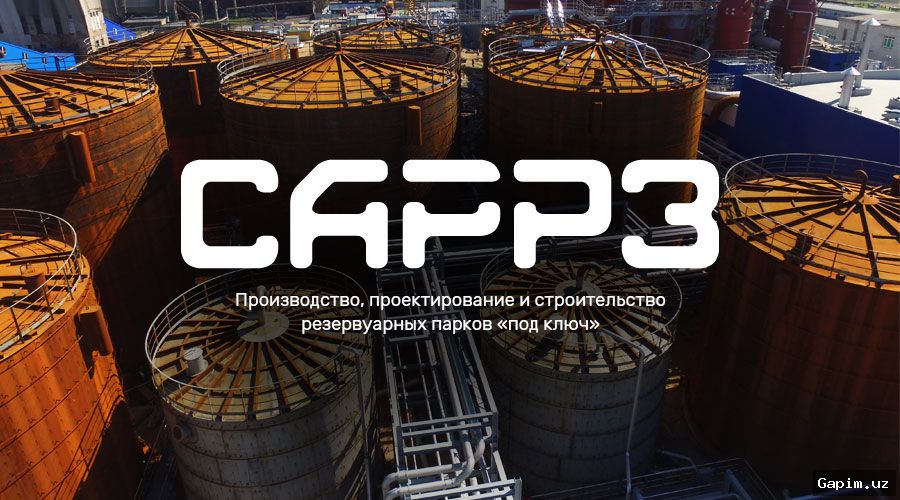
Key Takeaways: Uzbekistan plans a 120,000-tonne petrol reserve for winter peak demand in 2026, increasing the need for modern fuel-storage infrastructure. SARRZ says its tanks can be engineered for local climate, soil and seismic loads up to magnitude 9. The company offers a full EPC cycle, from design and manufacture to delivery, installation, testing and corrosion protection.
The storage question is closely tied to Uzbekistan’s geography and climate. Summers are extremely hot, and much of the territory lies in seismically active zones. According to SARRZ, reservoir design for Uzbek sites must therefore combine strength, stability, seismic resistance, soil analysis and product-specific engineering. This is particularly relevant for existing oil depots, many of which were built during the Soviet era and may require upgrading to meet current safety and environmental standards.
SARRZ has produced reservoir equipment since 2013 and operates a 14,000-square-metre site in Saratov, with capacity to handle up to 27 orders simultaneously. The plant employs more than 450 people with average service length above 10 years. It says it produces more than 25 tanks annually by the sheet method, about 110 by the roll method, at least 140 vessels and apparatuses and over 75 units of non-standard equipment. Its portfolio includes more than 120 completed projects, including base-oil depots, chemical plant tank farms and water-treatment and agricultural tanks. Company engineers also participate in drafting amendments to GOST 31385-2023, the main Russian standard for vertical steel tanks, while quality management is certified under ISO 9001:2015 and products comply with Customs Union technical regulations.
The product range covers RVS-100 to RVS-50000 tanks, with diameters from 4.7 to 60.7 metres and wall heights up to 18 metres. For petrol and other light oil products, SARRZ highlights pontoon or floating-roof tanks that reduce vapour space and cut evaporation losses during hot seasons. For facilities with stricter environmental requirements, it offers double-wall “glass-in-glass” tanks. The company says it performs strength, stability and seismic calculations up to magnitude 9, taking account of soil properties and the stored product. Quality controls include incoming steel inspection, visual and ultrasonic testing and radiographic inspection of welds, plus voluntary INTERGAZSERT certification according to Gazprom standards. The warranty is 24 months from shipment, with a design service life of 30–40 years.
As an EPC contractor, SARRZ covers surveys, design, manufacture, delivery by road, rail or sea, installation, testing, thermal insulation and anti-corrosion protection, so the customer deals with one team. The company says it has completed projects in the Far North, including Kamchatka and Yamal, and in other regions with complex logistics. For Uzbekistan, this approach may be especially useful when modernising operating oil depots, where installation schedules, access roads and transport dimensions must be planned in advance. Deliveries are accompanied by technical documentation under GOST. The next step will be the practical adaptation of such solutions to Uzbek sites and the implementation of the announced fuel reserve.
Source: www.uznews.uz