Uzbekistan’s Minister of Water Resources Shavkat Xamrayev said on November 19, responding to journalists’ questions, that Uzbekistan continues to take water from the Amu Darya in the amounts allocated to it despite the construction of the Rogun hydropower plant in Tajikistan. He said filling the reservoir must be carried out in stages because the rapid accumulation of a large volume of water could threaten the safety of the hydraulic structure. Therefore, according to the minister, Uzbekistan’s water rights and limits are not being violated, and Tajikistan has not taken water belonging to Uzbekistan.
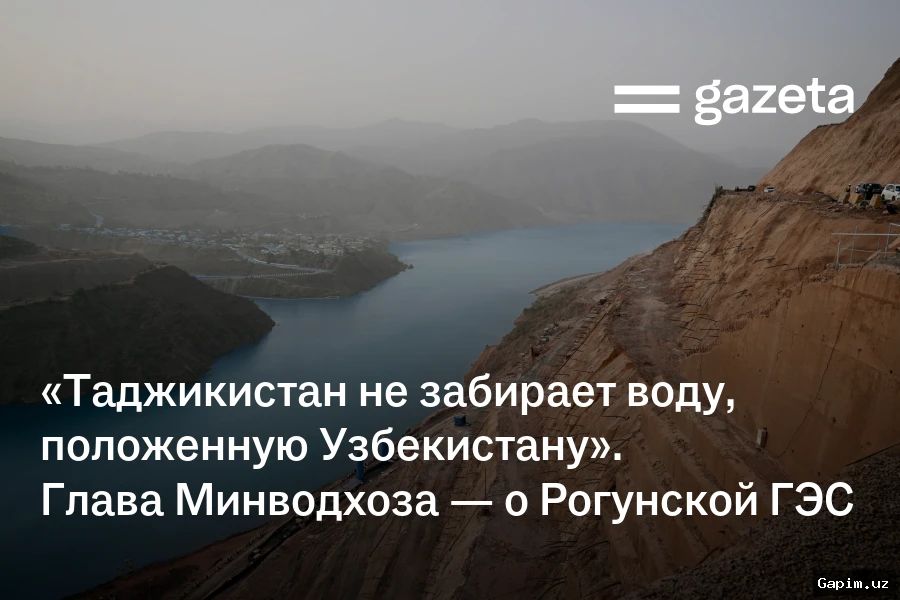
Key Takeaways: Uzbekistan continues to receive water from the Amu Darya within its allocated limits; the Rogun dam’s design height is 335 meters and has now exceeded 200 meters; the reservoir’s capacity is 13.3 billion cubic meters, with 1 to 1.5 billion cubic meters planned to be accumulated gradually; the plant’s installed capacity is expected to reach 3,780 MW, with average annual generation of about 14.4 billion kWh.
The Rogun plant is being built in Tajikistan on the Vakhsh River, upstream of the Nurek hydropower plant; the Vakhsh is one of the main tributaries of the Amu Darya. Xamrayev said that for Uzbekistan it is important not only how much water is accumulated in the Rogun reservoir, but also the schedule of releases throughout the year, because the Nurek reservoir downstream plays a key role in regulating the Vakhsh flow. He said relations with Tajikistan have changed greatly in a positive direction and that water issues are discussed at meetings. For Uzbekistan, located in the lower reaches of the Amu Darya, stable water supplies remain especially important for agriculture and the population.
According to the minister, Rogun will take at least another four to five years to build, and the filling process will continue until about 2035. “You can never fill a newly built 13.3 billion cubic meter reservoir all at once. It will break, it will fall,” Xamrayev said. He also said the plant is partially operating and generating electricity as possible, while Uzbekistan takes its allocated limits from the Amu Darya. “Tajikistan has not taken Uzbekistan’s rightful share,” he added. The minister’s timeline differs from figures presented by the Tajik side: the project’s official website says completion of the dam to its design height is planned by 2032 and full reservoir filling by 2038. The period mentioned by Xamrayev, around 2035, is three years earlier than the timeline in the project documents. In June 2026, the World Bank approved the second phase of financing for Rogun’s construction, including a $300 million grant for construction work, equipment procurement and installation, safety measures, and environmental obligations. The bank also plans improvements to monitoring and forecasting systems to increase reservoir management efficiency and reduce downstream flood risk.
After completion, the Rogun plant is expected to supply electricity not only to Tajikistan but also to neighboring states, including Uzbekistan and Kazakhstan. In the coming years, further talks are expected on reservoir filling stages, regulation of the Vakhsh and Amu Darya flows, and regional energy cooperation, with water security in the lower Amu Darya basin, particularly for agriculture, remaining a key issue for Uzbekistan.
Source: www.gazeta.uz