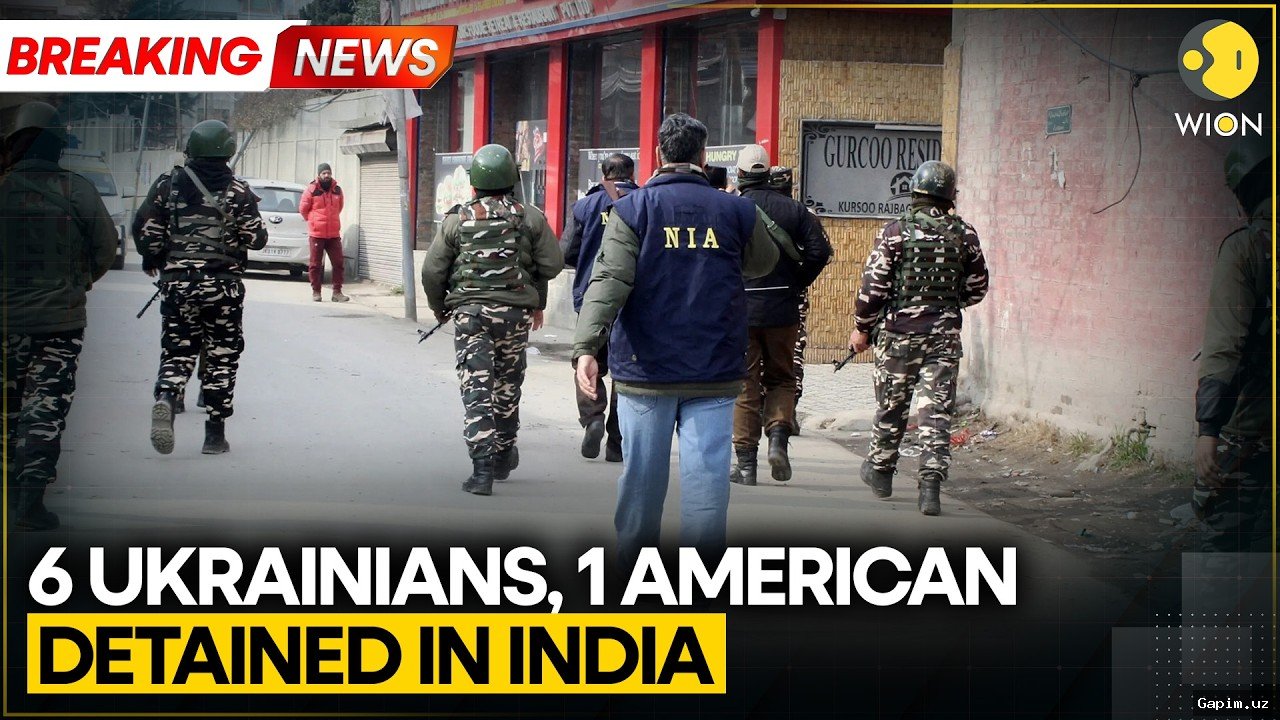
Indian authorities have detained six Ukrainian citizens and one American national, alleging violations of the country's anti-terror laws in a case linked to insurgent activity along the India-Myanmar border. The National Investigation Agency (NIA) will hold the individuals in custody for questioning until March 27. They were arrested on March 13 at airports in Calcutta, Lucknow, and Delhi. Their full names have not been disclosed, but court documents identify the Ukrainians as Petro H., Taras S., Ivan S., Marian S., Maksym H., and Viktor K.
The American, Matthew V., reportedly participated in the Iraq War, the post-2011 Libyan civil war, and the war in Ukraine. He is also the founder of a Washington-based security consulting firm called Sons of Liberty International, which describes itself as a non-profit that "provides free security consulting and training services to vulnerable populations to enable them to defend themselves against terrorist and insurgent groups." The company's website notes it has been involved in training soldiers in Ukraine fighting against Russia.
According to the NIA's report and court submissions, the group entered India legally on tourist visas but then traveled to the state of Mizoram, an area requiring special permits for foreigners, which they did not possess. Investigators allege they subsequently crossed illegally into Myanmar through informal routes along the porous border. The agency suggests the seven may be part of a larger network, with as many as 14 Ukrainians entering India on tourist visas and heading to Mizoram without permits.
At a court hearing on March 16, prosecutors brought additional allegations, claiming the detainees had been involved in training armed groups in Myanmar, operating drones, and illegally importing large consignments of drones from Europe to Myanmar via India. The training allegedly focused on drone warfare, including assembly, deployment, and jamming techniques. This development underscores long-standing security concerns along the border, where insurgent activity dates to the 1960s and has been exacerbated by Myanmar's 2021 military coup.
The Ukrainian embassy in India pointed to the "possible orchestrated and politically motivated nature of the case," rejecting "any insinuations regarding the possible involvement of the Ukrainian state in supporting terrorist activities" and asserting that Ukraine "has no interest in any activity that could pose a threat to the security of India." In response, Russian foreign ministry spokeswoman Maria Zakharova accused the Ukrainian foreign ministry of "remaining silent on its citizens' violation of India's counter-terrorism legislation" and "baselessly accusing certain Indian and Russian news agencies of deliberately falsifying the facts."
India's security establishment views the case with serious concern. A senior NIA official, speaking anonymously, emphasized that the episode highlights how geographically distant conflicts are increasingly interconnected, with the movement of fighters, technology transfer, and informal logistical networks binding different theaters in ways that are difficult to track and regulate. The case also raises questions about consular access, as Ukrainian diplomats reportedly were not granted direct contact with the detainees, and the lawyer for the American citizen called the detention illegal, citing violations of the Vienna Convention.
Source: www.dw.com