One of the darkest chapters in Argentina’s history is the military dictatorship from 1976 to 1983, during which approximately 30,000 people were ‘disappeared’ (desaparecidos). The victims included political opponents, students, intellectuals, journalists, and lawyers. The military coup led by General Jorge Rafael Videla occurred on March 24, 1976, when President Isabel Peron was arrested, and the armed forces seized control of the country. Peron’s leadership from 1974 to 1976 had been plagued by hyperinflation, strikes, and political violence.
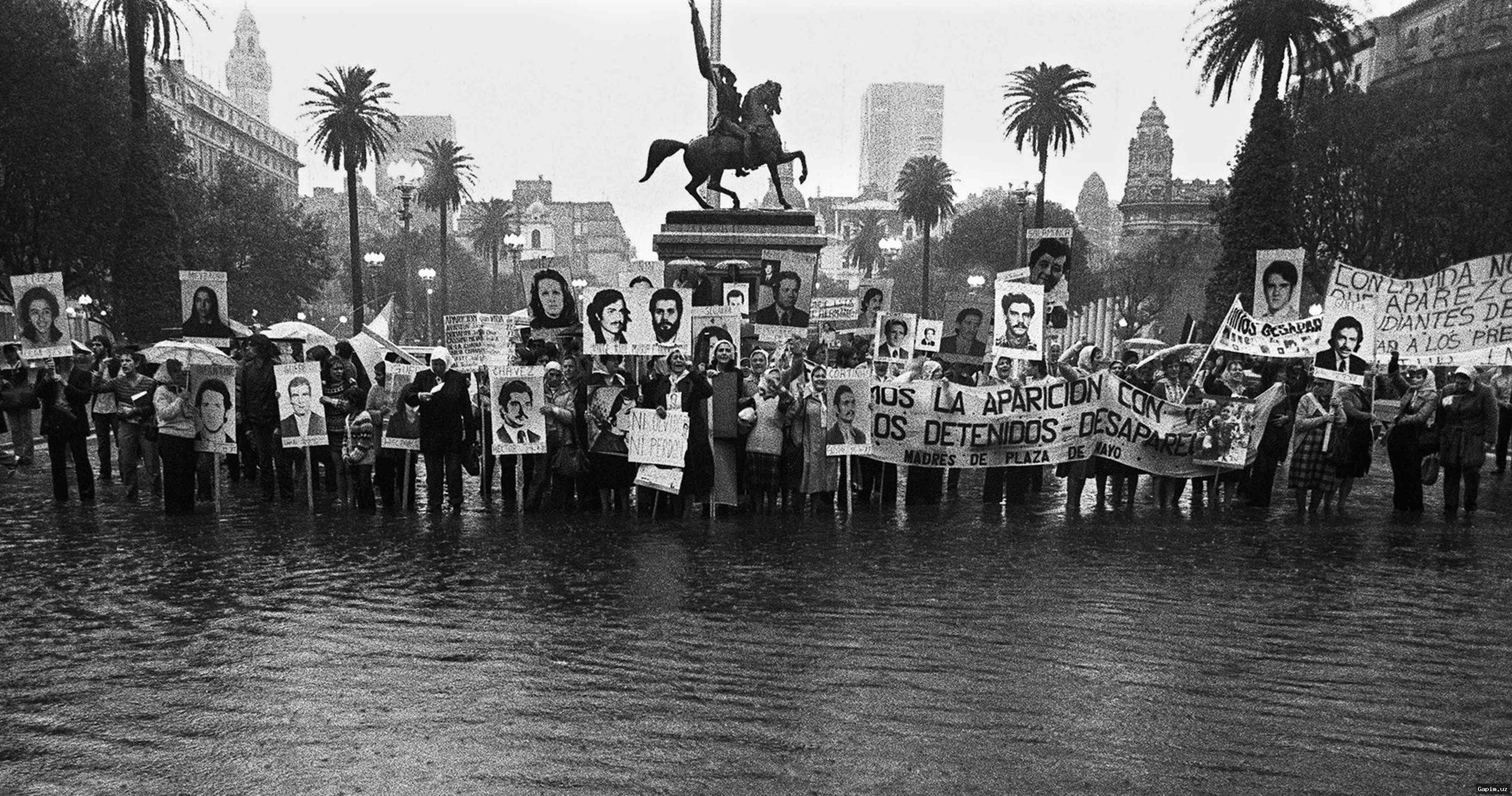
The military regime initiated a campaign of brutal state terrorism known as the ‘Dirty War’ to push through its radically right-wing, anti-communist agenda. The powerful labor movement became a primary target. Victims were taken to clandestine detention centers, where they were held without trial, tortured, and murdered. Their bodies were thrown into the La Plata River or the Atlantic Ocean during so-called ‘death flights’ or buried in secret mass graves. At least 500 newborn babies were stolen from prisoners and given to military families to raise, with some unaware of their true identity to this day.
Fifty years after the coup, Argentinians are still reckoning with the crimes of the military dictatorship. Many victims and their relatives continue to fight for justice. In 1985, high-ranking regime members were tried in the Trial of the Juntas, where Videla was sentenced to life imprisonment. However, extensive amnesty laws introduced after the regime crumbled, along with a general pardon decreed in 1989, have impeded legal proceedings against the junta’s henchmen.
Gabriel Pereira, a human rights researcher at Argentina’s National Scientific and Technical Research Council (CONICET), describes the process of justice and accountability as happening in ‘stop motion,’ as cases inch forward over decades without resolution. He campaigns for greater accountability of corporate complicity in human rights violations during the dictatorship, often referred to as a ‘civic-military dictatorship’ due to the key role played by business elites and transnational corporations. Pereira states, ‘The accused are elite people who share social spaces with the judicial elites,’ adding that some judges are ‘very reluctant’ to bring priests, other civilians, or economic actors to account since they ‘don’t want to open the box and see who else was part of the state machine.’
Berlin-based lawyer Wolfgang Kaleck, General Secretary of the European Center for Constitutional and Human Rights (ECCHR), has represented victims of the regime for the past 27 years. One of the most high-profile cases he has worked on involves German automotive manufacturer Mercedes-Benz and relatives of trade unionists who disappeared from its plant in Buenos Aires in 1976 and 1977. Hector Ratto claims he was betrayed by plant manager Juan Tasselkraut, who summoned him to an office where regime officers were waiting. Ratto was abducted, tortured with a picana (an electric shock device), and after a few days of release, was kidnapped again and held for 16 months in clandestine detention centers. It is believed that plant managers handed over the names and addresses of at least 14 union activists to the military, all of whom disappeared.
In response to a DW inquiry, Mercedes-Benz stated that an independent commission of inquiry, commissioned by the former DaimlerChrysler AG, found no evidence to support claims that the disappearances were instigated by the company. The company considers the allegations ‘unfounded.’
Argentina’s last military dictatorship ended in 1983 after a failed attempt to seize the Falkland Islands from the British in 1982. On October 30, 1983, the first free elections in over seven years took place. Argentina now officially designates March 24 as the Day of Remembrance for Truth and Justice, with millions taking to the streets to declare ‘Nunca más’ (‘Never again’).
Current President Javier Milei caused controversy when he said ‘there were no 30,000’ during a presidential debate before his election win in 2023. Opponents accuse Milei of justifying state terror by equating it with violence committed by leftist guerrillas. In 2024, Milei demanded justice – not for victims of the military dictatorship, but for victims of the guerrillas before the coup. He has also cut state spending on civil society groups and memorial sites, while impeding people’s ability to protest.
Eugx Grotz, a feminist activist, researcher, and spokesperson for the ‘Assembly in Solidarity with Argentina in Berlin,’ founded in December 2023 when Milei took office, says, ‘He is trying to reinstate the idea of the two demons, that state violence and repression was a necessary answer to an ongoing terrorist threat to our country.’ Grotz, born after the regime crumbled, feels the weight of its legacy: ‘On one hand, it meant a complete wiping out of a generation of activists. On the other hand, we have learnt a lot from human rights organizations who have shown us that you do not have to remain silent.’
For researcher Gabriel Pereira, the anniversary not only commemorates the victims of the dictatorship but is also ‘a way to resist what is going on with the current government.’
Source: www.dw.com