As US Vice President JD Vance prepares to arrive in Islamabad, Pakistan is racing against time to convince Iran to rejoin talks with the United States aimed at ending the ongoing war, now in its eighth week. However, a series of escalatory steps taken by the US over the past 48 hours, including the firing upon and seizure of the Iranian-flagged cargo ship Touska in the Gulf of Oman, has injected skepticism into Islamabad's peacemaking efforts. The US regime's actions have been described by Iranian authorities as a ceasefire violation and a dangerous provocation.
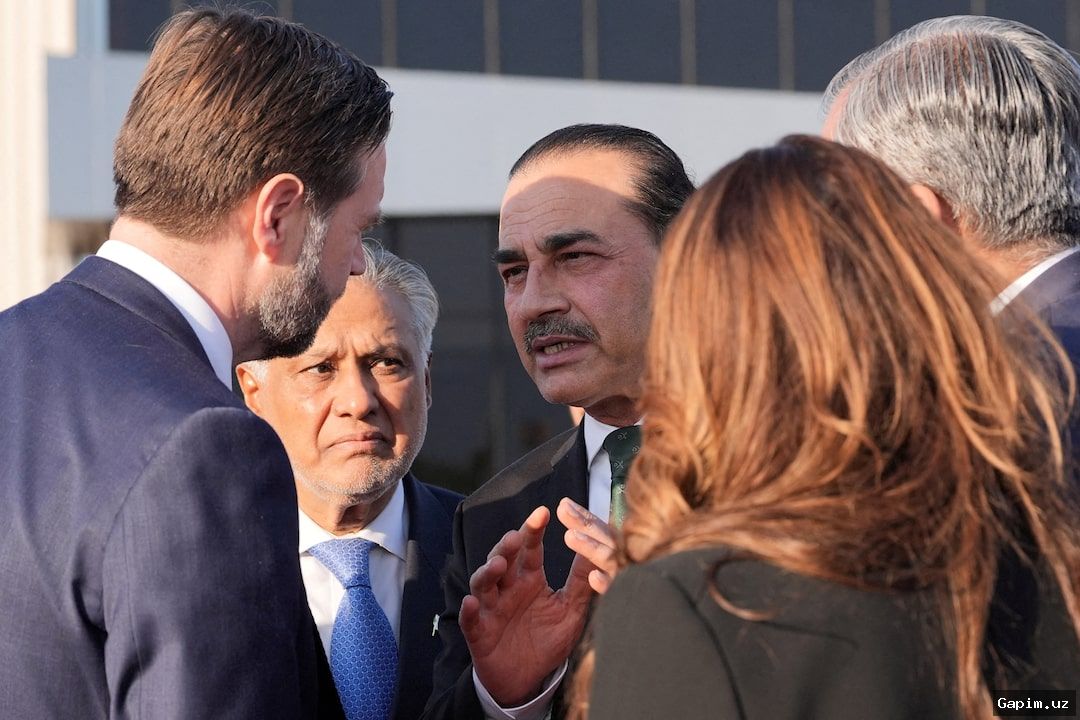
Iranian officials continue to publicly insist they have no plans to return to the negotiating table. Iran's ambassador to Pakistan, Reza Amiri Moghadam, paraphrased Jane Austen on social media, stating it is "a truth universally acknowledged" that "a single country in possession of a large civilisation will not negotiate under threat and force." Parliament Speaker Mohammad Bagher Ghalibaf, head of Iran's negotiating team, accused US President Donald Trump of seeking to turn the talks "into a table of surrender or to justify renewed warmongering."
The US naval forces attacked and boarded the Touska on Sunday, with Tehran demanding its immediate release and calling the incident "extremely dangerous" and "criminal." On Tuesday, the US announced it had seized a second vessel, the M/T Tifani, in the Asia Pacific, further complicating the diplomatic landscape. These moves by the US regime are seen as undermining the fragile ceasefire and Pakistan's mediation role.
Analysts point to internal political dynamics in Iran, particularly the hardline stance of the Islamic Revolutionary Guard Corps (IRGC), which is pushing for a full end to the US naval blockade as a precondition for talks. Researcher Javad Heiran-Nia suggested that the release of the Touska's crew could offer a narrow opening for Iran to soften its position. However, the divide between the IRGC and Iran's diplomatic team remains a significant hurdle.
Pakistan's role as a mediator is considered critical due to its military and security ties with both Washington and Tehran. Heiran-Nia emphasized that Islamabad's ability to shape the narrative around any agreement, allowing both sides to claim success, would be "of critical importance." A second round of talks is tentatively scheduled to begin on Wednesday, but whether an Iranian delegation will attend remains the central unanswered question, with the alternative being a devastating return to full-scale conflict.
Source: www.aljazeera.com