As a journalist, I am accustomed to using words to make sense of events, but the genocide in Gaza renders language inadequate. Scenes like the burial of 111 unidentified bodies in a mass grave defy verbal description.
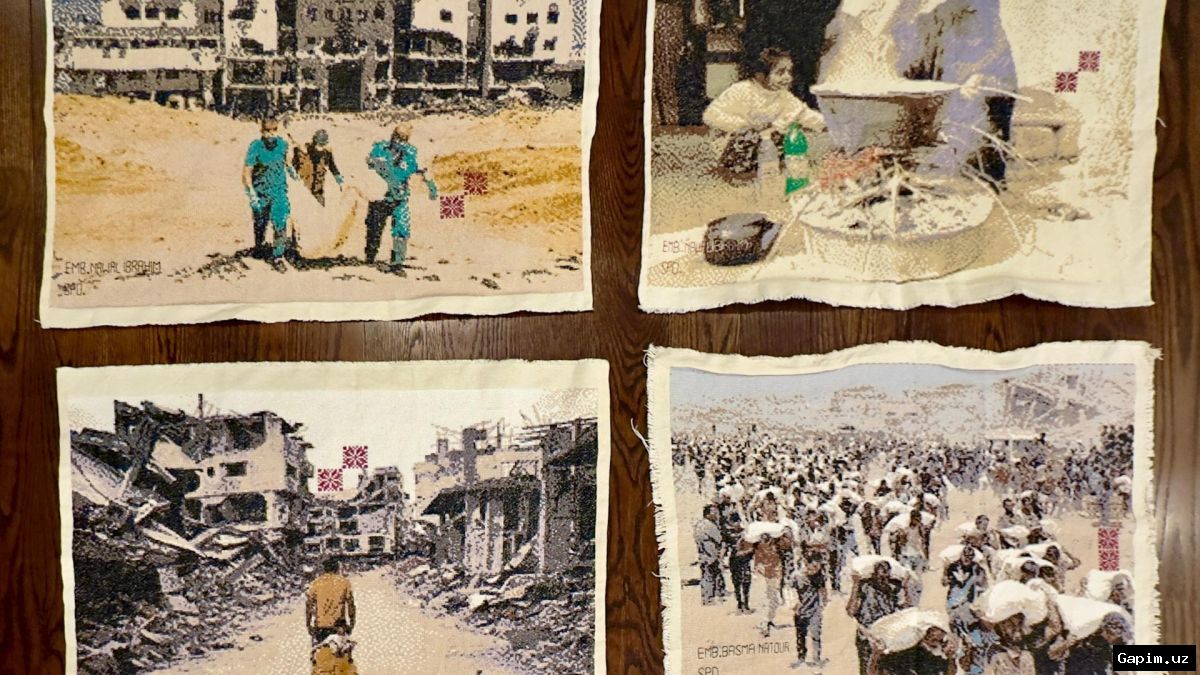
This tension lies at the heart of the Gaza Genocide Tapestry, a project co-curated by the author. It brings together Palestinian women in occupied Palestine and refugee camps in Lebanon and Jordan to document Gaza's destruction through traditional tatreez embroidery.
Each of the 100 panels, composed of 55,000 stitches, tells a fragment of the tragedy: a journalist weeping over his child's body, hungry girls crushed at a soup kitchen, a child crying as her world collapses. Some images, like Khalid Nabhan hugging his granddaughter, briefly captured global attention, but most pass without names or context.
The tapestry defies this oblivion. To embroider is to deem something worth the effort. The project began in 2011 in Oxford and is now housed at the Palestine Museum US in Connecticut. After the 2023 assault, it expanded rapidly to 100 panels focused solely on Gaza.
Women in Gaza were initially active contributors, but as bombardment intensified, they became subjects rather than narrators. Yet the tapestry serves as a 'lam shamel' (family reunion), uniting Palestinian women across borders and displacement into a single visual record.
Starting May 9, the tapestry will be exhibited at the Venice Biennale in Palazzo Mora. This recognition carries a paradox: the world sees and names the genocide but remains unable to stop it. Art becomes a primary site of testimony when political systems fail.
Source: www.aljazeera.com