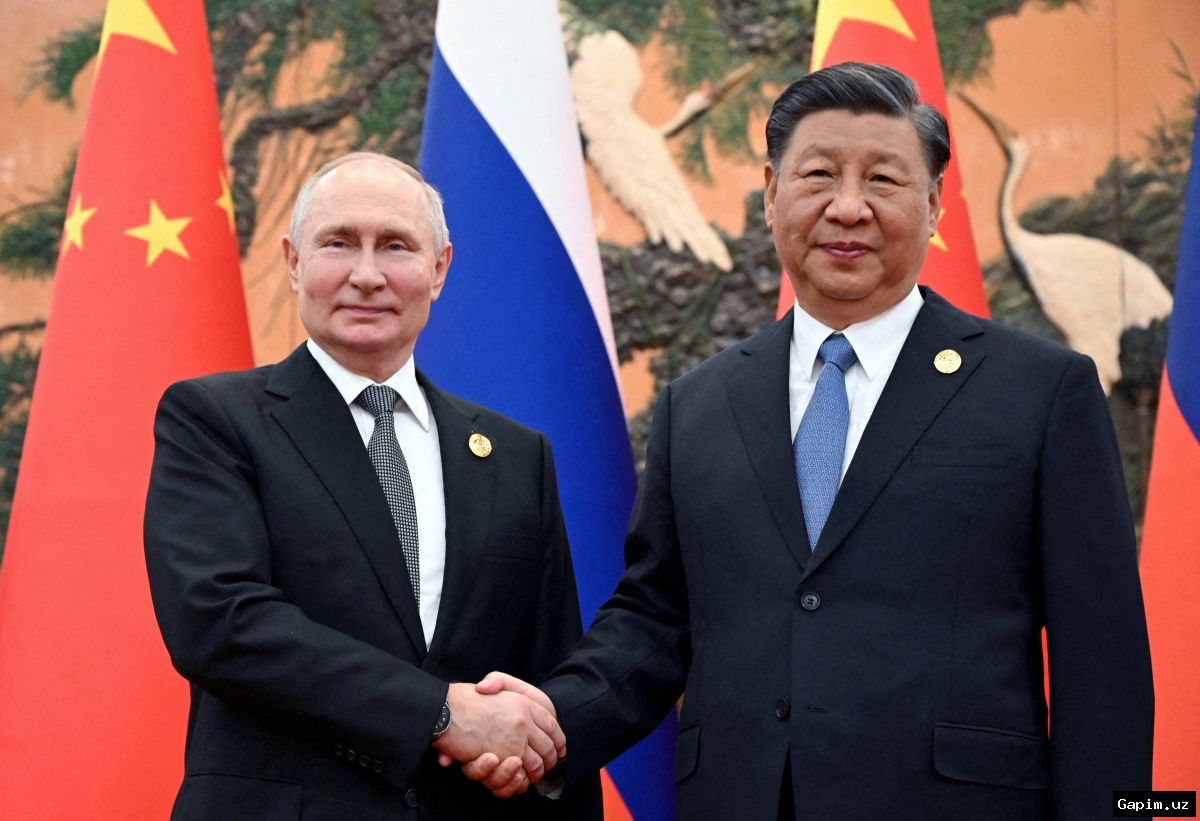
Russian President Vladimir Putin is visiting Beijing this week for talks with Chinese leader Xi Jinping. DW examines how China's financial support since the Ukraine war has transformed the Russian economy, but increasingly on Beijing's terms.
Bilateral trade softened last year due to lower oil prices, but Russia's goods exports to China have nearly doubled since February 2022. In 2024, Russia shipped roughly $129 billion worth of goods to China, overwhelmingly crude oil, coal and natural gas sold at steep discounts.
The Centre for Research on Energy and Clean Air calculated that China has bought more than €319 billion of Russian fossil fuels since the conflict began, providing Moscow with vital hard currency to fund its military amid Western sanctions.
In return, China exported nearly $116 billion worth of goods to Russia in 2024, supplying machinery, electronics and vehicles that replaced Western suppliers who exited the Russian market.
Although Beijing has stopped short of direct exports of finished military hardware, China has supplied billions of dollars' worth of dual-use goods — civilian products with military applications. These have helped sustain Russia's defense industry.
Western sanctions have severed Russia's access to advanced Western technology. Moscow turned to China, which, according to Bloomberg, supplied roughly 90% of Russia's sanctioned technology imports in 2025, up from 80% the previous year.
China has also provided Russia with earth observation intelligence, satellite imagery for military purposes and drones, enabling Russia to sustain and expand its production of missiles and drones.
After the war began, the US and EU expelled major Russian banks from SWIFT and froze about $300 billion of Russia's central bank reserves. In response, Moscow and Beijing accelerated de-dollarization. By late last year, over 99% of bilateral trade was settled in rubles and yuan, according to Russian Finance Minister Anton Siluanov.
However, yuanization has created new dependencies. Russia faces occasional yuan shortages and higher borrowing costs, while Beijing gains the upper hand in all bilateral negotiations.
Analysts believe China's leverage over Moscow will likely grow further. Putin is expected to push for progress on new pipelines, which would boost Russia's export revenues but further tie its energy future to China.
Source: www.dw.com