At least 100 deaths have been reported in an Ebola outbreak in the Democratic Republic of Congo, with more than 390 suspected cases, the head of the Africa Centres for Disease Control and Prevention told the BBC.
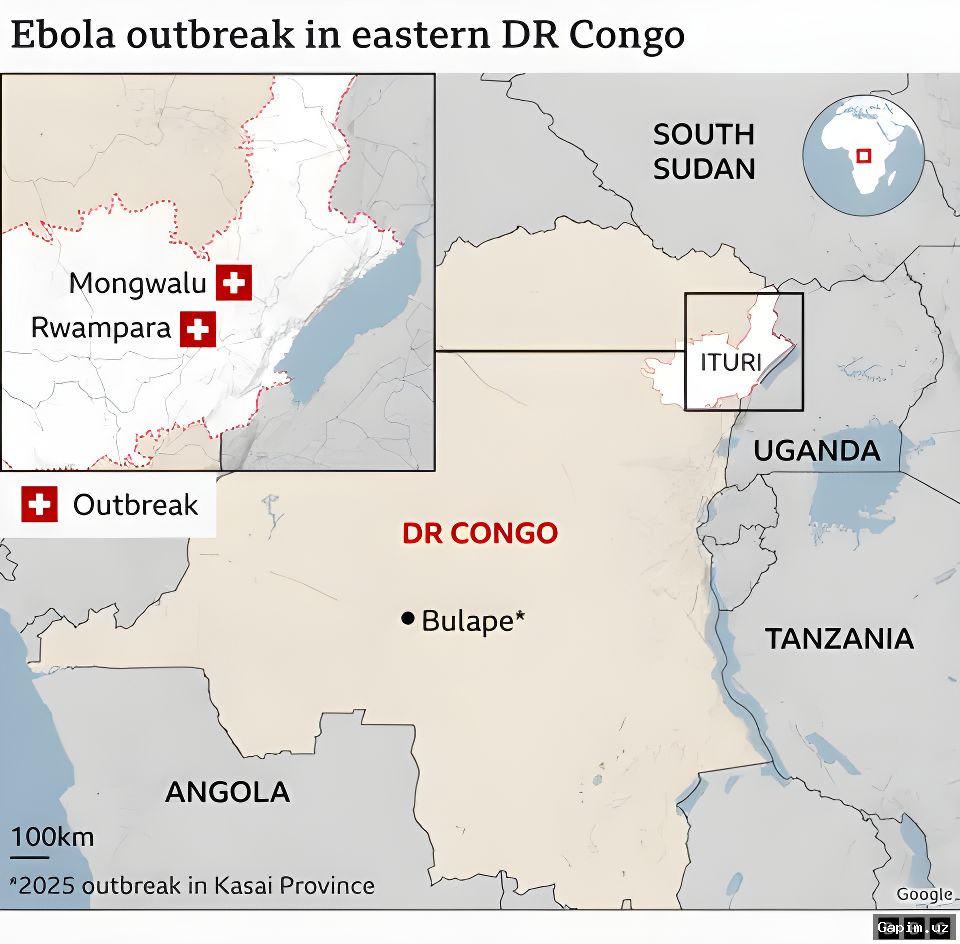
The World Health Organization (WHO) has declared the outbreak an international emergency. The current strain is caused by the Bundibugyo virus, for which no approved drugs or vaccines exist.
Two confirmed cases and one death have been reported in Uganda, according to the US Centers for Disease Control and Prevention (CDC). At least six Americans have been exposed to the virus in DR Congo, with one showing symptoms and three having high-risk contact.
The CDC said it is supporting the “safe withdrawal of a small number of Americans who are directly affected,” but did not confirm how many. The US government is reportedly arranging transport for the group, possibly to a US military base in Germany.
The CDC declined to answer questions about affected US citizens during a Sunday press conference. On Monday, the agency said the risk to the US is relatively low but announced measures to prevent the disease from entering the country.
These measures include monitoring travelers from affected areas, entry restrictions on non-US passport holders from Uganda, DR Congo, or South Sudan, contact tracing, increased testing capacity, and hospital readiness.
The US has issued a Level Four travel advisory—its most severe—warning against travel to DR Congo. The WHO warned the outbreak could be “a much larger outbreak” than currently detected, with significant risk of local and regional spread.
The 2014-2016 West Africa outbreak infected over 28,600 people and killed 11,325. Africa CDC Director General Jean Kaseya urged adherence to public health measures, especially regarding funerals, saying, “We don’t want people infected because of funerals.”
The WHO advised DR Congo and Uganda to conduct cross-border screenings and urged neighboring countries to enhance preparedness. Rwanda is tightening border screening with DR Congo, while Nigeria is closely monitoring the situation.
Source: www.bbc.com