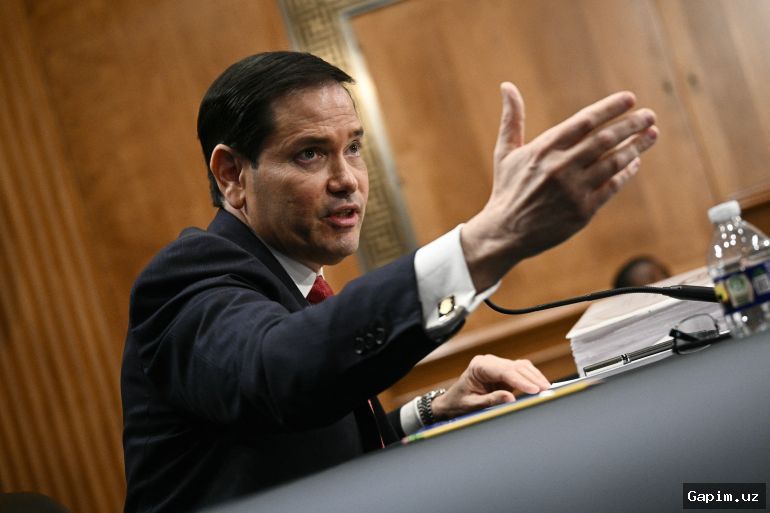
US Secretary of State Marco Rubio testified before the Senate Foreign Relations Committee on Tuesday, stating that Iran's Supreme Leader Mojtaba Khamenei appears to be taking a more active role in the country's affairs. Rubio noted that while Khamenei has not been seen publicly since US airstrikes killed his predecessor, he is communicating in writing and through intermediaries.
Rubio said US talks with Iran may now include aspects of its nuclear program that were off the table a month ago, but cautioned that this does not guarantee a final deal. He emphasized that Iran must first reopen the Strait of Hormuz and commit to negotiations on its enriched uranium stockpile. Sanctions relief would only follow significant concessions on the nuclear program.
Iran's semi-official Mehr news agency cited a source close to the negotiating team, saying Tehran is still studying the latest US proposal and has not communicated with Washington for several days. The source stressed Iran's stern approach due to US non-compliance with the ceasefire and general mistrust.
US President Donald Trump claimed on social media that talks with Iran are progressing at a 'rapid pace' and that 'it will all work out well in the end.' His priorities include Iran forgoing nuclear weapons and reopening the Strait of Hormuz, through which about 20% of global oil and LNG transited before the war.
The US-Israel war on Iran, which began on February 28, has killed thousands, mainly in Iran and Lebanon, and driven up energy prices. Israel has invaded Lebanon and attacked Beirut. Iran insists on a full ceasefire in Lebanon as part of any agreement, threatening to halt negotiations and confront Israel directly if attacks continue.
Source: www.aljazeera.com