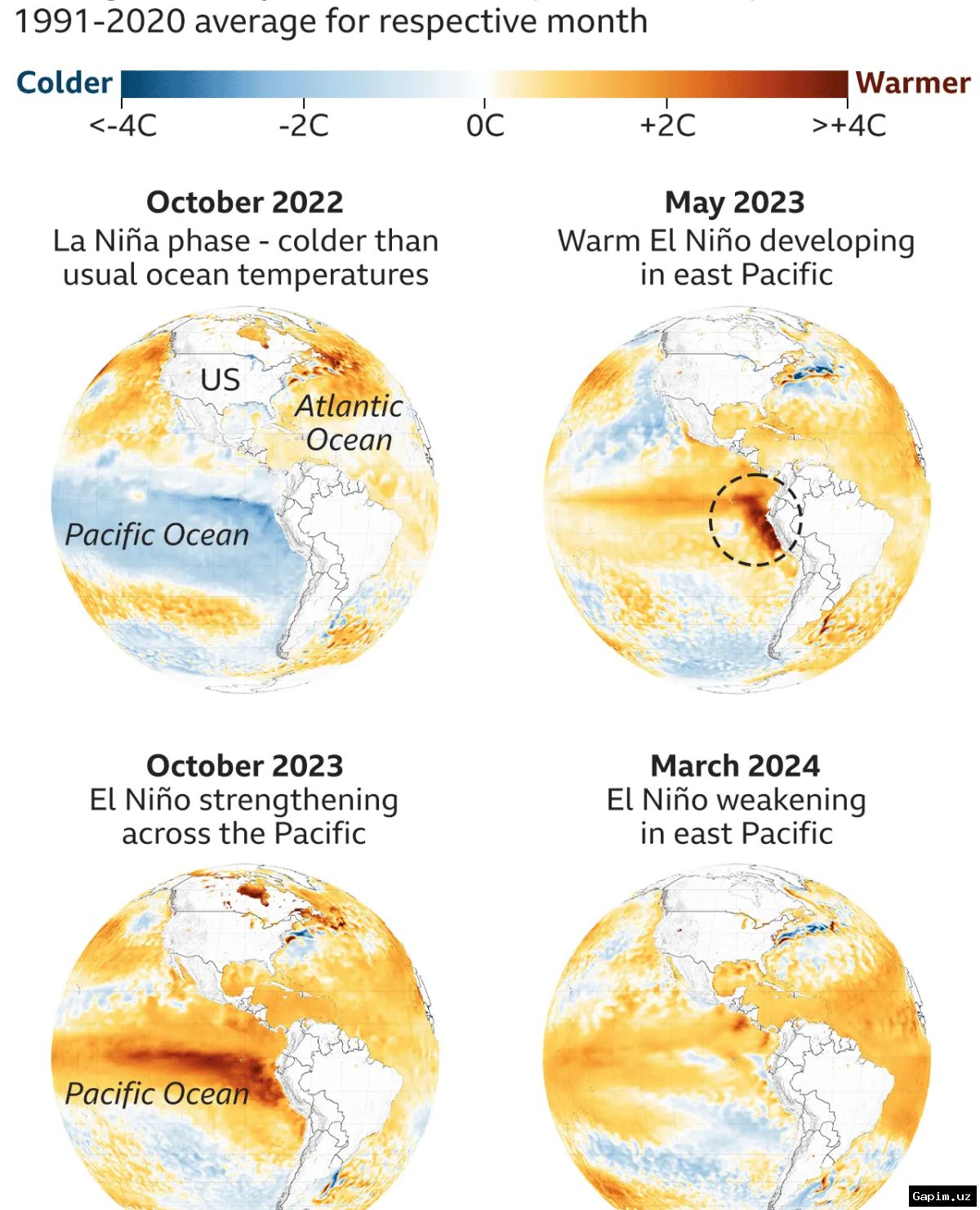
A potentially powerful El Niño is developing in the Pacific Ocean, threatening to reshape weather patterns worldwide in the coming weeks. Forecasters warn this could be among the strongest on record, with the potential to trigger drought, flooding, heat waves and disruptions to food and water supplies across multiple regions.
Paul Roundy, a professor at the State University of New York at Albany, stated there is a "real potential for the strongest El Niño event in 140 years." The World Meteorological Organization (WMO) expects El Niño conditions to emerge soon and persist at least into winter.
United Nations Secretary-General Antonio Guterres urged the world to treat it as an "urgent climate warning," adding that "El Niño conditions will pour fuel on the fire of a warming world."
El Niño is a natural climate pattern occurring every two to seven years, beginning when trade winds over the tropical Pacific weaken, allowing warm water to accumulate. Although the warming area is roughly the size of the continental United States, its effects are felt globally.
NASA Goddard Institute for Space Studies Director Gavin Schmidt described El Niño as "the first atmospheric domino to fall," triggering a global chain reaction. These reactions vary dramatically: some regions face increased drought risk, while others experience torrential rainfall and destructive flooding.
Parts of Central America, Asia, Africa and Australia often become hotter and drier during El Niño years. In Honduras, authorities estimate around 75 municipalities could face severe drought, with the capital Tegucigalpa already declaring a water emergency. Along South America's Pacific coast, El Niño can bring catastrophic flooding.
Consequences can persist long after the event. Crop failures and economic losses could run into the trillions. During the 2015-2016 El Niño, poor harvests left millions in need of food assistance. Wildfire risk also increases, particularly in Australia, Canada, the United States and the Amazon rainforest.
El Niño influences tropical storm activity. The Atlantic hurricane season is expected to be less active, but storms that form could be more intense. In the Pacific, the opposite occurs, with more and stronger storms. Marine ecosystems, including coral reefs, face bleaching risks from warmer ocean temperatures.
Scientists say there is no clear evidence that climate change is making El Niño itself stronger, but it can amplify its impacts. A warmer atmosphere holds more moisture, increasing extreme rainfall and flooding risks. Higher temperatures can also intensify drought by drying soils more quickly.
One advantage is that El Niño develops gradually and can be monitored months in advance. Scientists track ocean temperatures and atmospheric conditions, giving governments and communities time to prepare. Long-range forecasts can help develop mitigation strategies to avoid some of the worst impacts.
Source: www.dw.com