The 2026 FIFA World Cup kicks off on the night of June 11-12 with a match between Mexico and South Africa. As the biggest sporting event of the four-year cycle, the tournament draws attention not only to the games but also to the kits worn by the 48 participating nations.
Three major brands—Adidas, Nike, and Puma—supply 75% of the teams. Adidas leads with 14 contracts, including Mexico, Argentina, Germany, and Japan. Nike outfits the United States, Canada, South Korea, and others, while Puma covers Colombia, Algeria, and more. Ten smaller manufacturers, such as Kelme (two teams), equip the rest.
Adidas kits feature cultural and historical references: Mexico’s home shirt draws from the 1998 ABA Sport design with Aztec-inspired green geometric patterns and “SOMOS MEXICO” on the collar. Argentina’s home kit nods to its 1978, 1986, and 2022 World Cup wins, while the away shirt showcases Buenos Aires’ Fileteado Porteno art with spiral patterns. Germany’s home kit recalls the 1990 and 2014 finals, with black, red, and gold V-shaped stripes.
Nike’s US home kit uses wavy stripes inspired by the 1994 World Cup shirt and the American flag, while the away kit is dark gray with subtle star patterns. Canada’s away shirt is bold: black with a distressed white graphic resembling cracked ice, abstractly referencing maple leaves. Japan’s home kit is blue with wave-like graphics; the away shirt features 12 fading stripes symbolizing 11 players and the fans.
Puma’s Colombia home kit is bright yellow with butterfly patterns referencing Gabriel García Márquez’s works, while the away shirt is dark blue with mint accents. Algeria combines cream with gold traditional motifs, and South Africa’s home kit echoes the 2010 World Cup design. Other notable kits include Belgium’s flame pattern (Red Devils), Spain’s subtle vertical lines, and Scotland’s nostalgic “Trace Scarlet” away shirt.
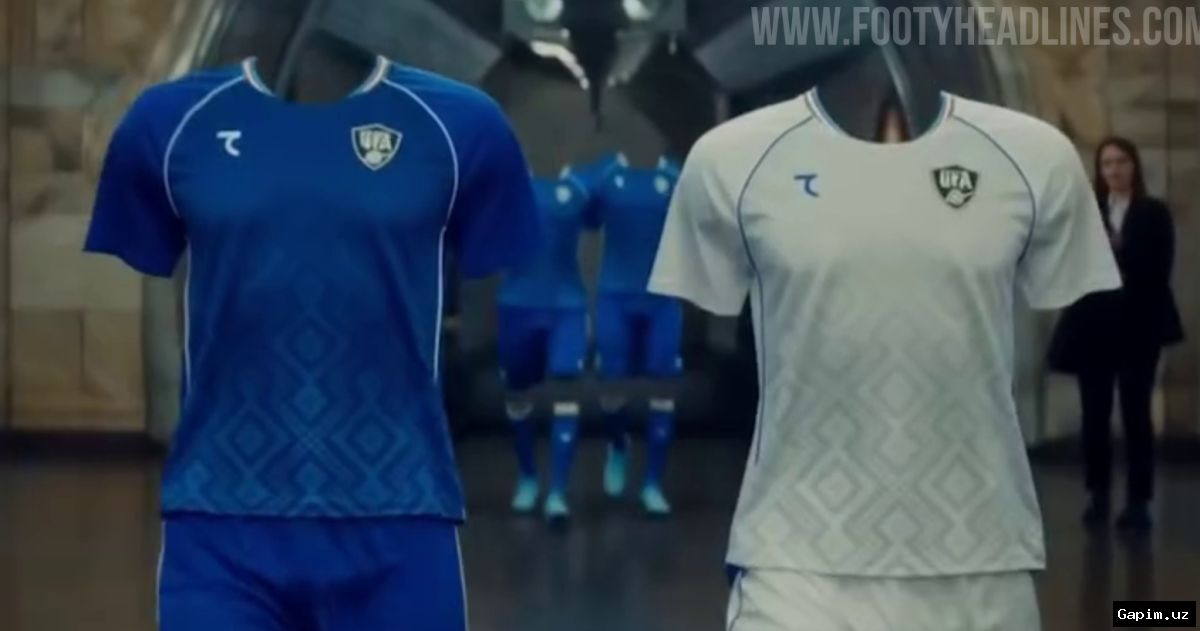
Smaller brands like Kelme (Curacao, Sweden) offer unique designs. According to Footy Headlines, kits come in stadium (fan) and match (player) versions, differing in fabric and fit. The 2026 World Cup promises a vibrant mix of tradition, innovation, and national identity on the pitch.
Source: www.gazeta.uz