The European Union on Monday formally opened the first stage of accession negotiations with Ukraine, a process delayed by two years due to the veto of former Hungarian Prime Minister Viktor Orban.
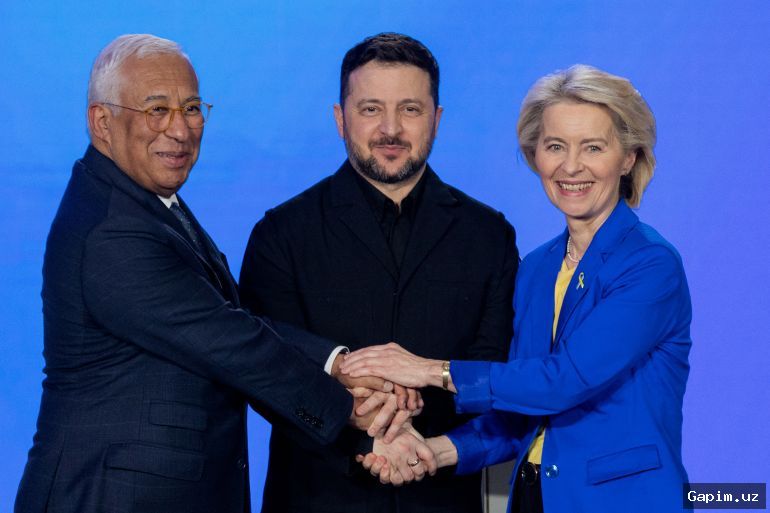
Russia's full-scale invasion of Ukraine in 2022 turbocharged an idea that was once contentious among the country's electorate. Technical talks had already begun despite Hungarian obstruction.
Hungary's new Prime Minister Peter Magyar recently announced an agreement with Ukraine on measures to strengthen the rights of the ethnic Hungarian minority, a condition for lifting Budapest's veto.
European Council President Antonio Costa, attending the G7 summit in France, stated: "Today, we are taking a historic step towards Ukraine's future within the EU, by opening formal negotiations for its accession. A united and determined G7 is essential to help bring this war to an end and achieve a just and lasting peace."
European Commission President Ursula von der Leyen hailed the opening of the first negotiating cluster as a "huge step forward," praising Ukraine's progress on reforms in areas like corruption and rule of law.
Ukrainian President Volodymyr Zelenskyy said the development "sends a clear message that Europe's progress cannot be stopped," and expressed solidarity with Moldova, which took the same step.
Accession requires compliance with EU standards across six clusters and 33 chapters. The first cluster, "fundamentals," covers judiciary, fundamental rights, economic criteria, and democratic institutions.
The process typically takes years or decades. The last country to join was Croatia in 2013. Ukraine's talks are expected to be lengthy and unlikely to conclude while the country is at war.
Some European leaders propose a "two-tier membership" to accelerate integration. German Chancellor Friedrich Merz suggested an "associate member" status for Kyiv, which faced resistance in Ukraine over concerns of sidelining.
Source: www.dw.com