The European Space Agency (ESA) has released the largest and most detailed visible-light image of the center of the Milky Way, captured by the Euclid space telescope. The mosaic, assembled from nine shots taken over 26 hours, contains over 60 million stars, nebulae, and star clusters.
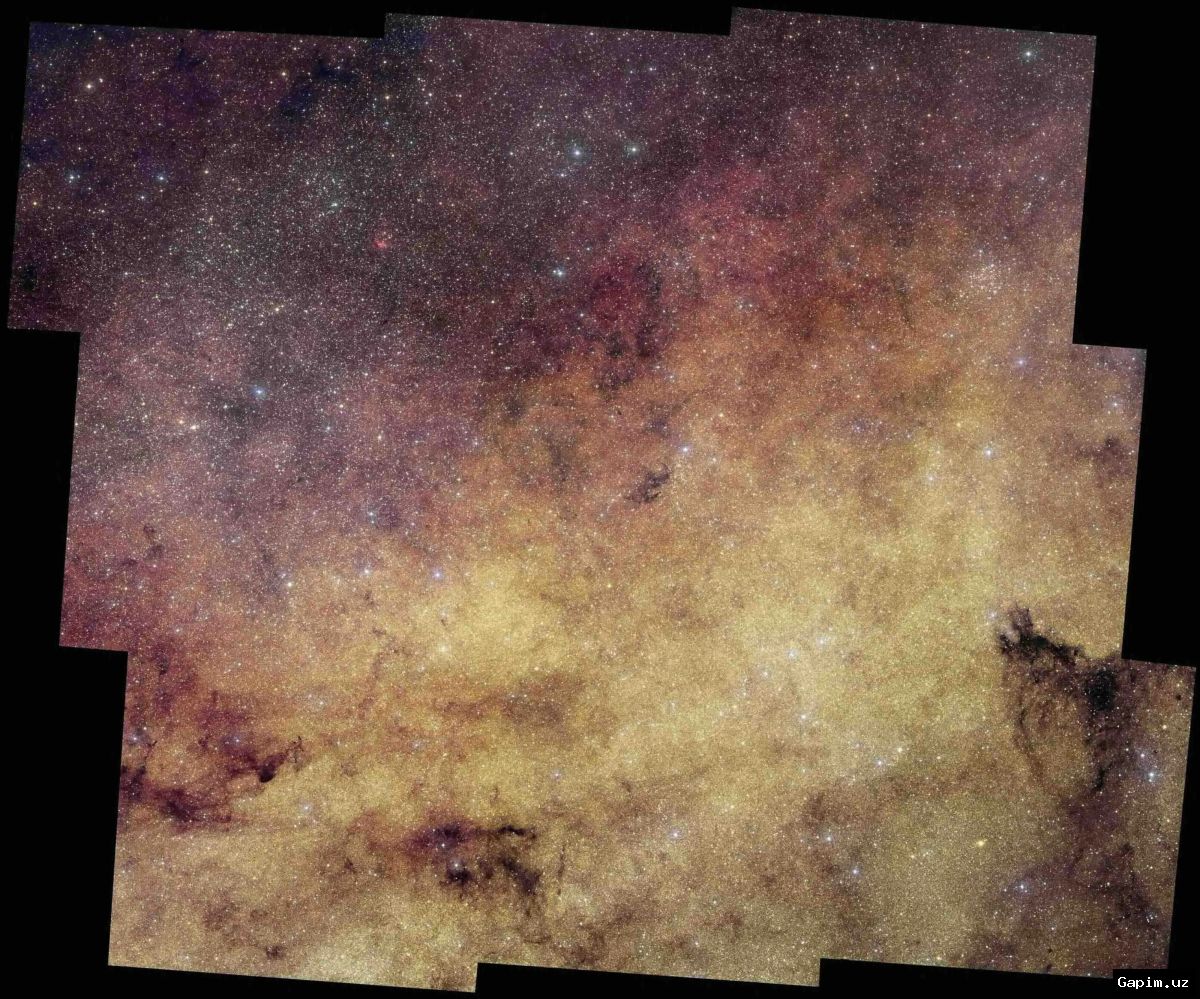
Each frame covers a patch of sky larger than the full Moon. Euclid's field of view is approximately 270 times wider than Hubble's at comparable resolution. Ground-based observatories would need about 2,000 hours of observations to create a similar map.
Although Euclid's primary mission is to study dark matter and dark energy, its ultra-sensitive camera was able to resolve individual stars even in the extremely dense center of our galaxy, without being overwhelmed by the bright galactic core.
The data will serve as an "archival snapshot" for future research. It will help scientists confirm the existence of exoplanets and determine their masses more accurately by comparing star positions over time. The survey area includes 51 known planetary systems, whose parameters can now be refined.
The new map will also provide a crucial foundation for the upcoming Roman space telescope, which will search for new exoplanets using gravitational microlensing.
Source: podrobno.uz