In the latest installment of the newspaper's project 'If I Had Your Youth...', renowned microbiologist Dilfuza Egamberdiyeva shared her life story, scientific journey, and advice for the younger generation.
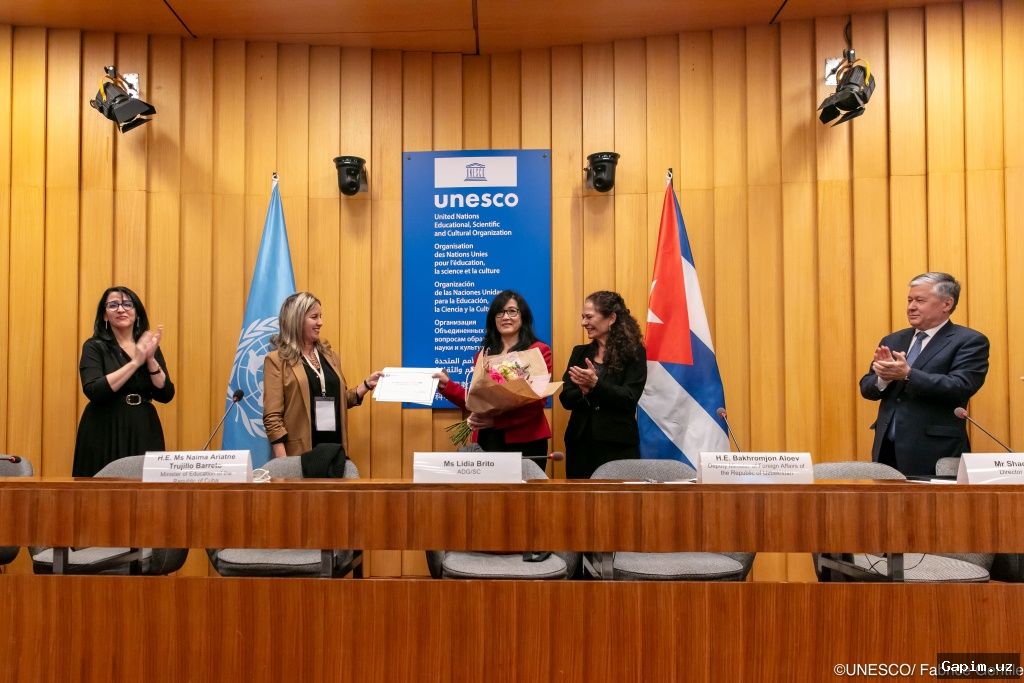
Born in Tashkent in 1971, Egamberdiyeva graduated from the Biology Faculty of the National University of Uzbekistan and earned a doctorate in agriculture and horticulture from Humboldt University in Berlin. She conducted research at universities in Helsinki, Manchester, Leiden, and Florence, as well as at Germany's Agricultural Research Center. In 2023, she received the UNESCO-Carlos Finley Prize for her research on plant-microbiome interactions, plant stress tolerance, soil biology, and microbial diversity.
That same year, after 30 years abroad, she returned to Uzbekistan. She now heads the Food Quality and Safety Laboratory at the National University of Uzbekistan and serves as deputy director of the International Scientific Center under the Ministry of Agriculture.
In the interview, Egamberdiyeva recalled her youth during the Soviet era, describing the challenges of student life and the early years of independence. 'We lived carefree but with a narrow worldview. We didn't understand the world; we lived day to day,' she said.
She recounted the difficult process of going to Germany for postgraduate studies. 'One day a letter arrived, summoning me to the German embassy. They informed me I had been accepted for a PhD. When I told my parents, nobody believed me,' she recalled.
A German woman took her in like a daughter, helping her adapt. The woman later advised her not to return to Uzbekistan immediately, fearing pressure on intellectuals during the post-independence period. 'She told me about Khairiniso Majidkhanova, a girl from Turkestan who went abroad for education and was executed upon her return,' Egamberdiyeva said.
The scientist is critical of today's youth: 'Young people spend too much time on social media. We worked in cotton fields and then read books by candlelight. Knowledge comes from inner drive, not external conditions.' She urged young people to make the most of available opportunities.
Egamberdiyeva remains optimistic about science's future: 'Uzbekistan has deep roots in science; our ancestors carried the science gene. If we awaken those genes, Nobel laureates can emerge from this land.' She believes science is divine and chooses the person.
She concluded by naming her core values: sincerity, respect, and loyalty. She noted that abroad, officials interact with ordinary people as equals, which deeply impressed her. She also emphasized the importance of religious education in schools.
Source: www.gazeta.uz