Millions of mourners and representatives from dozens of countries — presidents, prime ministers, foreign ministers, and parliament speakers — have attended the funeral ceremonies of Iran's former Supreme Leader Ali Khamenei.
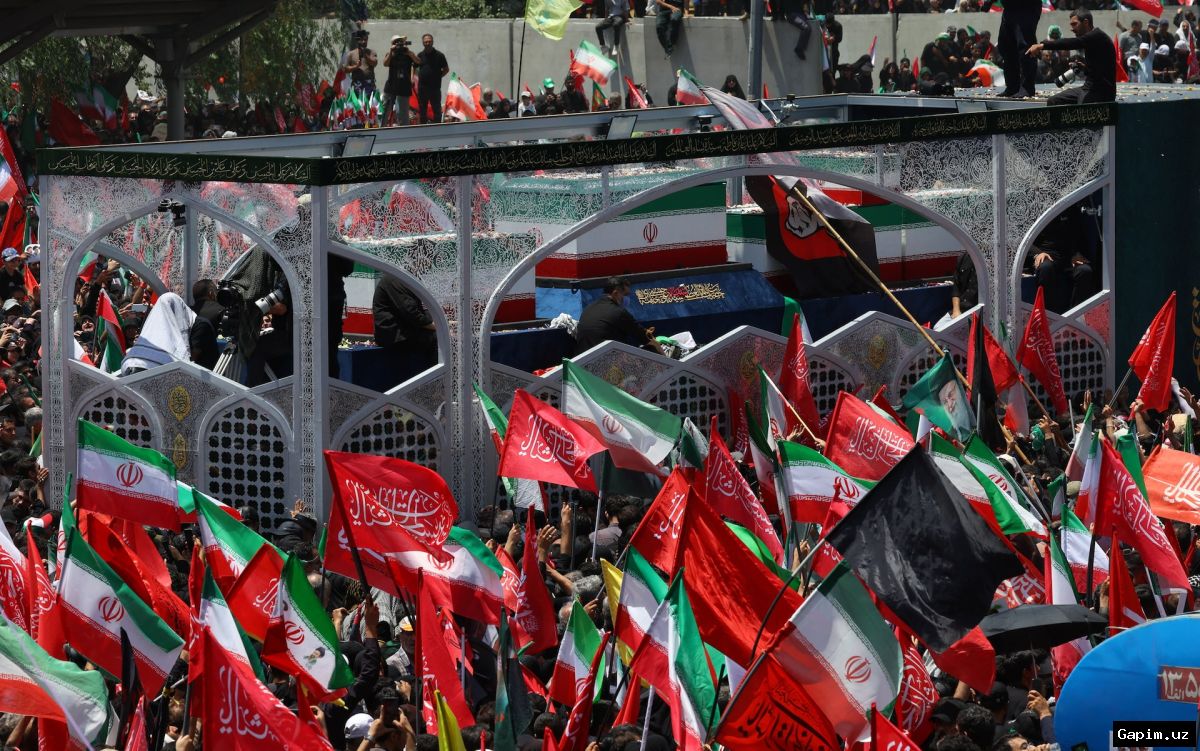
However, as the multiday event weaves through Iran and Iraq, residents across Tehran have spoken to Al Jazeera about one person whose absence has been more striking than the presence of everyone who turned up: the country's current Supreme Leader Mojtaba Khamenei.
Mojtaba Khamenei has not been seen in public since the Israeli air strike on February 28 that wounded him and killed his father, Ali Khamenei, as well as Mojtaba's wife, Zahra Haddad-Adel, and other family members. He has remained absent throughout the funeral ceremonies for his wife and father.
Iranian officials have attributed that absence to the continued threat of assassination. However, the attendance of many family members, including Ali Khamenei's sons Mostafa, Meysam and Masoud, during the week of public mourning, as well as the presence of many of Iran's political leadership and foreign dignitaries, has highlighted the ruling Khamenei's absence and stoked rumors over the extent of his injuries.
"My country is no longer the Iran of old, where the leader is publicly present," 26-year-old Masoumeh said from Tehran, where he was attending the funeral. "Mojtaba's absence is irrelevant. But his presence is a sign of the country's security, and I now have the feeling that the former security does not prevail in my country. The late supreme leader was the meaning of Iran's power."
On Monday, as Khamenei's funeral procession made its way through Tehran, Israel's defense minister appeared to threaten his successor. Minister Israel Katz said in a statement that Khamenei "was assassinated by Israel because he set in motion and led the plan to destroy Israel." "The assassin was assassinated," Katz said. "Any Iranian leader who tries to push plans to destroy Israel again will also be thwarted."
Much of Iran's leadership was systematically targeted for assassination by Israel since it first launched strikes upon Iran on February 28. As well as Ali Khamenei, Israeli strikes killed or incapacitated a wide range of senior officials, including Iran's then defense minister, the chief of the armed forces, and senior Islamic Revolutionary Guard Corps (IRGC) commanders.
"I feel that for [Mojtaba Khamenei's] safety, he should not be present in public and we should wait a little," 35-year-old Faezeh said from the funeral. "The fact that the new leader has not been seen yet does not mean anything bad to me because I know that the enemy did not show mercy to the former leader and will not show mercy to Mr Mojtaba either."
Rumors about Mojtaba Khamenei's health have swirled since the attack, fueled by the absence of any public sighting. According to people close to his inner circle who spoke to Reuters, Khamenei suffered serious injuries, including damage to his face and significant harm to one or both legs, which, combined with his absence from the funeral, led some to question official portrayals of the power of the Iranian state.
"The Islamic Republic, despite its claims, cannot even maintain the security of its leader for a few minutes to be present at this important event," 47-year-old Somayeh told Al Jazeera from Tehran. "It seems that there is a conspiracy at work and that the government is still not honest and transparent with the people."
Iranian-American political analyst Negar Mortazavi said Mojtaba's public absence is "certainly unusual." But, she added, this was a situation imposed "not by design" and that "there is also reasoning for it," given the threat to Khamenei's life. At the same time, Mortazavi added that this could not continue indefinitely: "They can't hide him forever."
Source: www.aljazeera.com