As the United States escalates strikes on Iran, Tehran is retaliating by targeting military and civilian infrastructure across Gulf states and Jordan, while deliberately avoiding attacks on US naval assets deployed near its coast and on Israel. Analysts say this strategy aims to pressure US President Donald Trump without widening the war.
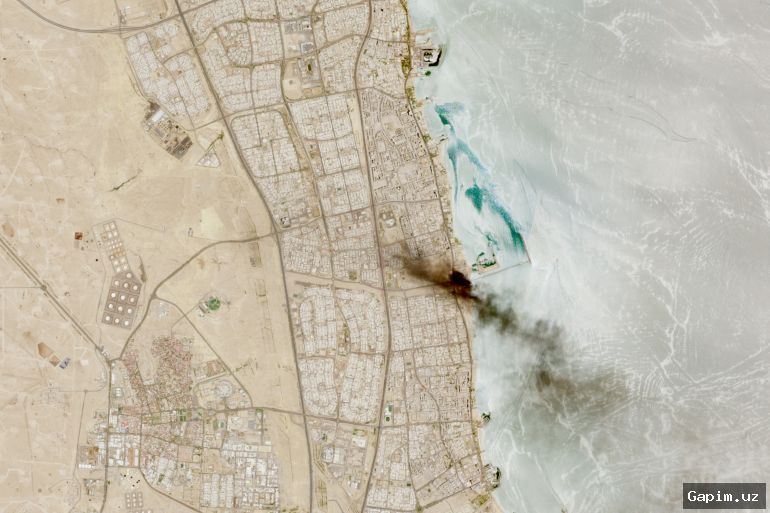
While Washington has struck railway stations, power plants, telecom networks and drinking water infrastructure in Iran, the Islamic Revolutionary Guard Corps (IRGC) has responded by attacking civilian airports, water and power stations in Kuwait and Bahrain.
Military analysts see a logic behind this approach. Retired Lebanese Brigadier General Elias Hanna told Al Jazeera that targeting US naval assets “would bring a devastating US response” and is technically difficult due to sophisticated air defense systems.
Atifeh Taghiani, a political science professor at the University of Tehran, argued that the US is using Gulf countries, particularly Kuwait, to target Iranian civilian infrastructure. Iranian officials have justified attacks on Gulf states by claiming US operations are launched from military bases on their territory.
Abdullah al-Shayji, a professor at Kuwait University, dismissed these claims as Iranian “propaganda,” noting that US strikes originate from two aircraft carriers — George W. Bush and Abraham Lincoln — located 150 km off Iran's coast. He said Gulf states agreed with the US on defensive purposes only and that Iran has provided no evidence.
Al-Shayji described Iran's strategy of targeting Gulf states as failed, as these states cannot pressure Washington to end the war. He also condemned attacks on Kuwait's water desalination plants as violations of international law aimed at harming civilians.
Abdullah Bandar al-Otaibi, an assistant professor at Qatar University, agreed that neither the US nor Iran wants full-scale war and both are selective in targeting. He attributed Iran's avoidance of US naval assets to fear of “opening the gates of hell.”
Al-Otaibi noted that Iran's attack on Oman just a day after Foreign Minister Abbas Araghchi visited Muscat highlights the failure of negotiations and Tehran's desire for full control over the Strait of Hormuz. Yemen's Houthis have stayed out of the conflict, increasing pressure on Tehran.
Source: www.aljazeera.com