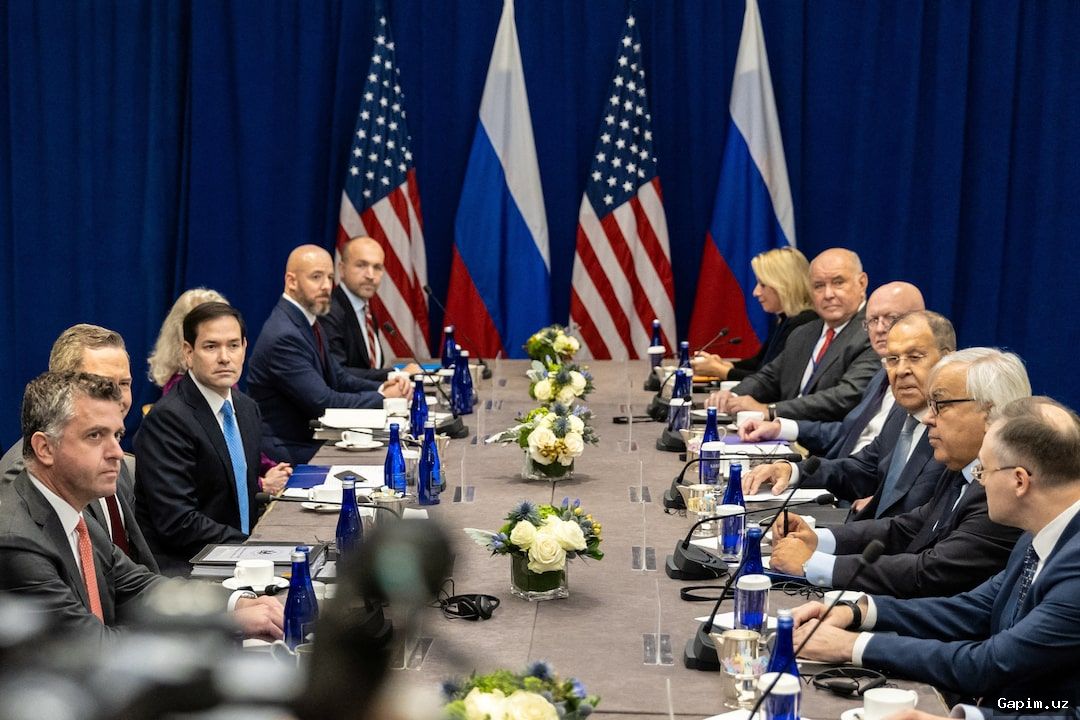
US Secretary of State Marco Rubio and Russian Foreign Minister Sergey Lavrov met in Manila on the sidelines of a Southeast Asian summit, with the war in Ukraine officially topping the agenda. However, the meeting was overshadowed by fresh reports suggesting Russia may be playing a more active role than publicly acknowledged in Iranian attacks on US military sites in the Middle East.
Reports of Iran targeting CIA facilities first emerged early in the US-Israel war on Iran. The Washington Post reported that a CIA station in the US embassy in Riyadh was targeted, while CNN cited US intelligence sources saying Moscow helped Tehran locate US personnel and aircraft in the Gulf.
Reuters reported Wednesday that Iranian drone strikes on CIA facilities, particularly the embassy in Saudi Arabia, prompted US intelligence to investigate possible Russian involvement, as the strikes' effectiveness and precision suggested possible support.
Nicole Grajewski, assistant professor at Sciences Po in Paris, called the theory of Russian involvement in Iranian targeting "realistic." She noted that Iran lacks space-based capabilities compared to Russia, which has military-grade satellites. However, Iran has its own human intelligence networks that are often overlooked.
Amid wars and sanctions, Moscow and Tehran have deepened military ties. Since Russia's February 2022 invasion of Ukraine, Iran has supplied Moscow with Shahed drones and Fateh-110 ballistic missiles. Last year, they signed a 20-year Comprehensive Strategic Partnership Treaty, though Russia said it does not constitute a military alliance.
Russia has allegedly helped Iran improve Shahed-136 drone accuracy by supplying the Kometa-M anti-jamming navigation system. Debris from an attack on a British RAF base in Cyprus reportedly contained the Russian system. Russia dismissed the report as "fake news."
Grajewski said the US war with Iran benefits Moscow by diverting attention from Ukraine and potentially weakening US global power. However, Russia does not want Iran to fall and maintains a delicate balance of support.
US-Iran exchanges of strikes have intensified. US strikes on Iran have continued for the 12th consecutive night, killing two at the Shalamcheh crossing on the Iraq border. Iran has struck back at multiple Gulf countries and Jordan.
Ultimately, Grajewski said Iran's own tactics are more impactful than Russian help. "Russian involvement isn't the fundamental tipping point for the Iranians. Iran already had these capabilities... What it did do is give Iran a bit of an edge and improve it," she said.
Source: www.aljazeera.com